

A closer look at Frameless’s gallery format, participatory ideas and changing programme helps first-time visitors decide what kind of art-led London outing it offers.
Some art venues ask visitors to keep a respectful distance. Frameless takes a different route: it gives images room to move across walls and floors, pairing projection with sound so people can experience familiar works at architectural scale. The question for a first-time visitor is not simply what is on display, but whether this kind of shared, sensory encounter suits the day they have in mind.
We reviewed the venue’s published programme and experience descriptions to understand the idea behind the brand. The result is a London attraction built around four permanent galleries, with interactive features, evening sessions and changing residencies adding other ways to engage. For a first visit, standard admission is the clearest place to start.
Disclosure: this post includes affiliate links, and we may be paid a commission on purchases made through them.
Highlights
- Four permanent galleries reinterpret more than 40 artworks through room-scale projection and sound.
- Colour In Motion uses motion tracking to let visitors interact with projected brushstrokes.
- Standard admission is the core gallery visit; FRAMELESS Lates provides an after-hours option for adults.
- The Art of You Photo Experience adds a personalised portrait inspired by artistic styles.
- Time-limited residencies such as the Nikon Comedy Wildlife Awards Immersive Experience give repeat visitors a reason to check the current programme.
That combination makes Frameless easier to understand as a format than as a conventional collection. The venue’s own descriptions foreground the rooms, movement and atmosphere around the artwork. We think that is useful context: visitors who want close, quiet study of original paintings may prefer a traditional gallery, while curious groups can share a more spatial interpretation of art.
Four galleries give the brand its lasting structure
The permanent experience is organised into four distinct gallery concepts. Beyond Reality leans into surreal, dreamlike and symbolic works, including artists such as Munch, Bosch, Dalí and Klimt. The World Around Us turns to landscapes, cityscapes and seascapes, while The Art of Abstraction explores colour, shape and form through artists including Kandinsky, Mondrian and Klee.
Colour In Motion is the clearest example of Frameless’s participatory approach. The venue says motion tracking transforms projected brushstrokes and lets visitors use gestures to paint with pixels. That is a meaningful distinction from simply placing a large image on a wall: the visitor’s movement becomes part of how the work is encountered. See the official Colour In Motion description for the gallery details. Seurat’s pointillist imagery, for instance, gives the room an obvious relationship to dots, colour and the act of looking.
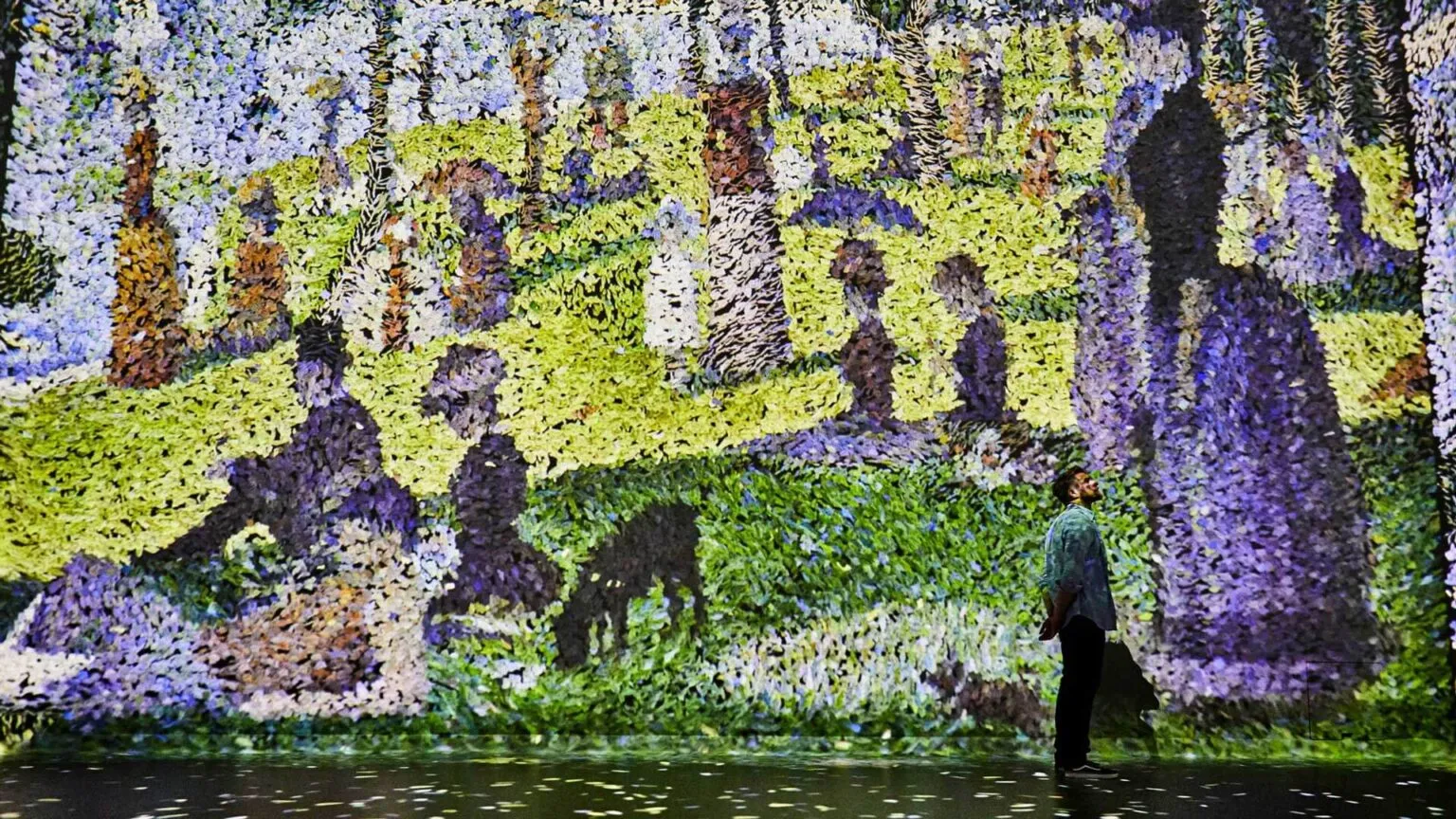
For newcomers, the benefit is variety within one visit. A group can move from surreal imagery to landscapes, then into a more active, colour-led room. The trade-off is that the large-scale projection is the main interpretive device. The works are presented through an edited audiovisual environment, rather than as a substitute for seeing the original objects and their physical details.
- Choose Beyond Reality if surreal and symbolic art is the draw.
- Look to The World Around Us for landscapes and recognisable scenes.
- Make time for Colour In Motion if interaction sounds more appealing than a still viewing experience.
- Try The Art of Abstraction for a room shaped around colour and form.
The official gallery overview is worth checking before selecting a date, especially if one theme is a priority. Frameless’s own material also notes a programme of more than 40 artworks across the four rooms, giving the visit breadth without asking a first-time reader to arrive with specialist art knowledge.
Changing experiences keep the programme open
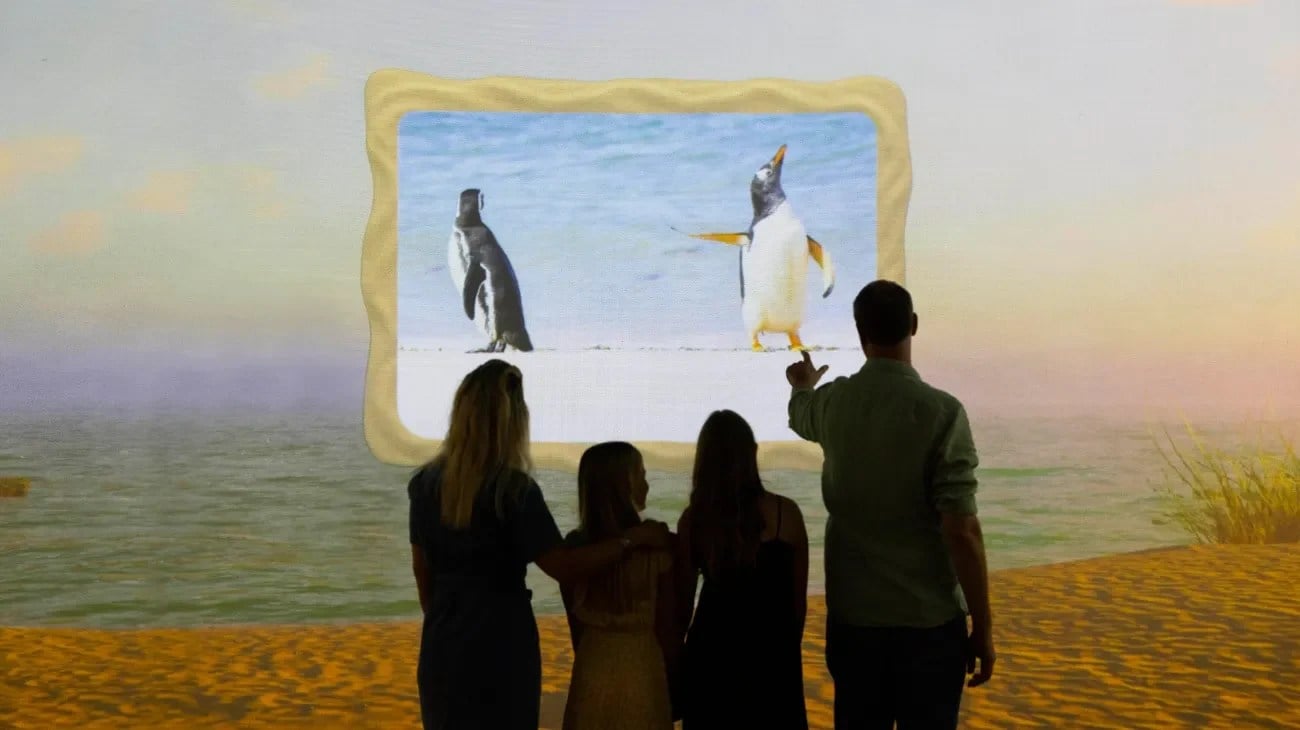
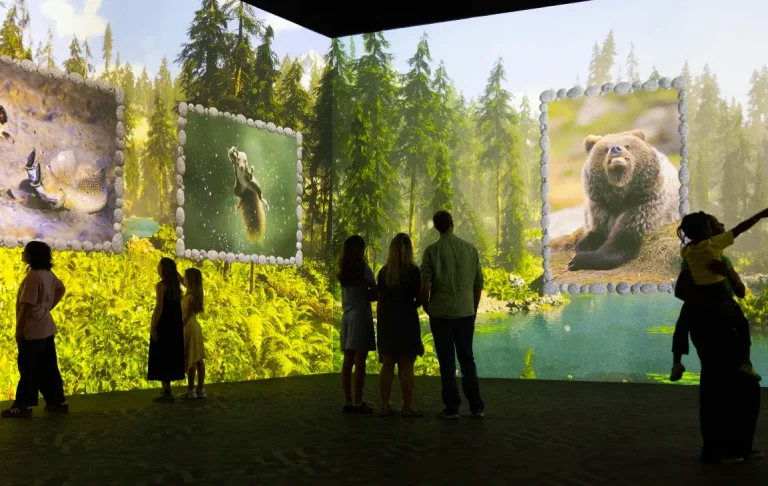
The permanent galleries are the foundation, but the brand also uses residencies and add-on experiences to change the feel of a visit. At the time reflected in the programme pages we reviewed, the Nikon Comedy Wildlife Awards Immersive Experience brings wildlife photography into themed habitats. It shifts the emphasis from canonical art history toward expressive animal images and a lighter, family-friendly tone. The current dates and availability should be checked directly because residencies are time-limited. The residency listing provides the current information.

Habitat imagery helps explain the appeal: instead of treating photographs as small framed prints, the installation groups them into an environment and lets scale and sequence do some storytelling. A reader drawn to wildlife or photography may find this more immediately inviting than abstract art. It is also a reminder to look at the programme before booking, rather than assume every visit includes the same temporary content. Check the Nikon Comedy Wildlife Awards Immersive Experience page for its current details.

The Art of You Photo Experience takes participation in another direction. Frameless describes it as a personalised artwork inspired by the masterpieces and styles seen during the visit, with options for one or two people. That makes it a keepsake-led add-on rather than a core gallery room. Visitors interested in the portrait option can review The Art of You Photo Experience before choosing. It may appeal to visitors who enjoy a playful portrait, while those focused on the art itself can treat it as optional.
- Check whether a residency is running on your chosen date.
- Consider whether an interactive portrait adds value to your group’s plan.
- Review the programme details for any age guidance or session-specific information.
- Keep the permanent galleries as the main reason to visit, and treat add-ons as optional extras.
Different formats suit different London plans
Standard admission is the straightforward starting point for a first visit because it centres on the permanent gallery experience. The ticket page is the place to compare available dates and admission options for standard admission. The final cost can depend on the selected date, ticket category and any add-ons, so check the live booking information rather than relying on an old summary.
For an evening plan, FRAMELESS Lates changes the occasion as well as the timing. Frameless describes these sessions as after-hours access for adults, with a café bar and a soundtrack forming part of the social setting. It is better suited to friends or a date night than to a family outing. Review the FRAMELESS Lates details and confirm any session-specific inclusions before booking.
For a first-time reader choosing between these options, the distinction is practical. A daytime ticket prioritises the galleries; Lates adds an evening atmosphere; a residency gives a date-specific theme; and The Art of You is an optional personalised extra. Explore the relevant Frameless pages before booking: Lates details, the wildlife residency and The Art of You each answer a different question.
Before you settle on a time, it is sensible to check accessibility information, opening details and the location page as well. An immersive venue relies on light, sound and movement across large spaces; visitors with sensory or mobility requirements should use the official guidance to decide whether the format works for them. The brand publishes dedicated accessibility information, including details for specific session types. Check Frameless accessibility guidance alongside the relevant ticket information.
The format rewards curiosity more than close study
Frameless’s strongest idea is that the room becomes part of the artwork. That can make art feel approachable to visitors who might not choose a conventional gallery, because the encounter is spatial and shared. A family or group can talk about what catches their eye, move through the projections and respond to the soundtrack together. The Beyond Reality gallery is one example of how the rooms each have a distinct mood. The experience is built around attention and atmosphere, not a long label beside each painting.
The same design choice sets a limit. Projection can make detail and scale vivid, but it also places the venue’s presentation between the visitor and the original work. Anyone seeking conservation context, quiet contemplation or a close view of materials should treat Frameless as a complement to a museum visit, not a replacement. That distinction helps set expectations without diminishing what the venue is designed to do.
- Good fit: curious visitors who enjoy visual spectacle, shared discovery and flexible wandering.
- Also worth considering: families or friends who want several different gallery moods in one outing.
- Less suited: visitors whose priority is quiet, object-led study of original artworks.
- Plan carefully: anyone with access needs or sensitivity to projected light and sound should consult the venue’s guidance first.
That is why we see the brand’s identity in its range rather than a single gallery. Permanent rooms make the visit legible; participatory features invite visitors into the image; residencies create a changing reason to return; and evening sessions recast the venue as a social plan. A first visit does not need to include every extra. Picking the format that matches the group is more useful than trying to cover everything. Visitors can compare available admission options with the current programme.
Questions visitors ask about Frameless
What is included in a standard Frameless visit?
Standard admission is centred on the four permanent immersive galleries. Temporary exhibitions, add-ons and date-specific details can vary, so check the ticket page and current programme for the exact inclusions attached to your chosen booking.
Is Frameless suitable for someone who is not an art expert?
The format is designed around room-scale images, sound and movement, so visitors do not need specialist knowledge to engage with it. It is best approached as a sensory interpretation of art; those wanting detailed historical labels or original works up close may prefer to pair it with a traditional gallery.
Does the programme stay the same?
The four gallery concepts form the permanent foundation, while Frameless also lists residencies and separate experiences that can change. Check the official what’s-on pages before choosing a date if a particular theme is important to your visit.
Wrapping up
Frameless is worth considering for a London day built around shared visual discovery rather than traditional gallery viewing. Its four permanent rooms provide a clear core, while Colour In Motion, residencies, Lates and The Art of You show how the venue broadens the idea of an art visit. Our main caveat is that immersive projection changes how artwork is encountered; it cannot replace the detail of seeing original pieces in person.
If that balance sounds right, compare the official ticket options and check which experiences are running on your preferred date.