
A research-led look at Irish Ferries’ direct France route, onboard choices and the extra coordination that can shape the trip.
Choosing a ferry to France from Ireland is partly a question of geography and partly a question of how much work you want to do after arrival. Irish Ferries brings a direct sea crossing, onboard services and separate onward travel and holiday options together on its Ireland-to-France pages.
We reviewed the current product and route information rather than travelling with the service. The useful question is whether this combination makes a trip simpler for your kind of itinerary, or whether the connection details and extra choices add more planning than they save.
Disclosure: this post includes affiliate links, and we may be paid a commission on purchases made through them.
Highlights
- Dublin-Cherbourg gives Ireland a direct ferry connection to France, which is the clearest strength of the offer.
- W.B. Yeats has cabins, lounges and multiple dining spaces, so passengers can choose how to spend the crossing.
- Sail & Rail opens an onward train option but requires separate train booking and a carefully planned transfer.
- France holiday options can extend the booking into a park or attraction stay, though details vary by destination.
Dublin-Cherbourg keeps the crossing direct
For travellers starting in Ireland, the main case for Dublin-Cherbourg is straightforward: it connects Dublin and Cherbourg without routing the journey through Britain. That can make the ferry a natural fit for a self-drive holiday, especially when the car is part of the trip rather than a complication to avoid. The route page presents both ferry and ferry-and-rail planning, with a booking flow that asks travellers to select their route and dates. Check the route and sailing details in the Dublin-Cherbourg listing.
A direct sailing does not make the whole itinerary automatic. The route details are only the first part of the journey plan. You still need to compare travel dates, decide how you will reach the port, and plan the journey from Cherbourg. For drivers, that onward flexibility is a strength. You can carry luggage in the vehicle and set your own route after arrival, subject to the rules and booking conditions shown for the sailing. The Irish Ferries route information is the place to confirm current availability and what your vehicle category requires. The vehicle booking guidance helps clarify the choices before you proceed.
- It suits drivers who want to take a vehicle and continue at their own pace after landing.
- It is less direct on the ground for anyone whose final stop is far from Normandy and who has not planned the onward leg.
- Route dates matter, so check the timetable against accommodation and road plans before fixing the rest of the trip.
The trade-off is concentration around one port pair. This is a useful route when Dublin and Cherbourg fit your starting point and destination. It is less compelling if either terminal creates a long extra journey or if your plans depend on a tight same-day connection.

Foot passengers take on the connection work
The Ireland-France Sail & Rail option extends the route to travellers without a car. Irish Ferries describes a three-step process: book a foot-passenger ferry, arrange the onward train through its named rail partner, then send the relevant booking references to the company to follow the stated process. This can be a practical alternative to driving, particularly for a trip that begins or ends near a rail station.
The main limitation is that the ferry and train are not treated as a protected connecting service by the train operators, according to the brand’s page. That makes connection flexibility a key part of the decision. Irish Ferries recommends allowing at least two hours between ferry arrival and train departure at Cherbourg. That buffer matters because delays on either leg may affect the other, while transfers between the port and station can add another moving part.
The local transfer picture changes by season and day. The page notes that a port-to-station bus operates in July and August, and gives taxi and walking as other possibilities. Dublin transfers also involve separate services between the port and rail stations. Read the Sail & Rail transfer details before selecting a train; the arrangement rewards flexible timing more than tight connections.
- Book the ferry as a foot passenger and confirm its arrival time.
- Choose a train with the recommended transfer allowance, then verify port-to-station transport for your date.
- Keep both booking references and check the current instructions for the follow-up process.
- Allow for separate local transport where the brand says it is not included.
That is a meaningful option, but not a seamless rail ticket. Travellers comfortable managing separate bookings may value the route. The Sail & Rail page sets out how the ferry and train steps fit together. People who need a guaranteed connection or want one operator responsible for the entire journey should compare other itineraries before committing. The Ireland-France Sail & Rail page sets out the current route-specific process.
W.B. Yeats makes cabin choice part of the value
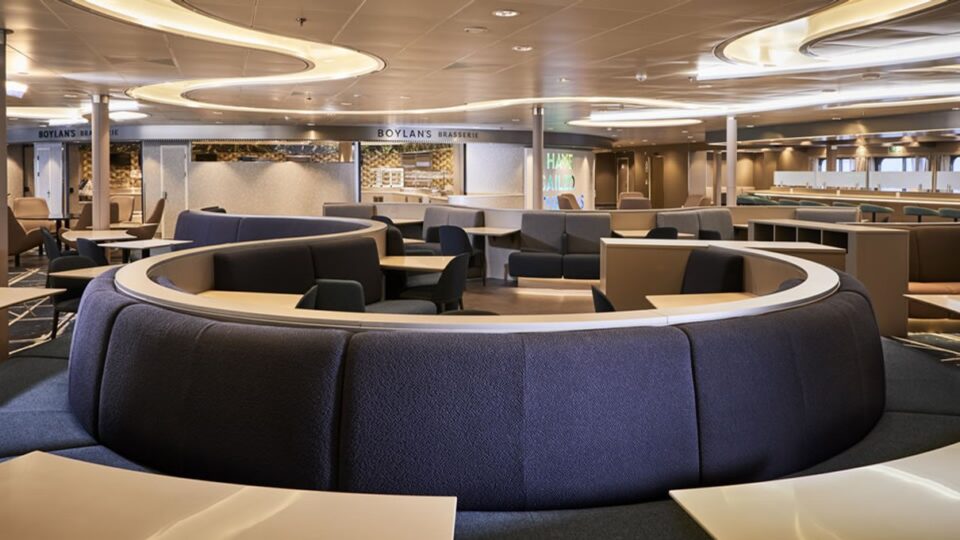
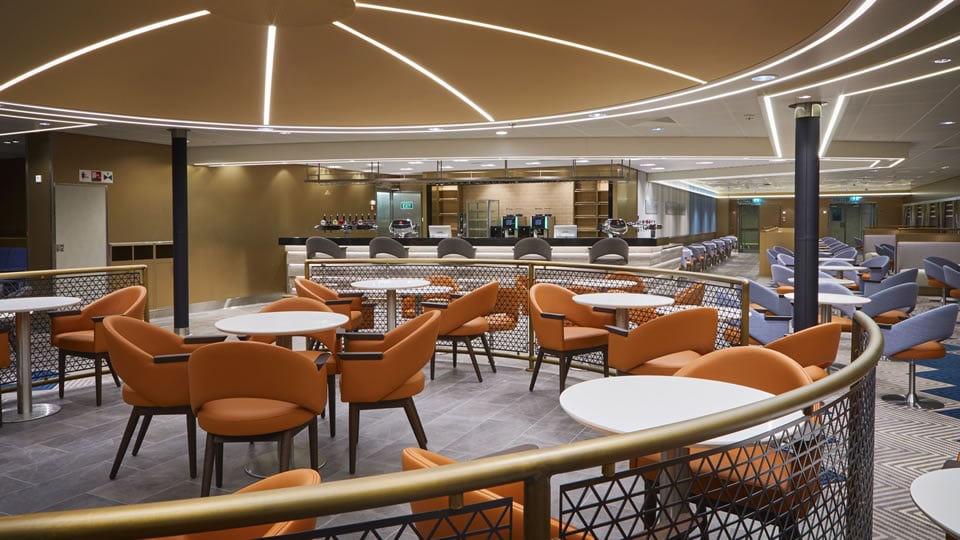
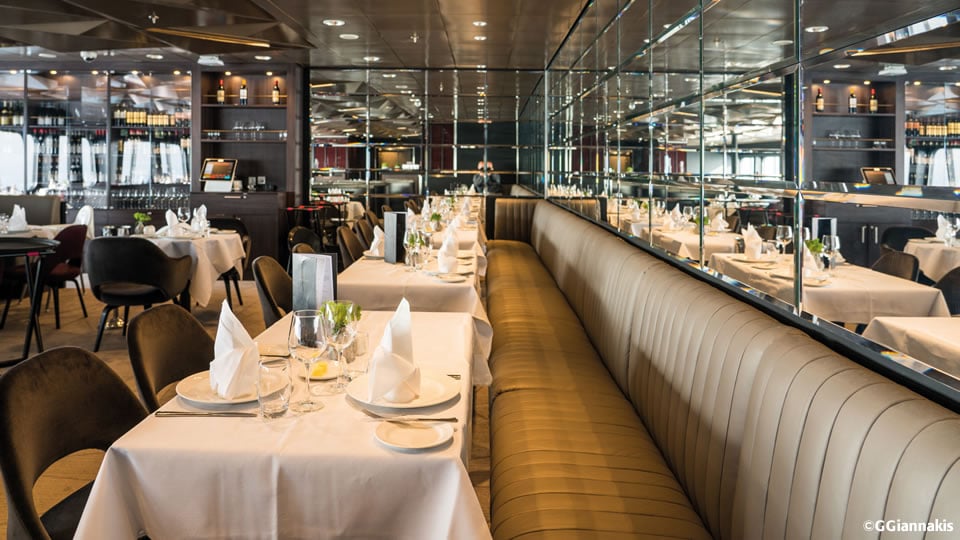
Irish Ferries describes W.B. Yeats as a ship with a range of public areas and cabin types. The onboard information lists a cinema, free Wi-Fi subject to terms, bars, lounges, sea views and dining venues. A cabin can make a long crossing more private and restful, while a foot passenger who does not need a room may prefer to weigh the available seating and lounge choices instead.
The cabin range includes four-bed inside and window cabins, family options and higher-tier suites. The brand says the four-bed inside cabin has two lower beds and two pull-down bunks, air conditioning, an ensuite shower and a television. A window cabin adds a view, although the page notes that some cabin views are limited by safety boats. These are concrete distinctions worth checking against your party size and sleep preferences in the W.B. Yeats cabin information.
Onboard dining includes Boylan’s Brasserie, Café Lafayette and Lady Gregory, with some venues subject to seasonal closure. The site also says opening hours and selected services can vary. That variety gives passengers choices during the crossing, but it should not be read as a guarantee that every outlet will be open on every departure. Confirm current facilities if a particular meal or accessibility feature is central to your decision. The onboard facilities page lists the spaces and qualifications.
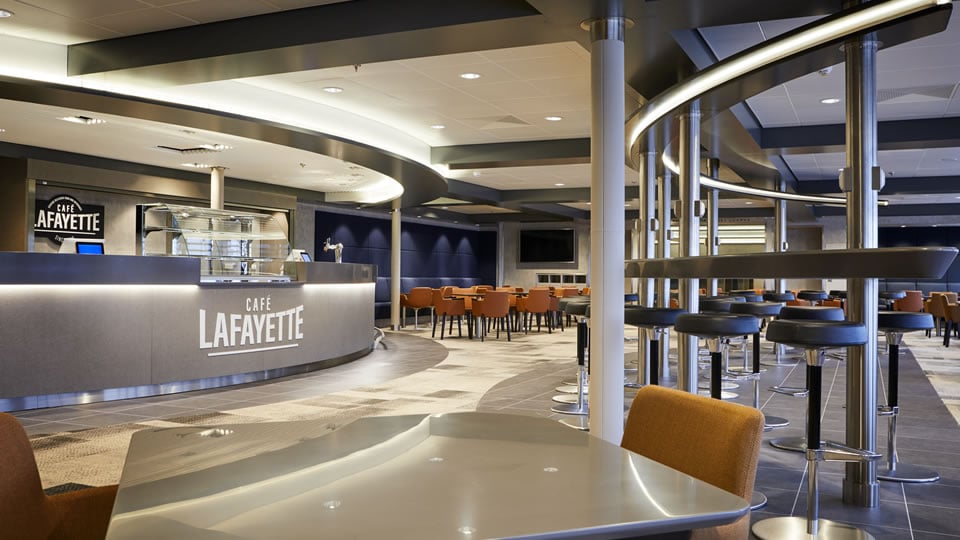
The product-page evidence supports a comfortable range of ways to spend time onboard; it does not establish which cabin tier represents the best value for a particular sailing. The fare depends on travel details and selected extras, so the sensible comparison is between the current cabin options for your dates, not a generic claim that one level is always worth paying more for. Review the current W.B. Yeats facilities alongside the route booking before choosing.
- For families, compare sleeping layout, cot conditions and the children’s spaces rather than choosing on cabin name alone.
- For quiet or privacy, assess the cabin descriptions against the length and timing of the sailing.
- For a day crossing, consider whether lounges, seating and dining cover your needs without a cabin.
Holiday add-ons suit trips with a fixed focus
Irish Ferries also lists French stays and attraction trips, including Parc Astérix holiday options. This can be useful for families who already know the attraction is the centre of the trip and want to investigate ferry and accommodation arrangements through the same brand. The France pages include other stays and destinations too, giving the offer a broader scope than transport alone.
The limitation is that a holiday page is a starting point for an itinerary, not a substitute for checking what is included. Dates, accommodation, travel arrangements and availability vary. A resort-focused trip can reduce the effort of choosing a base, but it may be less flexible than booking independent accommodation around a wider driving route. Read the details for the specific Parc Astérix package and compare its inclusions with the trip you intend to make. The holiday listing is where dates and current arrangements need review.
This is where Irish Ferries may be most useful as a travel planner: the brand can connect the crossing with a defined holiday focus. The Parc Astérix option shows that approach. If you want a broader tour of France, the route is still usable, but the additional holiday pages are optional rather than a reason to book. Check whether the chosen stay aligns with the ferry dates and the amount of time you want to spend on the road. The Parc Astérix travel option gives a concrete example of a focused stay.
The service fits flexible drivers better than tight schedules
Our assessment is strongest for travellers who want to take a vehicle from Ireland, value a direct crossing, and can plan the onward leg with some flexibility. Compare the Dublin-Cherbourg route with your actual start and end points. Families may appreciate cabin layouts and onboard spaces, while travellers building a resort visit can explore the holiday pages. These advantages are visible in the brand’s route, ship and destination information.
The case is weaker for foot passengers who need tightly timed rail connections, for itineraries that do not naturally begin near Dublin or end near Cherbourg, and for anyone assuming that all transport or holiday components are bundled. Sail & Rail requires separate arrangements, transfers can be seasonal or separately payable, and ship facilities may have operating conditions. Those are not small-print curiosities; they affect how much coordination the trip demands.
Before choosing, we would check four things in the live booking information: route dates, vehicle or passenger category, accommodation needs, and the transfer plan after landing. For a holiday package, add the inclusions and accommodation dates to that list. The Dublin-Cherbourg route page, W.B. Yeats details and Sail & Rail instructions provide the relevant checks. Confirm the specifics on the route page and ship page before finalising.
Can foot passengers travel from Ireland to France with Irish Ferries?
Yes. The route information includes foot-passenger travel, and the Sail & Rail page outlines onward train planning. The train is booked separately, so check the ferry arrival, transfer time and local transport before choosing a departure.
Is the train connection protected if the ferry is delayed?
The Sail & Rail information says train operators do not treat the services as connecting services. Irish Ferries recommends allowing at least two hours at Cherbourg, so avoid relying on a tight connection and confirm the current terms before booking.
What should families compare on W.B. Yeats?
Compare the cabin layout and view, the party’s sleeping needs, and which public facilities matter to you. Some services can be seasonal or subject to terms, so verify the live ship information for your sailing.
Wrapping up
Irish Ferries earns consideration for a clear reason: the Dublin-Cherbourg crossing gives Ireland a direct sea route to France, and W.B. Yeats offers enough cabin and onboard variety to make the crossing part of the travel plan. It is a stronger fit for drivers and flexible itineraries than for passengers who need a protected onward rail connection.
Our recommendation is to shortlist Irish Ferries if the route matches your geography and you are willing to plan the arrival leg carefully. The honest limitation is that convenience depends on the whole itinerary, not just the ferry. Check the current route and cabin availability before deciding.