
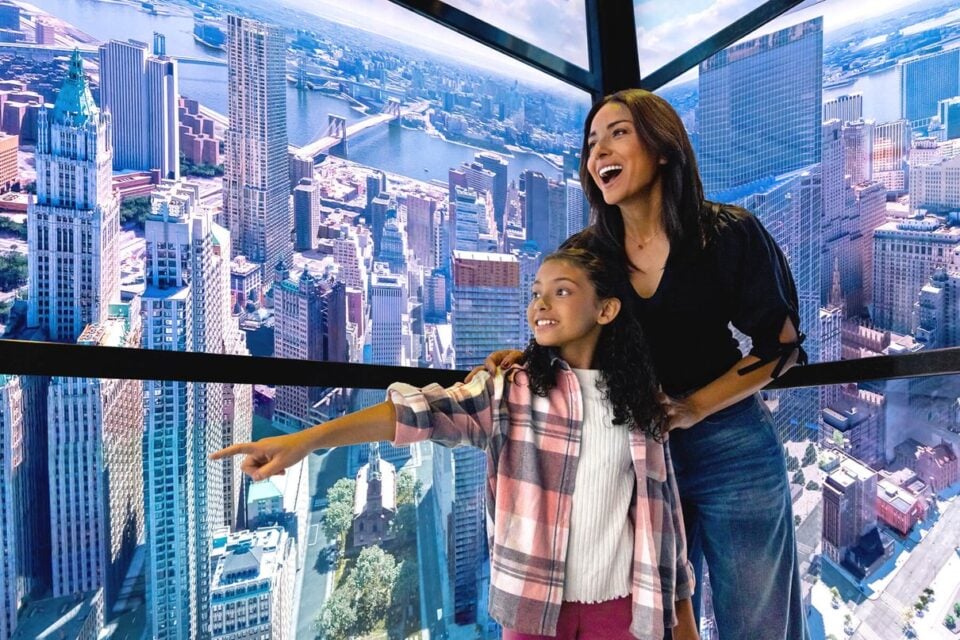
A first look at how the observatory connects city history, panoramic views, and official ticket choices into one Lower Manhattan visit.
A high observation deck can promise a view, but a first-time visitor may want more than a place to take in the skyline. What is the visit actually made of, and does the experience have enough context to earn time in a New York itinerary?
One World Observatory – New York answers that with a sequence: welcome exhibits, an elevator journey through the city’s history, a cinematic reveal, skyline interpretation, and optional dining. We reviewed the brand’s official visitor and ticket information to explain the thinking behind that sequence and how the choices fit different plans.
Disclosure: this post includes affiliate links, and we may be paid a commission on purchases made through them.
Highlights
- The visit links the SkyPod elevator, See Forever Theater, skyline viewing, and City Pulse storytelling.
- Standard General Admission keeps the focus on the observatory experience itself.
- All-Inclusive Experience combines priority entry, arrival flexibility, and on-site credit, according to the official ticket page.
- VIP Tour adds an escorted visit and a guided introduction to city landmarks.
The observatory turns a landmark into a visitor experience
The brand’s setting does a lot of the initial work. One World Observatory sits within One World Trade Center in Lower Manhattan, a part of the city where history, civic life, and tourism meet. The official site frames the attraction as an experience from arrival through departure rather than a single viewing platform. That distinction matters: visitors are invited to read the skyline as a map of neighborhoods, waterways, and landmarks instead of simply collecting a high-up photograph.
The sequence begins in the Global Welcome Center and Horizon Grid. The venue describes these spaces as an introduction to the people and stories that shape New York. This is a useful editorial choice for a broad audience: it gives the outing a human frame before the panoramic one. Guests who arrive with little knowledge of Lower Manhattan can start with orientation; those who already know the city can treat the displays as a short prelude.
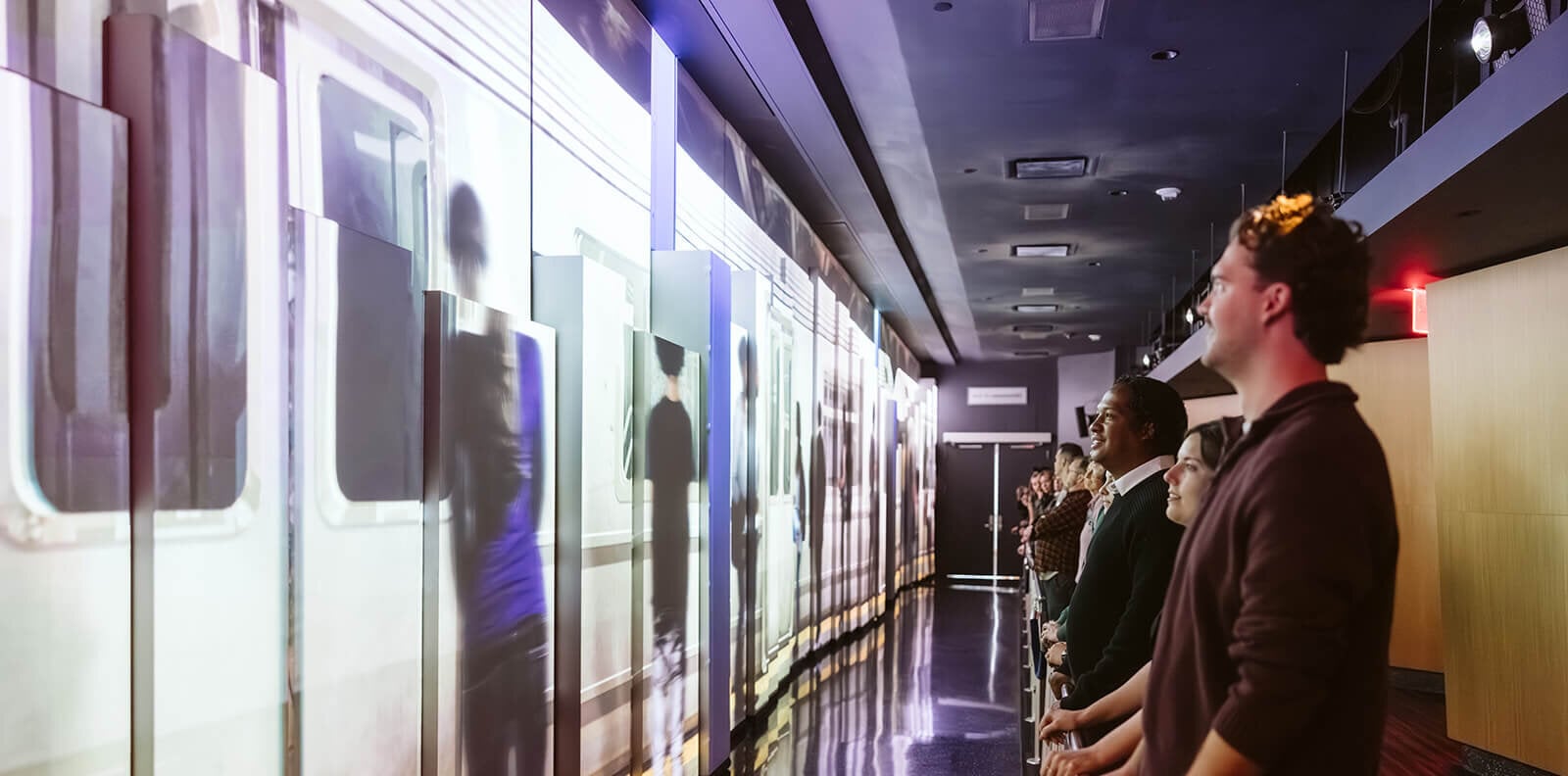
For readers comparing New York viewpoints, the appeal here is a layered visit within a single building. Standard General Admission is the clearest way into that core proposition. The architecture and storytelling work together: the city becomes both spectacle and subject.
The SkyPod and theater give the ascent a narrative
The SkyPod elevator is presented as an attraction in its own right. Its screens show a time-lapse of New York’s development during the ride, making the change in altitude a visual history lesson. The effect is practical as well as theatrical: rather than treating the elevator as dead time, the venue uses it to establish that the modern skyline grew from a much older city.
At the top, the See Forever Theater stages the transition from the enclosed journey to the open view. The official experience page describes a cinematic reveal using imagery, music, and motion. That moment gives the visit a clear beginning and payoff, particularly for families or visitors who enjoy attractions with a designed sequence. It is also the element that makes this more curated than a simple lookout, so travelers who prefer a quiet, self-directed viewpoint may find the staging less essential.

This sequence suits people who want a recognizable attraction with interpretation built in. The experience does not require a guidebook or detailed city knowledge. Visitors with a packed day of museums and tours can consider whether the exhibits overlap with context they will get elsewhere.
City Pulse helps visitors read the skyline
A panoramic view can be beautiful and still leave a visitor unsure what they are looking at. One World Observatory addresses that gap through City Pulse, where tour ambassadors share stories about landmarks, and through its Digital Skyline Guide, which helps identify points in the view. This is a meaningful part of the brand’s identity: the skyline is not only scenery, it is material for conversation and orientation.
The approach is especially useful for first-time visitors, school-age travelers, and anyone trying to connect a photograph to the city beneath it. People who enjoy reading a place through its neighborhoods may get more from this layer than visitors who want only a brief stop. The difference is whether explanation and discovery are part of what you want from the outing.
- City Pulse offers stories about landmarks.
- The digital guide helps identify places in view.
- Both support visitors who want orientation as well as scenery.

For a visitor who likes a more guided feel, VIP Tour formalizes some of that interpretation. The official ticket listing describes an escorted entry and a guided tour focused on landmarks and New York history. It is a distinct choice from simply adding convenience: choose it when a host and extra context matter to your group, and compare the schedule and inclusions with the standard visit before booking.
Guests wanting that structure can compare the VIP Tour details with the main admission format. It is most persuasive for someone who will use the guide’s context.
The ticket range changes convenience more than the view
The official ticket menu keeps the central attraction consistent while changing how arrival and add-ons work. We would start with the actual shape of the day, not the most elaborate label. Is your timing fixed? Would priority entry make a meaningful difference? Will you use any included credit at the venue? Those questions help separate a useful upgrade from extras that sound appealing but may go unused.
- Standard General Admission suits visitors who want the main observatory experience and a straightforward booking choice.
- All-Inclusive Experience combines priority entry with a choice of arrival period and on-site credit, as listed by the venue.
- VIP Tour is for visitors who value escorted entry and a guided account of city landmarks.
- Pick the core ticket if you mainly want the views and exhibits.
- Consider arrival flexibility when your day has several fixed stops.
- Choose a guided format only if hosted context matters to your group.
- Check included credit and its conditions before counting it in your plan.
The All-Inclusive Experience may suit people who want more flexibility around arrival and expect to spend time at the venue’s cafe, bar, restaurant, or shop. Its components matter only if you will use them, so check the current listing for the exact terms attached to the booking. The bundle can streamline decisions, but it asks the visitor to make a plan for those inclusions rather than treating them as automatic value. Compare the All-Inclusive ticket details with the simpler entry option before settling on a format.

Dining gives the brand a natural bridge between attraction and occasion. Its site presents ONE Dine as a restaurant with skyline views, alongside illy Caffè & Gelateria for a lighter stop. These choices are optional, which is helpful for visitors who want to shape their own break. Groups that have a separate meal booked nearby may not need to build food into the observatory visit, while those planning a longer stay can consider whether an on-site pause makes the itinerary easier.
- ONE Dine is the seated restaurant option.
- illy Caffè & Gelateria is a lighter stop.
- Neither needs to shape a shorter visit.
We would treat the ticket tiers as different planning tools. Standard General Admission is the sensible starting point for a simple visit; All-Inclusive Experience earns consideration when arrival flexibility and venue credit match your plans; and VIP Tour is the more structured route for a guided outing. Ticket availability and terms can vary by date, so review the booking page before deciding.
The brand suits visitors who want context with the view
The strongest reason to care about One World Observatory is the way it packages the city’s vertical perspective with interpretation. The SkyPod, theater reveal, City Pulse, and digital guide each serve a different role, but together they reduce the friction of knowing where to look and what a landmark means. That can make the visit approachable for a mixed-age group, for travelers new to New York, or for anyone who likes a destination to provide its own narrative.
It is less compelling for someone seeking a quiet, free-form lookout. The attraction is a managed visitor experience, and its appeal depends partly on enjoying the exhibits and arrival sequence. We recommend it to first-time visitors who want an organized skyline encounter. Travelers with a full itinerary should weigh the time against other observation decks and nearby Lower Manhattan stops.

- Core admission favors a straightforward visit.
- All-Inclusive suits flexible timing and planned on-site use.
- VIP Tour suits visitors who want a host.
Before choosing, compare the official options side by side in terms of your priorities. Standard General Admission leaves extras out of the decision; All-Inclusive Experience groups convenience features together; and VIP Tour adds a hosted dimension. Each option still leads to the same central draw: taking in New York from above.
The official page also lets readers compare Standard General Admission as a baseline for the day.
Questions visitors ask about the observatory
- Look at the core visit first.
- Add convenience or a guide only when useful.
- Confirm current ticket conditions before booking.
What makes the visit more than a viewing deck?
The official experience includes the Global Welcome Center, Horizon Grid, SkyPod elevator sequence, See Forever Theater, City Pulse interpretation, and the skyline itself. Dining is also available on site for visitors who want to extend the stop.
Which ticket should a first-time visitor consider?
Start with Standard General Admission if the core visit is your priority. Compare All-Inclusive Experience when arrival flexibility or its included credit would fit your plans, and look at VIP Tour if you want a hosted visit. Check the current official ticket page for availability and conditions.
Is on-site dining part of every ticket?
No. The brand lists dining venues separately from the core visit, although some ticket formats include on-site credit. Review the details for your selected option and decide whether a meal or cafe stop belongs in your schedule.
Wrapping up
One World Observatory – New York makes its strongest case as a structured introduction to the city from above: a landmark setting, a deliberate journey, and interpretation that helps visitors connect the skyline with New York’s stories. We recommend it to first-time visitors and groups who value context as much as the view. The limitation is that the designed sequence and ticket extras may be more than travelers seeking only a quick, quiet lookout need.
Choose the ticket around the experience you will actually use, then confirm the date-specific inclusions and availability on the official page. Standard General Admission keeps the decision simple; the All-Inclusive Experience and VIP Tour each make sense when their particular additions solve a real planning need.
Before you settle on a format, review the current listing for Standard General Admission and compare it with the specific All-Inclusive inclusions or VIP Tour format.