
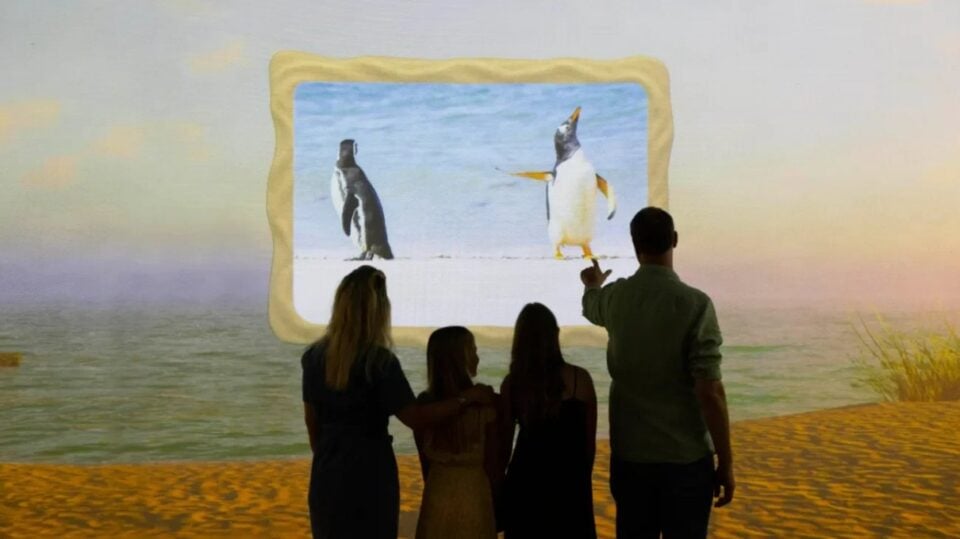
A clear introduction to Frameless, from its room-scale gallery concept to the changing experiences that give the brand a broader point of view.
Some art venues ask visitors to move quietly from frame to frame. Frameless takes a more environmental approach: images are projected across rooms and paired with sound, so the setting becomes part of how the work is encountered. That difference is the key to understanding the brand.
For a first-time reader, the useful question is not simply which artworks appear. It is whether a shared, sensory setting adds something to the way you want to spend time with art. We reviewed the experience and programme information on the official Frameless site to map the answer.
Disclosure: this post includes affiliate links, and we may be paid a commission on purchases made through them.
Highlights
- Four permanent galleries bring together more than 40 artworks using projection and sound.
- Beyond Reality focuses on surreal, symbolic and dreamlike art.
- The Nikon Comedy Wildlife Awards Immersive Experience adds a rotating, habitat-led residency.
- FRAMELESS Lates and The Art of You extend the programme into evening and participatory formats.
Frameless starts from a room-scale idea
The brand’s central choice is to change the relationship between artwork and viewer. Rather than treating the frame as a boundary, Frameless uses projection to make walls, floors and sound part of the presentation. Its site describes four permanent galleries and more than 40 artworks, an arrangement that gives the visit a clear backbone while leaving room for the programme to change.
This approach can make familiar art feel less like a sequence of labels and more like an environment to navigate. The trade-off is equally clear: projection gives atmosphere and scale, but it does not replace the material surface, brushwork or quiet looking available in a conventional gallery. Readers who want the original object and close study should treat this as a different kind of encounter rather than a substitute.
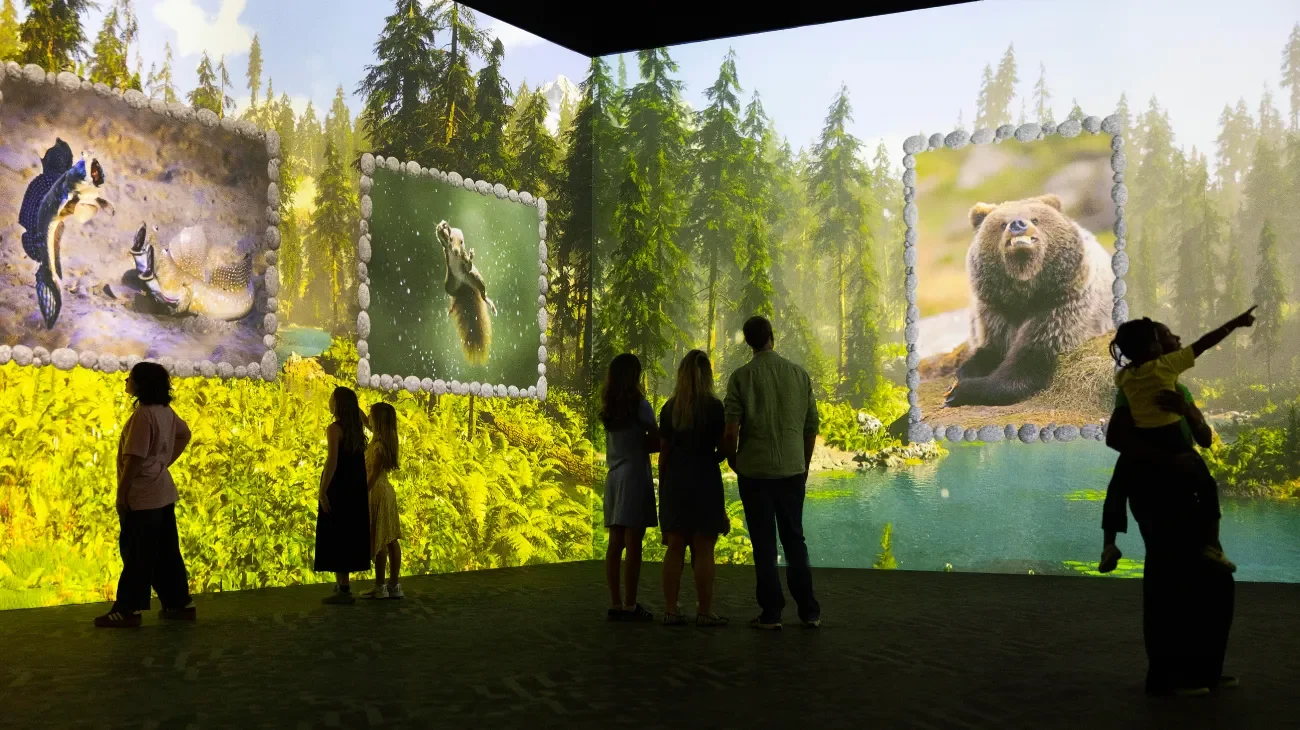
For a first visit, it helps to think of the format as art interpreted through space. Sound and movement make the room active; the visitor decides where to stand, what to follow and when to pause. The official Beyond Reality gallery page gives a sense of that curatorial direction, while the Colour In Motion gallery shows how the same format can emphasize color and gesture.
That distinction matters for expectations. Visitors who enjoy visual atmosphere, group conversation and a less linear route may find the premise compelling. Those who prefer captions, object labels and prolonged attention to one canvas may want to plan a shorter stop or pair the experience with a traditional museum visit. Frameless works best when its immersive method is the reason for going.
Four galleries give the permanent offer its shape
The permanent galleries create variety without making the overall concept hard to grasp. Beyond Reality brings surreal and symbolic works into a dreamlike setting; it is the natural pick for visitors drawn to dramatic imagery. Colour In Motion places emphasis on color, painterly marks and movement, which makes it a useful counterpoint for anyone interested in how projection changes the perception of a familiar image.
The World Around Us gathers landscapes and cityscapes, using the room to suggest changing viewpoints. The Art of Abstraction turns toward shape and form, offering a different visual vocabulary. Readers can explore the official pages for The World Around Us and The Art of Abstraction before deciding which themes interest them most.

As a simple way to navigate the offer, match the gallery to the kind of attention you enjoy:
- Choose Beyond Reality for surreal, symbolic and otherworldly imagery.
- Choose Colour In Motion for a focus on color and painterly energy.
- Choose The World Around Us for landscapes and scenes of place.
- Choose The Art of Abstraction for forms, patterns and non-representational work.
These descriptions are a starting point, not a fixed itinerary. The official ticket and visit information is the right place to check what is included in a chosen admission option, how long to allow, and which experiences are available for the date. A little pre-reading can make the visit feel more intentional without turning it into a checklist.
Changing residencies show how the brand can expand
The permanent galleries explain the foundation; residencies show how Frameless can use the same room-scale language for a more specific subject. The Nikon Comedy Wildlife Awards Immersive Experience is described by the venue as a journey through seven habitats, built around humorous wildlife photography. Its theme gives first-time visitors an easy entry point: the rooms have a subject that can be understood at a glance, while the large-scale presentation supplies the spectacle.
The residency is also a reason to check the current programme before choosing a date. Temporary content changes the mix and can make repeat visits feel distinct, but it means the exact lineup is not permanent. The official experience page should be treated as the source for availability, included access and programme details. We would not assume a particular temporary show will remain in place just because it appears in older coverage.

For readers, that rotation is a meaningful part of the brand story. It lets a permanent venue keep a recognizable structure and still introduce new themes. The limit is practical: a residency can be the main draw for one visitor and simply an extra for another, so it is sensible to check the current listing rather than plan around a title without confirming it.
- Permanent galleries provide the stable core of the experience.
- Residencies add focused themes that may change over time.
- Event formats can alter the mood or audience for a visit.
The side experiences widen the audience
The range extends beyond gallery admission. FRAMELESS Lates is an after-hours format for adults, giving the same spaces a more social evening context. The venue’s listing describes a late opening with drinks as part of the offer; timing and event details should be checked on the Lates page. This option suits adults looking for a cultural evening with room to talk, while families should select a regular visit instead.

The Art of You Photo Experience is a separate participatory addition, built around placing the visitor within an artwork-inspired image. It is best understood as a keepsake-oriented option rather than a replacement for the gallery route. Details about how it works and whether it is offered with a particular visit belong on the official Art of You page.
Families with younger children may also look at the Multi-Sensory Tots Classes, which have a different audience and purpose from general admission. Each format has its own terms, availability and age guidance, so compare the relevant official page rather than assuming every element is included in one ticket.

In practical terms, the current programme can be sorted into three kinds of choice:
- Core visit: explore the permanent galleries at your own pace.
- Focused add-on: check whether a residency or photo experience is available for your visit.
- Different occasion: consider Lates or a dedicated class when the audience and schedule fit.
The choices show a brand trying to make immersive art usable for more than one type of outing. That breadth is helpful, but it also asks the reader to make a small decision before booking: choose the format for the people attending, then verify what is included. The venue’s official ticket page and programme listings are the most reliable places to make that check.
The format rewards openness more than close study
From an editorial perspective, Frameless is most interesting as an interpretation of art, not as a claim that technology alone makes a visit worthwhile. Projection, sound and room scale can help people share a visual response; recognizable works and different gallery moods make the offer approachable. Those are real strengths for a group outing, a first introduction to art or anyone who wants a more atmospheric visit.
There are limits. Immersive spaces can be busy, the presentation may compete with quiet reflection, and a room-scale image is still a reproduction. Visitors who want to read every label or study an original object closely may prefer a conventional museum for that purpose. Before going, consider:
- Your preferred pace: allow time to pause, but expect the rooms to invite movement.
- Your group: pick the format and session that fit the ages and interests coming along.
- The programme: confirm temporary experiences and event details on the venue site.
- Your priority: choose atmosphere and shared discovery if those are the draw; seek object-led study elsewhere if that is central.
That is a straightforward way to decide whether the brand makes sense for you. The experience is not trying to be every kind of art venue. It offers a designed environment in which images can surround visitors, with the viewer’s movement and attention shaping the moment. For some people, that is precisely the point; for others, it will be an enjoyable complement to more traditional art viewing.
Questions readers ask about Frameless
What is the main idea behind Frameless?
Frameless uses projection and sound to present artworks across rooms, so visitors experience images as part of an environment. The venue lists four permanent galleries and more than 40 artworks; readers can check the official visit details for current admission information.
Are the galleries and residencies the same thing?
The four galleries form the permanent core. Residencies are focused programme additions that can change, such as the Nikon Comedy Wildlife Awards Immersive Experience. Check the current listing before planning around a temporary feature.
Who is likely to enjoy this format?
It may suit visitors who enjoy large-scale visuals, sound and moving through a shared space. People looking for close study of original canvases may prefer a traditional gallery, or treat Frameless as a complementary outing. Adults can also check FRAMELESS Lates for the evening format.
Wrapping up
Our recommendation is to approach Frameless as a distinctive, social interpretation of art. The permanent galleries make the concept easy to understand, while residencies and side experiences show how the venue can serve different occasions. Start with the theme that appeals to your group and confirm the current programme before setting plans.
The honest limitation is that immersive projection does not offer the same close encounter with original objects as a conventional museum. If atmosphere, movement and shared response are what you want, the brand has a clear case; if detailed study comes first, use it as one part of a wider art itinerary. Check current options and visit information on the venue’s official site.