
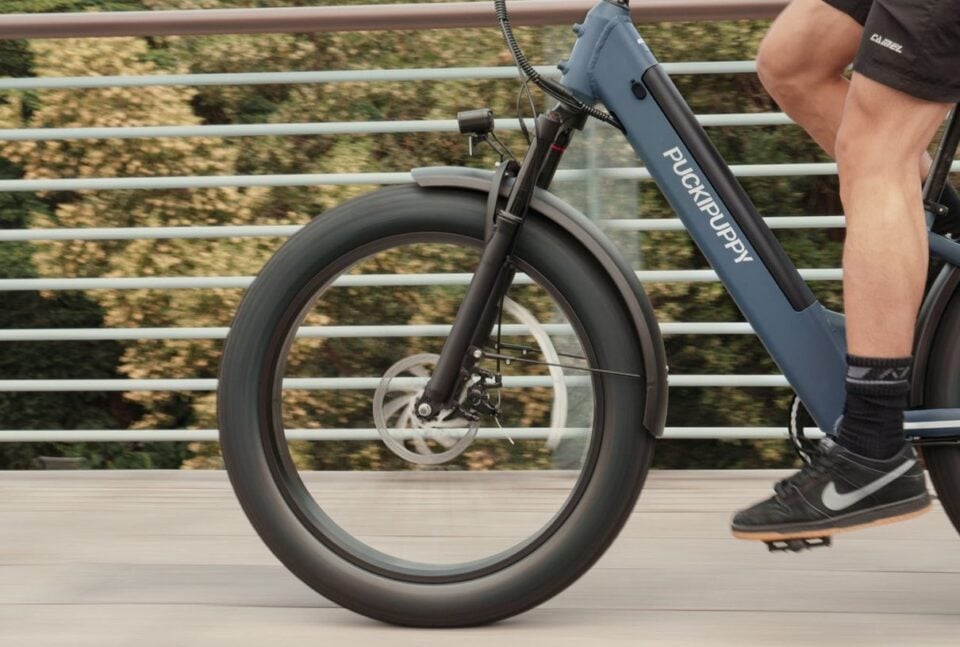
A route-first comparison of Poodle Pro, Boxer and Labrador Pro helps separate everyday commuting from loose-surface and off-road riding.
Choosing an e-bike from Puckipuppy starts with a practical question: where will most rides happen? The range mixes city commuters, fat-tire all-rounders and models built around rougher ground. Motor output alone does not settle the choice; frame shape, suspension, weight and the kind of surfaces you use matter just as much.
We compare three distinct options here: Poodle Pro for paved everyday trips, Boxer for mixed terrain and Labrador Pro for buyers prioritising off-road capability. The store lists several more models, but these three show the trade-offs particularly clearly.
Disclosure: this post includes affiliate links, and we may be paid a commission on purchases made through them.
Highlights
- Poodle Pro is the city-oriented pick, with a step-through frame, dual torque and cadence sensors, and a stated range up to 75 miles.
- Boxer balances paved riding and rougher paths with fat tires and hidden shock absorption.
- Labrador Pro favors off-road use with a listed 1350W peak motor, dual sensor assist and an 85.7 lb listed weight.
- Current prices and promotions change, so check the individual product pages before comparing total cost.
Three models target three kinds of route
The category labels are useful, but the details explain the difference. See Poodle Pro’s listing for its current specification table. Poodle Pro is presented as a step-through commuter with a 750W rated motor and 1350W peak output. Its product page lists torque and cadence sensors, Shimano 8-speed shifting and up to 75 miles of range. Those specifications point toward stop-start city trips and longer paved rides, where an easy mount and responsive pedal assistance can matter more than bulky tires.
Boxer shifts the emphasis toward adaptable comfort. Its product page provides the current component details. Puckipuppy calls it an all-terrain fat-tire bike and lists hidden shock absorption, a 750W motor with 960W peak output, hydraulic brakes and a maximum range of up to 80 miles. That mix makes it the middle ground in this comparison: the wide tires and suspension address imperfect paths, while the bike is not framed as a dedicated mountain model.
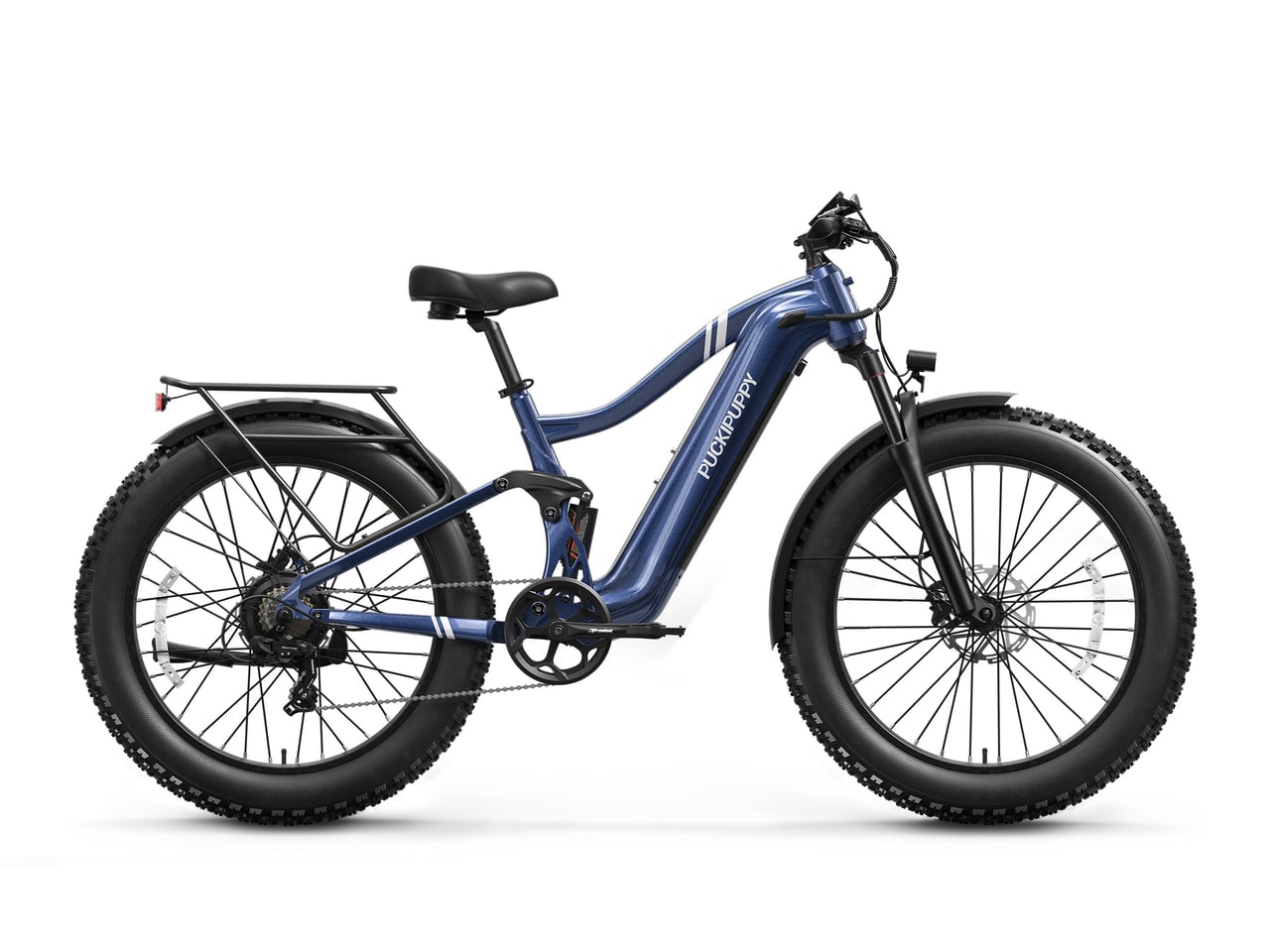
Labrador Pro has the clearest off-road brief. Confirm details on the Labrador Pro page. The product page lists a 1350W peak motor, torque plus cadence sensing, Shimano 8-speed gearing and a weight of 85.7 lb. Buyers get more stated power than on Boxer, but also a heavy bike to store, maneuver or lift onto a rack. Consider that weight before treating peak power as the deciding specification.
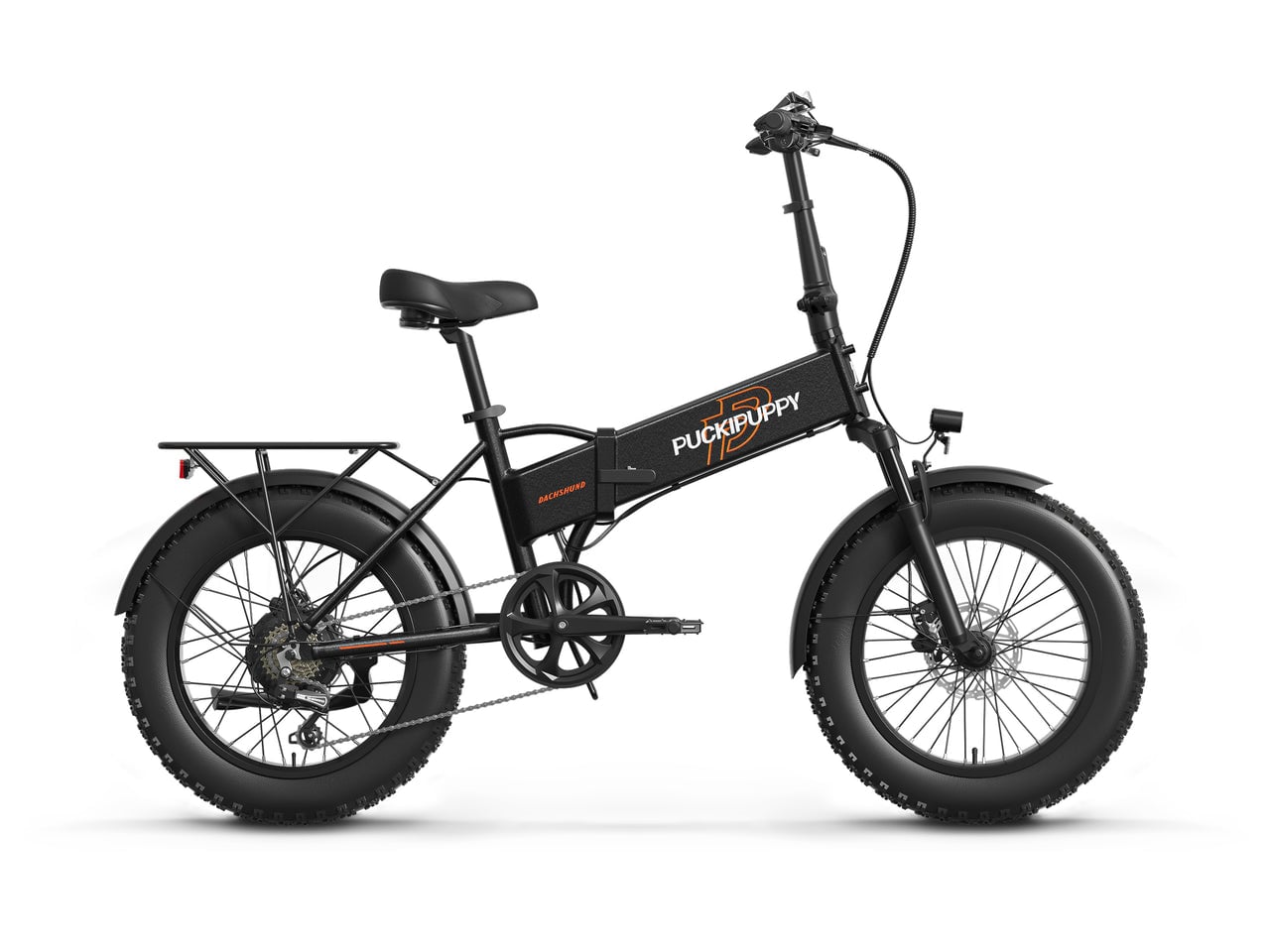
As a broader alternative, Poodle Pro is the dedicated commuter in this trio. Puckipuppy also sells commuter models such as Samoyed and folding options such as Dachshund. Those formats may be more relevant if easy storage or a lower step-through profile outweighs rough-trail ambitions. The named models make clear that a generic “best e-bike” label would miss the point: match the design to the route.
Poodle Pro keeps commuting straightforward
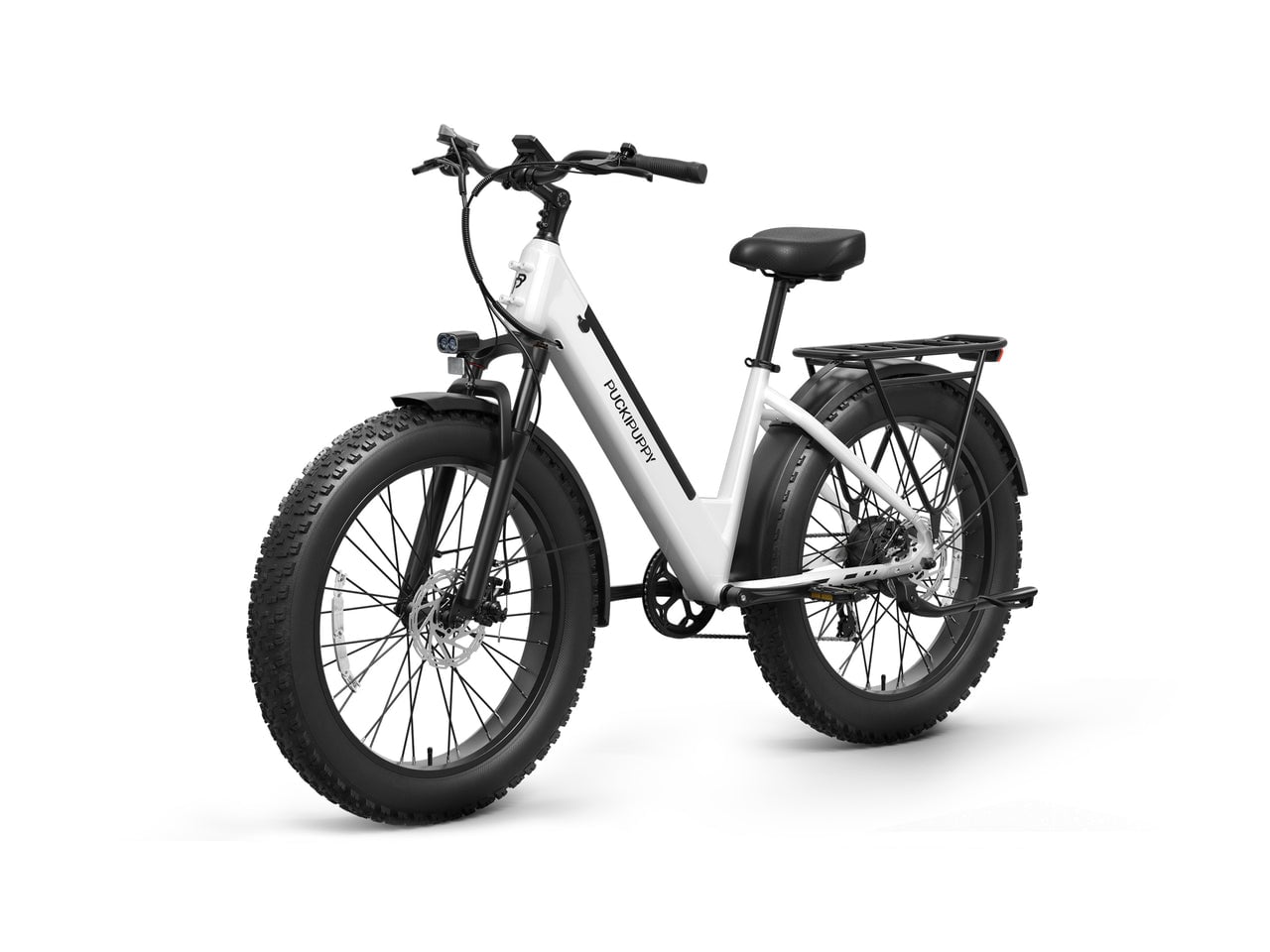
For a mostly paved commute, the Poodle Pro is the most coherent starting point. Its low step-through frame is easier to mount than a conventional high top tube, and the dual sensor setup combines cadence-based assistance with a response to pedal pressure. Shimano 8-speed gearing adds a familiar range of manual adjustment. The brand states up to 75 miles; that is a maximum claim, so route, assist level, rider load and conditions will affect real-world range.
The compromise is specialization. Compare Poodle Pro’s current equipment with the intended route. A commuter setup is a sensible fit for streets and errands, but it is not our first choice for frequent rocky trails. If your route includes broken pavement or gravel, Boxer gives more tire and shock-absorption emphasis. Poodle Pro also weighs substantially less than the listed Labrador Pro only if its page’s listed product weights support the comparison; check the current specification table rather than assuming a light build from its commuter label.
Before selecting a commuter, review the Poodle Pro page and decide whether the step-through frame, battery range and sensor feel solve real needs. The store says Poodle Pro’s batteries are certified to UL 2271 by SGS, and publishes a model comparison page for checking certification details across its range. Certification statements vary by model, so confirm the exact one rather than generalizing from the brand.
- Choose Poodle Pro when pavement, errands and frequent stops dominate.
- Check the size and rider-height recommendations on the product page.
- Use the stated range as a planning reference, not a guaranteed trip distance.
Boxer adds cushioning for mixed surfaces
The Boxer earns its place for riders whose normal loop moves between pavement, packed dirt and uneven paths. Its fat tires are the obvious visual distinction, while the brand highlights hidden shock absorption. The listed 960W peak motor sits below Labrador Pro’s peak figure, but power is only one part of control; tires and suspension can be more relevant when the surface changes.
Boxer may be the most balanced option for recreational riders who want one bike for neighborhood trips and occasional unpaved routes. That versatility has a cost in bulk: fat tires and suspension do not make a bike especially convenient to carry or store. The current model page should be checked for weight, rider fit, battery capacity and included components before deciding whether its format suits a small apartment or car rack.
There are two store variants worth separating. Compare the Boxer listing with its step-through counterpart: Boxer and Boxer ST. The ST version is described as a step-through, all-terrain fat-tire bike; compare frame access as well as the component table, because model details can change. If a low-step frame is important, see whether the ST listing meets your needs rather than assuming the standard Boxer does.
Labrador Pro prioritizes rougher riding
The Labrador Pro is the pick for shoppers who expect more demanding surfaces and want the strongest peak-motor specification of these three. Its 1350W peak rating, torque and cadence sensors and Shimano 8-speed derailleur make for a more performance-oriented equipment list. The store markets it as an off-road e-bike, which is a clearer fit than using the model as a default city commuter.
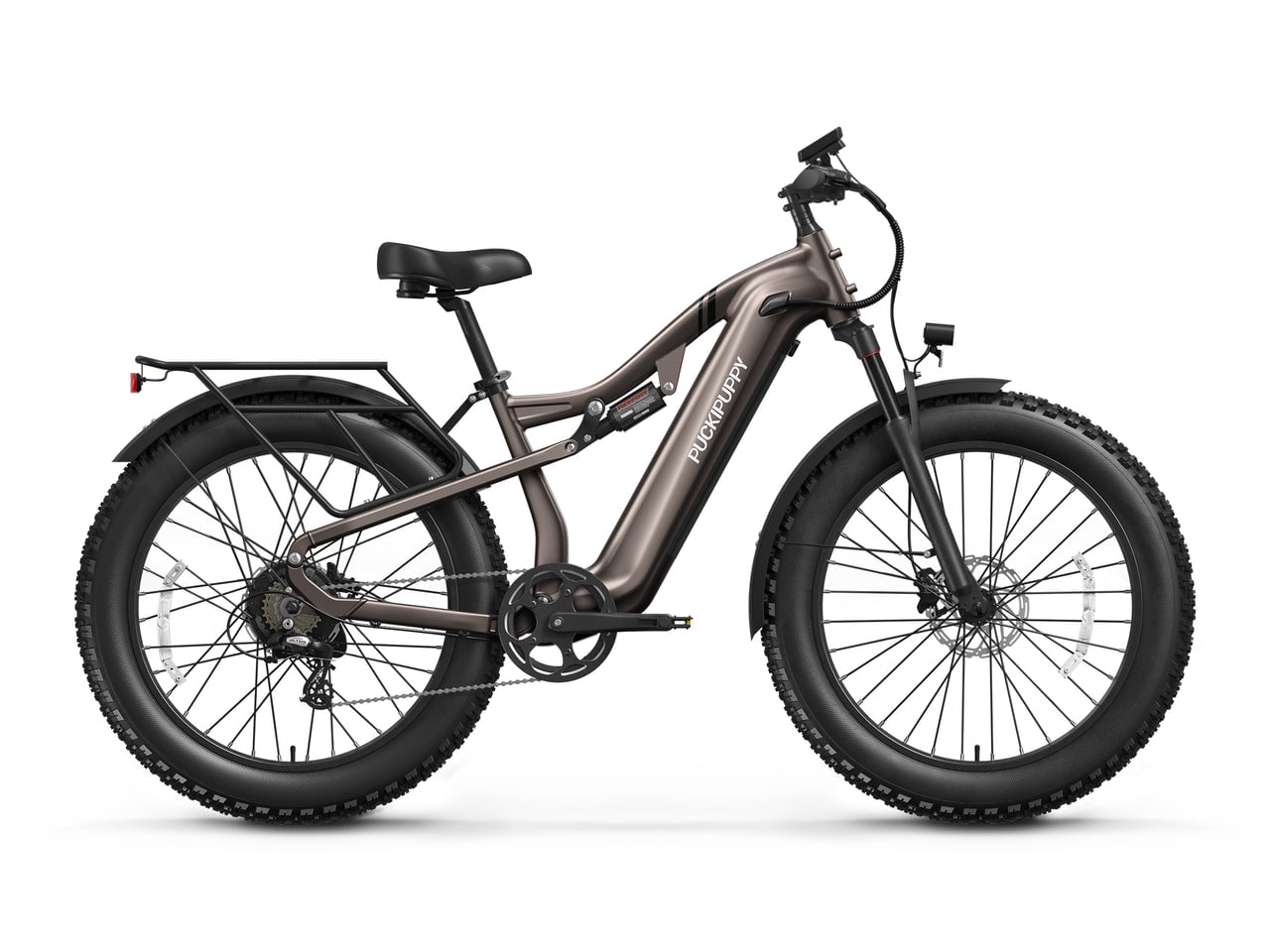
Its listed weight and components make the drawback practical rather than subtle: the listed weight is 85.7 lb. That is substantial for stairs, tight storage and loading without assistance. It is also a larger commitment if most rides are smooth streets where the extra off-road emphasis may go unused. A buyer comparing it with Boxer should ask how often rough ground appears in the weekly routine, not just whether it sounds appealing.
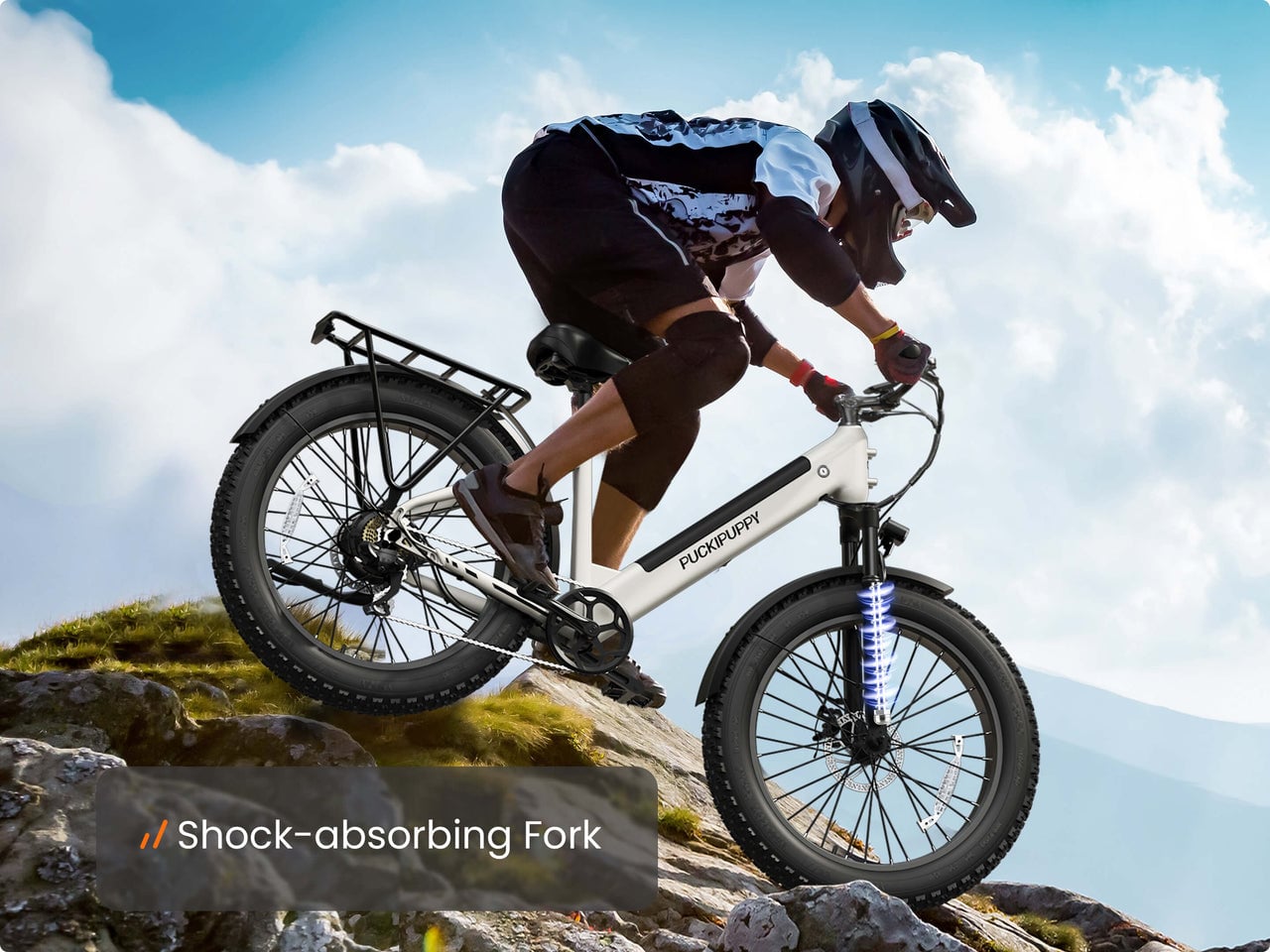
Check the current Labrador Pro specifications for battery details, brakes, dimensions, warranty and any model-specific certification notes. Those practical facts deserve as much attention as the peak output. Puckipuppy advertises free shipping, a 15-day return period and a 2-year warranty on its store pages, but readers should read the applicable terms and any exclusions before ordering.
- Pick Labrador Pro if frequent uneven trails make its off-road design useful.
- Plan for its listed 85.7 lb weight before arranging transport or storage.
- Compare frame size, battery details and warranty conditions on the live page.
| Model | Best fit | Published details | Trade-off |
|---|---|---|---|
| Poodle Pro | Paved commuting | Step-through; dual sensors; up to 75-mile stated range | Less suited to regular rough trails |
| Boxer | Mixed surfaces | Fat tires; hidden shock absorption; 960W peak | Bulkier than a simple city bike |
| Labrador Pro | Off-road riding | 1350W peak; dual sensors; 85.7 lb listed weight | Heavy for storage and transport |
The comparison favors the purpose-built choice over a single winner for everyone. Against a typical urban hybrid, Poodle Pro brings more e-bike-specific assistance and a step-through frame, while its battery and motor add weight and complexity. Compared with a conventional hardtail mountain bike, Labrador Pro offers motor support and fat tires, but it will be far heavier and is not a replacement for a light, unassisted trail bike. Boxer occupies the middle ground for riders who accept extra bulk in exchange for broader surface comfort.
To narrow the shortlist, compare Poodle Pro, Boxer and Labrador Pro, then put your main route first, then confirm the fit and support details:
- Mark the share of pavement, gravel and rough trail in a typical week.
- Check whether you need a step-through frame or a standard frame.
- Compare listed weight with stairs, storage space and vehicle racks.
- Review current battery, range, component and warranty information for the exact model.
Frequently asked questions about these models
Which Puckipuppy model is best for commuting?
For mostly paved commutes and errands, Poodle Pro is the clearest match among these three because the brand describes it as a step-through commuter and lists torque plus cadence sensors. Samoyed and other commuter models may also fit; compare their current sizing and component specifications.
Is Boxer or Labrador Pro better for trails?
Boxer is the more flexible mixed-surface pick, while Labrador Pro is the stronger choice when off-road use is central. Its higher listed peak output comes with a substantial listed weight, so check transport and storage needs alongside terrain.
Are advertised ranges guaranteed?
No. The product pages state maximum ranges, which should be treated as estimates. Rider load, terrain, assist level, temperature and other conditions can affect the distance between charges.
Wrapping up
Our use-case winners are Poodle Pro for city commuting, Boxer for mixed routes and Labrador Pro for regular off-road riding. The strongest model on paper is not automatically the best buy: route fit and the ability to manage a heavy e-bike matter more over time.
The specifications and store policies can change, and brand-stated range is not a promise of real-world distance. Compare the current model pages and terms before choosing.