
A closer look at how Frameless turns familiar art into a room-scale experience, and which parts of its London programme help first-time visitors understand the brand.
Art museums usually ask us to stand back and look. Frameless starts from a different question: what changes when an image is allowed to fill the room around you? The venue describes a programme of more than 40 artworks, reworking well-known paintings with large-scale projection, sound and movement, making the visitor’s position part of how the work is encountered.
That idea gives the brand a clear identity, but it also makes expectations important. This is not a conventional gallery hung with original canvases. We reviewed the official experience and ticket pages: they describe a digital interpretation of art, a permanent four-gallery visit and a changing calendar of add-on experiences. Here is how those pieces fit together, and what a first-time visitor should know.
Disclosure: this post includes affiliate links, and we may be paid a commission on purchases made through them.
Highlights
- Frameless is a London venue built around four permanent galleries and projection-led interpretations of more than 40 artworks.
- Beyond Reality, Colour In Motion, The World Around Us and The Art Of Abstraction give the core visit four distinct curatorial moods.
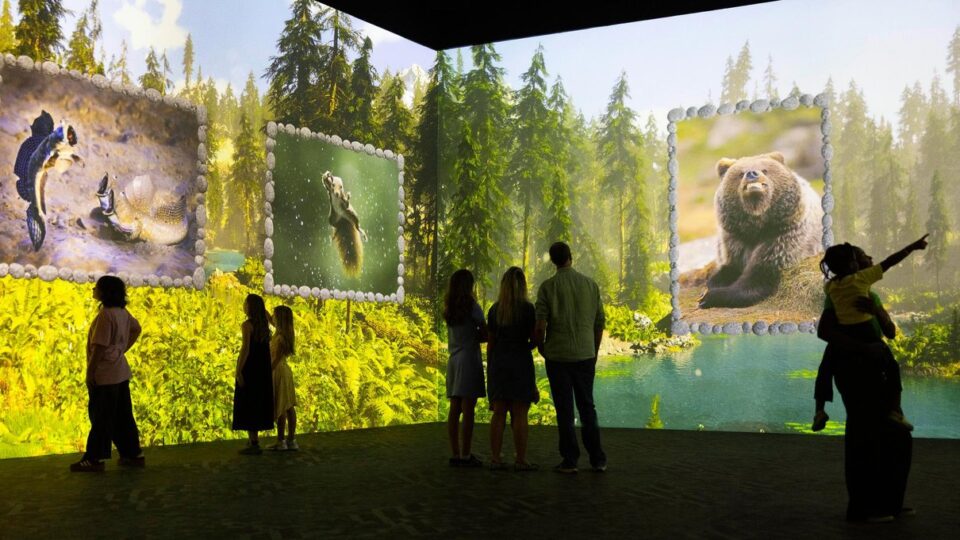
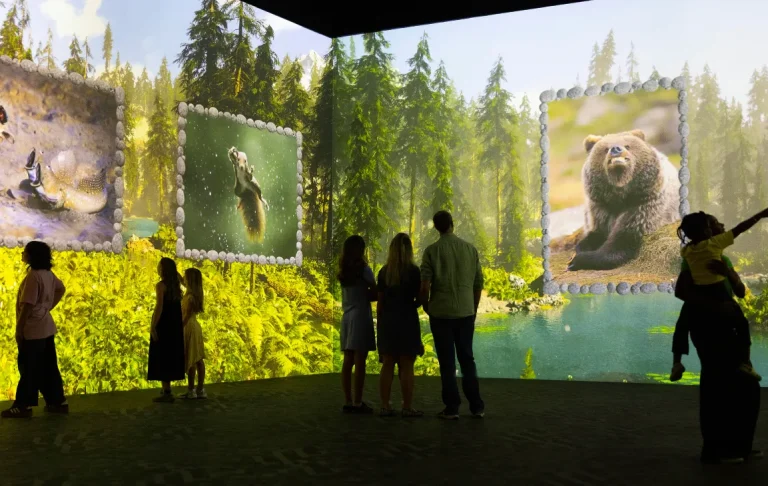
- The Nikon Comedy Wildlife Awards Immersive Experience adds a limited-run, seven-habitat theme to the programme.
- FRAMELESS Lates offers after-hours access, while The Art of You creates an optional portrait keepsake in the Crossing Gallery.
The short version: Frameless is best understood as an art-led attraction that translates paintings into an enveloping environment. Visitors who enjoy scale, music and movement will find a coherent concept here; people who want to inspect original brushwork at close range should plan for a different kind of museum visit.
Frameless makes the frame part of the idea
The name points to the central proposition. Instead of presenting art inside a fixed frame, Frameless uses the room as its display surface. Images can stretch across walls and floor, while music and animation create a sense of movement across more than one fixed viewpoint. The brand presents this as a multisensory way into famous works, rather than a replacement for seeing the originals.
That distinction matters. Projection can bring out colour, scale, rhythm and atmosphere, but it cannot offer the material evidence of paint on canvas. Watch how a composition changes when enlarged, then notice which detail or mood survives the shift in scale.
The venue’s identity is built around four permanent galleries, with a programme beyond them that changes over time. Visitors can read the four rooms as a sequence from surreal imagery and colour to landscapes and abstraction. The brand’s standard admission information explains the main visit; it is the natural starting point for anyone who wants the full gallery experience.
- Scale: artworks become environments that are difficult to take in from one fixed viewpoint.
- Sound: an original score helps set the pace and atmosphere of each room.
- Movement: animation makes details and transitions part of the presentation.
- Choice: visitors can pause, move around or revisit a room rather than follow one prescribed route.
Four galleries give the visit its structure
Beyond Reality draws on dreamlike and surreal imagery, including artists such as Munch, Bosch, Dalí, Klimt, Rousseau and Ernst. It suits visitors who like visual puzzles and symbolic scenes. The core gallery ticket provides access to this permanent sequence alongside the other rooms.
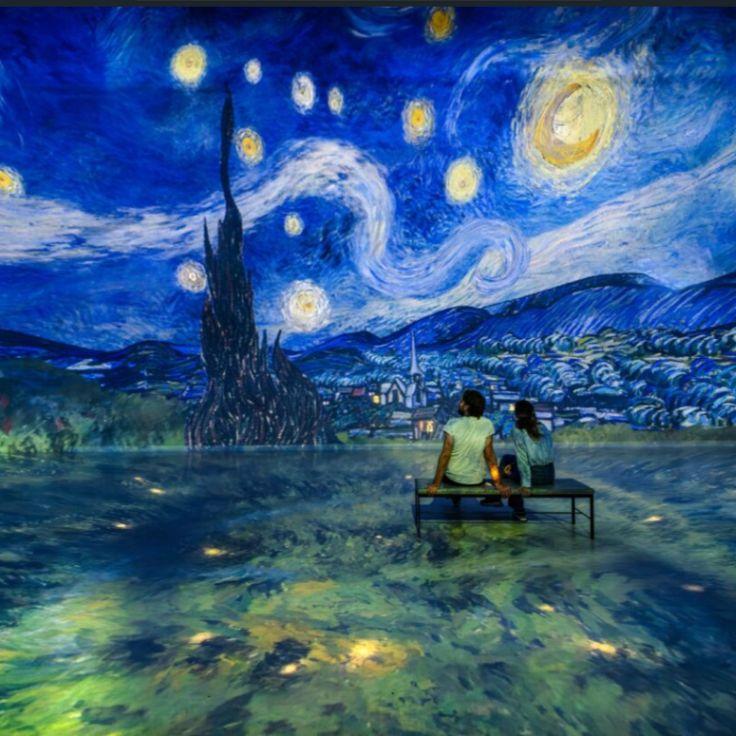
Colour In Motion turns attention towards brushstrokes, colour and the way a painted surface can be animated. Monet, Van Gogh, Signac, Seurat, Delaunay and Morisot are among the artists named by the venue. Its appeal is less about reading a painting’s subject and more about seeing its marks and palette occupy a larger field. A visitor curious about this approach can check the current standard admission details before choosing a date.
The World Around Us brings together landscapes, cityscapes and seascapes, with Canaletto, Van Gogh, Rembrandt and Ruysch among the artists listed. The change of subject gives the experience a more recognisable entry point: horizons and places are easy to read even when the image extends beyond a normal canvas. For a first visit, this room offers a familiar entry point to Frameless’s more abstract environments.
The Art Of Abstraction is the most direct encounter with shape, colour and form. Kandinsky, Klimt, Mondrian, Malevich and Klee feature in the brand’s description. Here, the lack of a narrative subject is part of the point; visitors can attend to pattern and motion. Together, the rooms make the venue feel more like a curated route through different ways of seeing than one extended projection show, with four distinct gallery moods.
Residencies and after-hours events extend the range
The permanent galleries are the foundation, while changing programmes add new reasons to look again. The Nikon Comedy Wildlife Awards Immersive Experience is described as a journey through seven habitats, using humorous wildlife photography as its subject. It broadens the brand’s art conversation beyond historic paintings and gives families or wildlife fans a more immediately playful theme. As a residency, its run and availability are time-dependent, so check its official programme page before building a visit around it.
Changing programmes let the subject shift while the core format stays recognisable. Visitors less drawn to old master painting may prefer a photography-led residency. These programmes are temporary, so verify that the wildlife theme is included on your selected date through the residency listing.
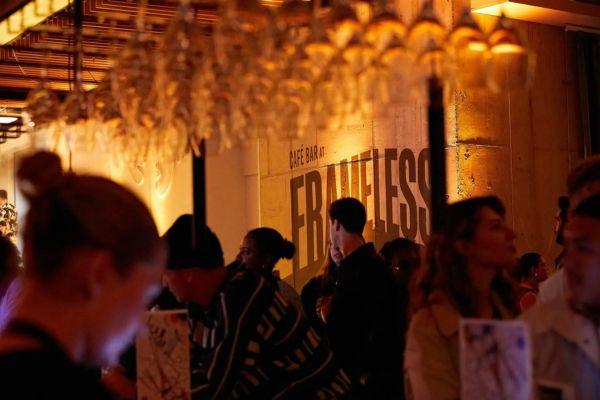
FRAMELESS Lates changes the timing and social feel of the visit. The official page describes after-hours access to the four permanent galleries and limited-time exhibitions when available. The evening version is aimed at adults and can suit a date or group plan better than a daytime attraction. It is a separate format to weigh against daytime entry. It is a separate format to consider, so compare its Lates details with standard admission rather than assuming all sessions work the same way.
For visitors who want an extra personal element, The Art of You Photo Experience is located in the Crossing Gallery. The venue says it uses artistic styles inspired by the visit to create a personalised portrait, with options for one or two people and digital or printed keepsakes. It is an optional add-on; check the experience page for current formats and availability.
The format rewards curiosity more than close study
Frameless has a clear point of difference: it makes the setting an active part of the art experience. That gives it broad appeal for people who want a cultural outing with an accessible visual hook. It also means the experience is shaped by projection, music, room layout and visitor movement, rather than by a traditional gallery’s quiet, close viewing.
Our recommendation is to treat the venue as a complement to traditional art spaces. It can prompt curiosity about artists and works, or simply make an engaging group visit. It will be less satisfying for someone whose priority is to study an original object’s surface, provenance or conservation. That is a real limitation of the format, not a flaw in its execution: digital interpretation makes a different promise.
Before choosing a session, think through what kind of visit you want:
- Choose standard admission if your main interest is seeing the four permanent galleries in sequence.
- Look at the residency calendar if a temporary subject, such as wildlife photography, is the main draw.
- Consider FRAMELESS Lates for an evening atmosphere and check its age and session details.
- Decide whether an optional portrait keepsake from The Art of You adds value to your group.
Those distinctions also help with the practical side. Ticket availability and the current cost can vary by session and format, so use the brand’s pages to compare the live choices. The standard admission page, Lates listing and residency details are the most relevant places to confirm what’s included on a chosen date.

First-time visitors can plan around the experience they want
Frameless connects art history with a contemporary presentation format. Its four-gallery core gives a visit shape, while residencies and evening events extend the programme. First decide whether the draw is the permanent gallery sequence, a temporary theme or an evening visit.
Allow room to move at your own pace. Room-scale projections reward more than one viewpoint, and there is no need to treat the visit as a timed checklist. A little unhurried attention makes the curatorial choices easier to notice.
- Check which galleries and temporary experiences are open for your date.
- Compare the daytime ticket with Lates if timing changes the atmosphere you want.
- Look at accessibility information if sound, lighting or crowd levels affect your plans.
- Keep the difference between digital interpretations and original artworks in mind.
Frameless may be easiest to enjoy when expectations are set clearly: this is an immersive interpretation, not a collection of original paintings. The official ticket information helps establish the core visit, and the after-hours description clarifies how that version differs. For a changing experience, the current residency page gives the subject-specific details.
Is Frameless a conventional art gallery?
No. Frameless presents digital interpretations through projection, animation and sound, rather than displaying the original works as framed paintings. Visitors looking for a room-scale art experience may enjoy that distinction; those seeking original materials should choose a traditional collection.
What is included in the standard Frameless visit?
The brand describes four permanent galleries: Beyond Reality, Colour In Motion, The World Around Us and The Art Of Abstraction. Temporary exhibitions and events can vary, so check the current admission information for the details that apply to your session.
How does FRAMELESS Lates differ?
FRAMELESS Lates is an after-hours format aimed at adults, with access to the permanent galleries and limited-time exhibitions when available. Confirm the session and inclusions on its official page before booking.
Wrapping up
Frameless has a defined creative idea: bring art out of the frame and make the visitor move through it. The four permanent galleries give that idea substance, and offerings such as the Nikon Comedy Wildlife Awards experience, FRAMELESS Lates and The Art of You show how the brand extends the format into themed events and participatory extras.
We recommend it for visitors who are curious about art in an immersive, social setting and comfortable with digital interpretation. The honest limitation is that projection cannot provide a close encounter with original surfaces that a museum offers. Check the current session and programme details, then choose the version that matches the reason for your visit.