
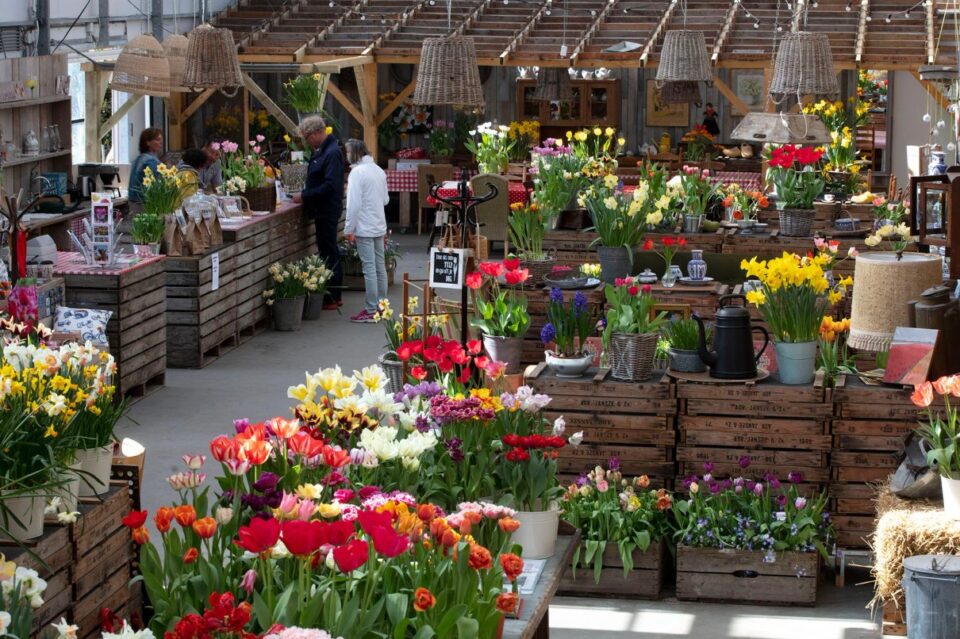
Match soil moisture, light and border space to named DutchGrown™ perennials before you place an order.
Choosing a perennial online is easier when the garden comes first. Soil that dries quickly, a shaded corner or limited border depth can matter more than a flower photograph. A useful shortlist starts with the conditions you can offer, then checks the plant’s mature size and flowering window.
We reviewed the product information on DutchGrown™’s UK store for this guide. Its named perennial listings give practical details such as height, flowering season and preferred soil, which makes it possible to compare plants against a real planting spot.
Disclosure: this post includes affiliate links, and we may be paid a commission on purchases made through them.
Highlights
- Trollius Cheddar is suited to reliably moist soil and can tolerate heavy or clay ground.
- Sanguisorba Chocolate Tip reaches about 60 to 100 cm and suits the middle of a border.
- Astrantia Cerise Button flowers from May to August and can be grown for cutting.
- Check each listing for current availability, dispatch timing and planting instructions.
Start with soil moisture and sunlight
Write down whether the site is sunny, partly shaded or shaded, and whether its soil stays damp or dries between watering. These are practical filters: moisture is a deciding factor for several garden perennials, while sun exposure affects where they will settle comfortably. DutchGrown™ product pages state these preferences, so compare them with the actual bed rather than choosing by colour alone. The Trollius Cheddar listing describes rich, consistently moist soil, full sun to partial shade, and tolerance of heavy or clay soils. It is a candidate for a low-lying or reliably damp border, not a dry raised bed.
Before ordering, note how the ground behaves after rain and during a warm spell. If the location dries out, either plan for regular watering or favour plants whose stated conditions match that reality. Sanguisorba Chocolate Tip prefers fertile, moist but well-drained soil and the store advises against letting it dry completely. It can occupy sun or partial shade, giving it a broader light range while keeping soil moisture central. The exact Chocolate Tip product page is the place to confirm its current planting notes.
- Observe the site after rain and in a dry spell.
- Record the light at the planting position, not across the whole garden.
- Avoid choosing a moisture-loving plant for a location that routinely dries out.
Use mature height to place each plant
Height determines whether a perennial belongs near the front, middle or back of a border. It also helps prevent a new plant from disappearing behind established shrubs. The store lists Sanguisorba Chocolate Tip at approximately 60 to 100 cm tall, with a spread around 40 to 50 cm. That makes it a middle-border option with upright stems, rather than a tiny edging plant. Revisit the Chocolate Tip listing if the bed is narrow, since its spread matters alongside its height. Its deep burgundy flowerheads are described as flowering from July to September, sometimes into October.
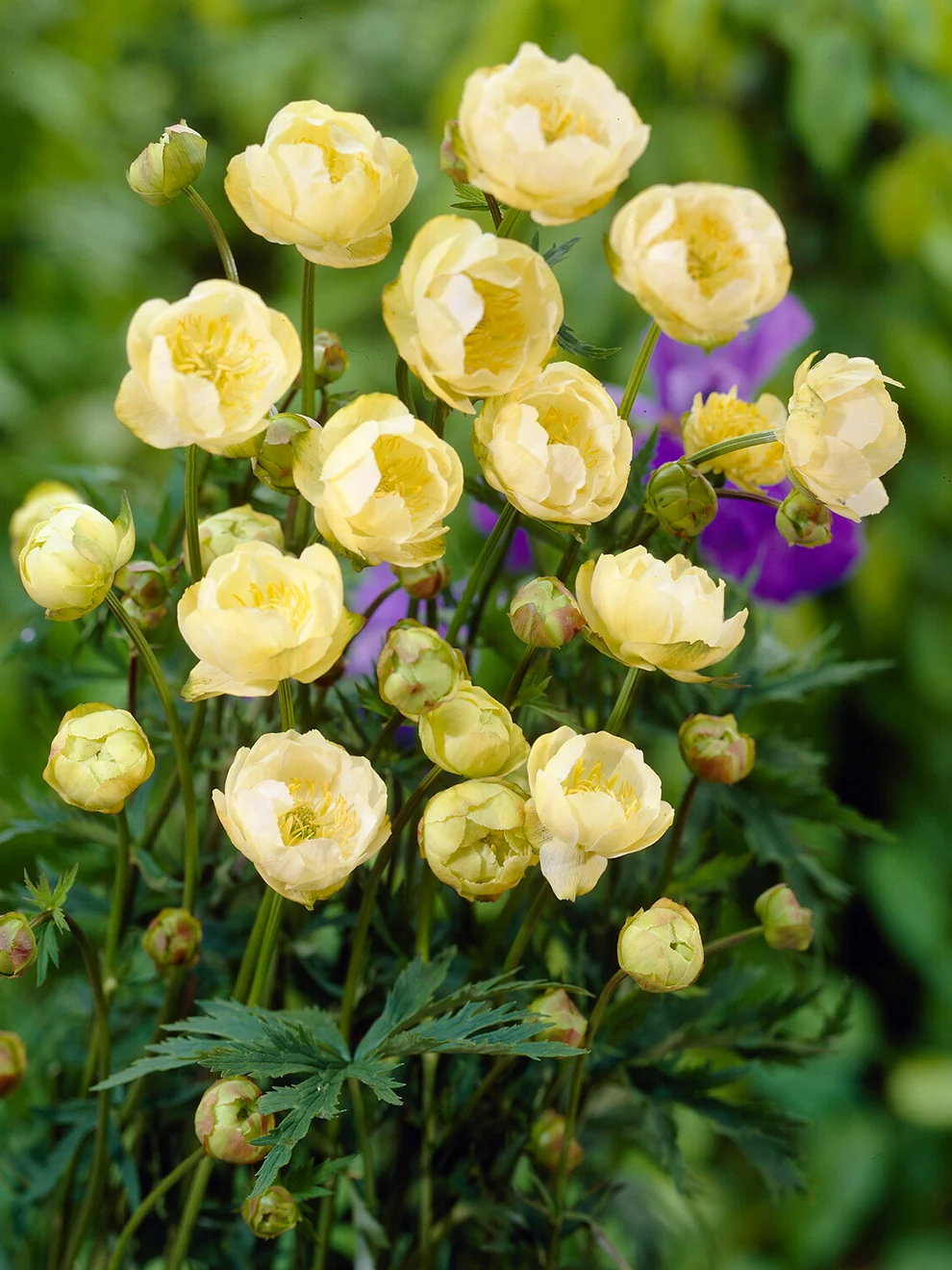
For a lower damp position, Trollius Cheddar is listed at 45 to 60 cm. The creamy, semi-double flowers sit above divided foliage, and the listing places flowering in late spring to early summer. Its lower height could work closer to the front or in a low-lying area, provided moisture is dependable. The Cheddar listing gives its height and growing conditions together. Keep spacing and neighbouring plants in mind: a stated height is a useful planning measure, not a promise that every garden will produce identical growth.
- Front: compare the mature height with the plants behind it.
- Middle: leave room for stems to rise above lower foliage.
- Near paths: account for spread as well as height.
Choose a flowering window and border role
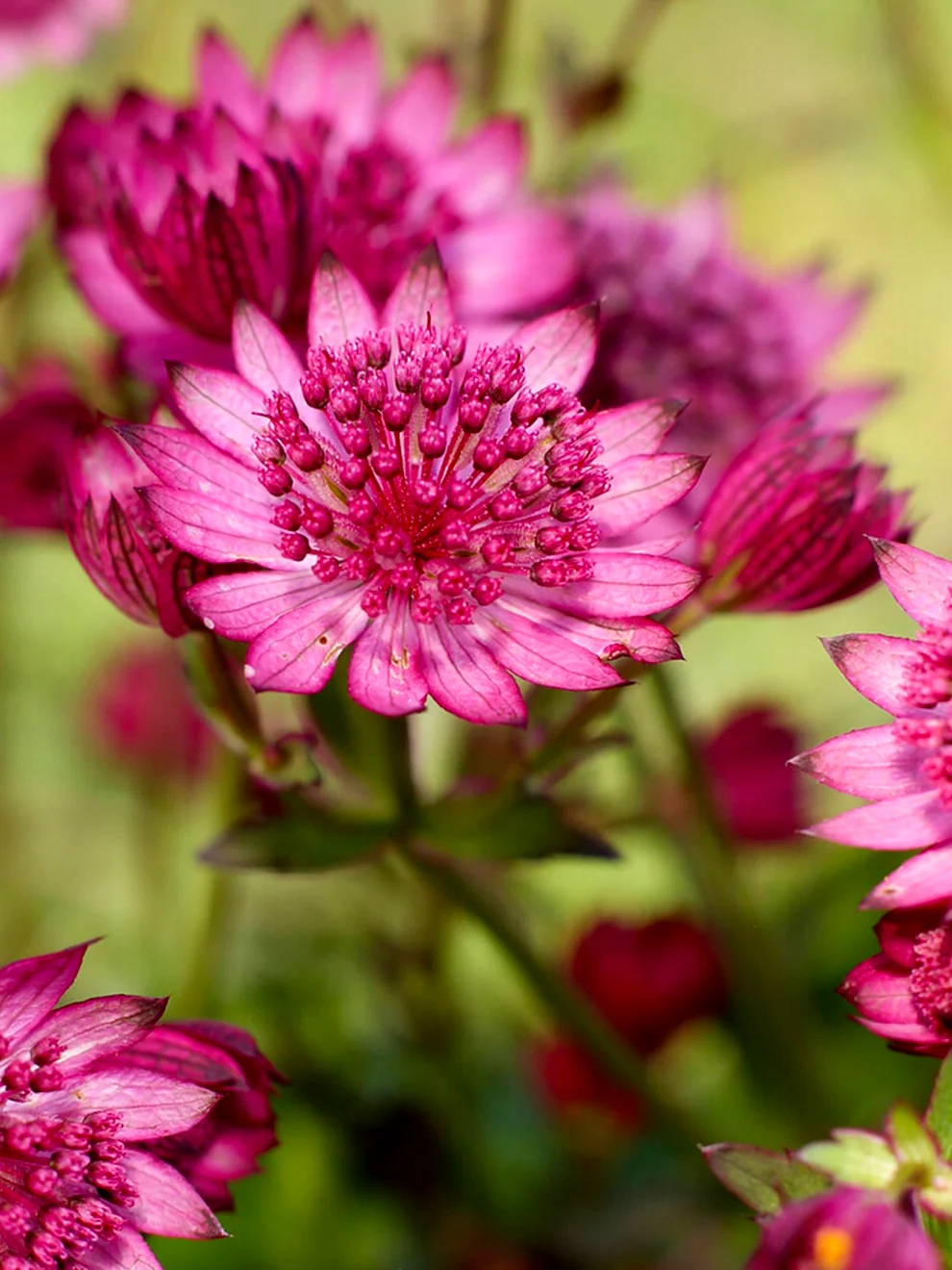
A planting plan feels more complete when flowering periods overlap or follow one another. DutchGrown™ describes Astrantia Cerise Button as a cerise-pink perennial flowering from May to August, with a compact, bushy clump and a listed height of 60 to 70 cm. Its papery bracts and pincushion-like centres add a different texture from the bottlebrush form of Sanguisorba or the cup-shaped Trollius blooms.
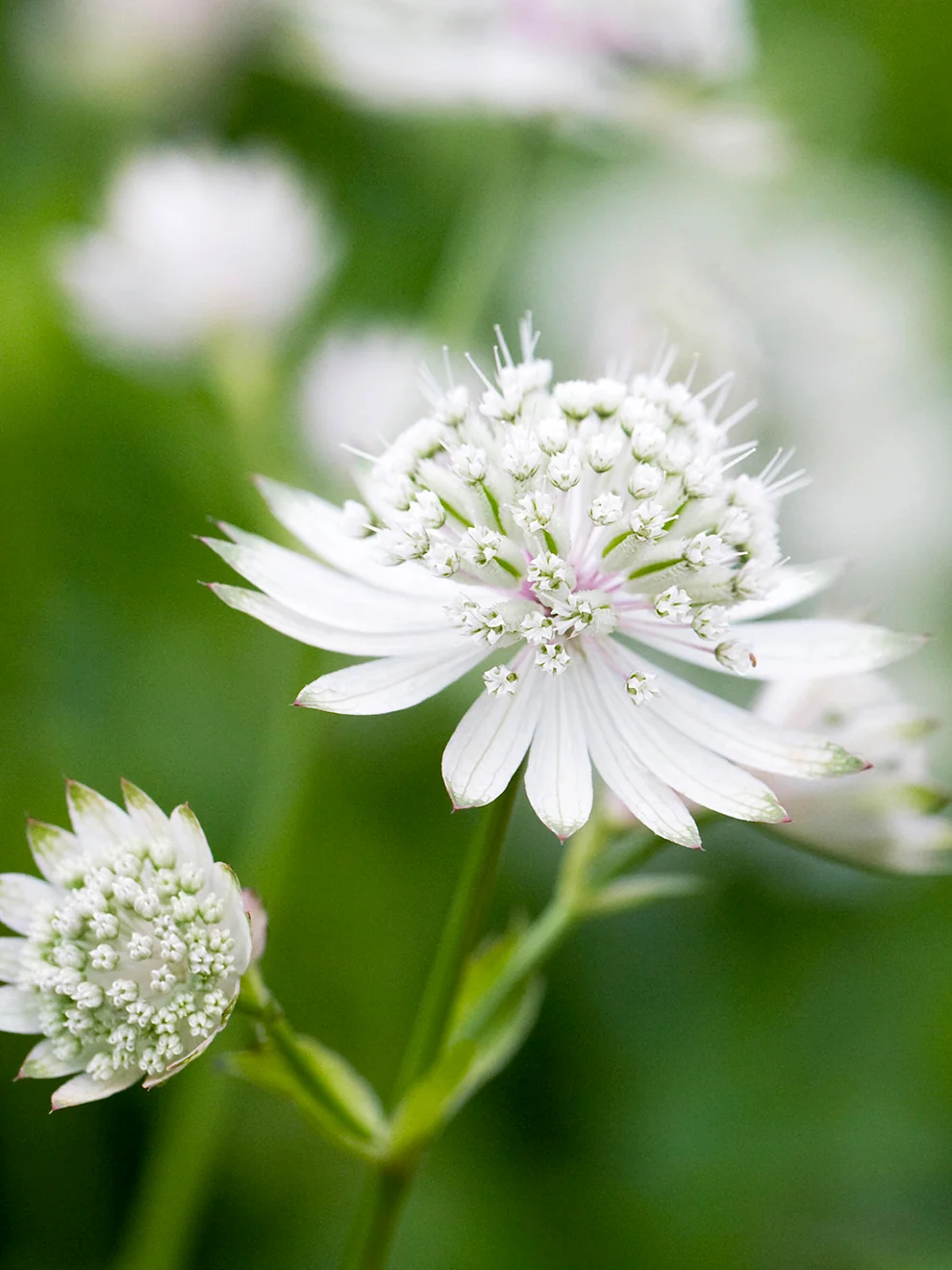
The Astrantia listing also notes that its flowers can be cut or dried, and that the plant suits fertile, moisture-retentive but well-drained soil in sun or partial shade. That offers a useful combination for a mixed border: colour for several months, a manageable clump, and flowers that have a second use indoors. Compare that role with the rest of the bed before adding it. The Astrantia product page helps confirm its expected height and spread. Three plants with similar height and flowering time may create a crowded patch, while varied forms can make the same area feel more layered.
- Use flowering months to identify gaps in the existing border.
- Mix flower shapes, such as pincushion-like, bottlebrush and cup-shaped blooms.
- Check whether cutting flowers matters to your plan.
Compare the listings before you order
A product page should help answer how a plant arrives, when dispatch is expected and what planting instructions apply. The information can change with seasonal availability, so recheck the listing when making a decision. Check the Chocolate Tip page, Cheddar page and Cerise Button page again when planning dispatch. Individual product pages may give planting formats and timing. Treat those details as part of the selection, particularly if you are planning around a narrow planting window.
| Plant | Border role | Key condition | Flowering detail |
|---|---|---|---|
| Trollius Cheddar | Lower moist position | Rich, consistently moist soil | Late spring to early summer |
| Sanguisorba Chocolate Tip | Middle of border | Moist, well-drained soil | July to September, sometimes October |
| Astrantia Cerise Button | Front or middle clump | Moisture-retentive soil | May to August |
The table is a shortlist, not a substitute for checking the full listing. Availability and dispatch can change, and a plant’s eventual size depends on its growing conditions. Confirm the current product information and match the stated soil requirements to the place you have in mind. A perennial bought for a specific gap should solve that gap in height, moisture and season, not simply look appealing in isolation.
Make a planting plan before checkout
A short written plan reduces impulse mismatches. Start with the planting site, then decide which plant fills each job. For a damp edge, Cheddar may be the clearest fit; for upright, darker summer flowers, Chocolate Tip gives a defined middle-border role; for a longer cerise display and cut flowers, Cerise Button brings a different shape and use. The store’s catalogue lets readers compare named varieties and open the individual listing before committing.
- Measure the open area and note neighbouring plants.
- Choose one main role for each new perennial.
- Check soil and light details on the exact product listing.
- Revisit dispatch and availability when you are ready to order.
There is a practical limitation to online selection: photographs and descriptions cannot guarantee how a plant will look in a particular garden, and stated dimensions are guides. Soil, exposure and establishment affect growth. Read the listing carefully, and leave enough space for the mature spread rather than planting to the size of the delivered item.
Frequently asked questions
Which DutchGrown™ perennial suits a damp border?
Trollius Cheddar is listed for rich, consistently moist soil and is described as suitable for moist borders and pond edges. Check that the location will not dry out.
How should I use the listed plant height?
Use it to estimate front, middle or back placement and leave room for the stated spread. Garden conditions can affect the final size, so regard measurements as planning guidance.
What should I check before placing an order?
Recheck the exact product page for current availability, dispatch timing, planting format and care details. Seasonal information can change, so use the live UK listing for Trollius Cheddar or Astrantia Cerise Button page for the final decision.
Wrapping up
For a damp site, start with Trollius Cheddar; for dark upright summer flowers, consider Sanguisorba Chocolate Tip; and for a longer cerise display with cutting potential, Astrantia Cerise Button has a clear role. DutchGrown™ is a natural place to compare these named plants because its UK listings set out useful growing details. The limitation is that online information cannot predict the result in your soil, so match the listing to your garden and allow for variation.