
We compare four Aetrex formats by construction, adjustability and likely use so you can choose a sensible starting point without treating built-in support as a guarantee of personal fit.
Supportive footwear is not one category with one obvious winner. A sandal needs adjustability and secure contact, a loafer has to balance polish with forefoot room, a sneaker must work with the rhythm of walking, and a clog usually wins on easy entry. The useful comparison is therefore about the job each style is asked to do.
Aetrex gives shoppers a broad set of ways into that question. The US store covers sandals, loafers, sneakers, clogs, boots and orthotics, while product pages repeatedly describe built-in arch support and cushioning. We looked at four representative formats to see where the range is genuinely differentiated, where a typical alternative may be simpler, and which style makes the most sense by routine.
Disclosure: this post includes affiliate links, and we may be paid a commission on purchases made through them.
Highlights
- Maria is the adjustable sandal option, with a hook-and-loop closure, memory foam footbed and microfiber lining.
- Collette is the polished loafer choice, pairing leather, an adjustable vamp, lightweight EVA foam and a metal shank.
- Tess is the sneaker-led option for shoppers who want arch support in a casual walking wardrobe.
- Bondi is the clog format, useful when easy entry and a more structured orthotic-style build matter most.
- Current cost varies: model, material, size and availability all affect the live store listing.
Aetrex support and construction details
The shared Aetrex story is the Aetrex Orthotic System. On its product pages, the brand describes arch support intended to help stabilize and align the foot, alongside memory foam or other cushioning depending on the model. Its design material also says the footwear is informed by learnings from more than 50 million global foot scans. Those are useful facts about the brand’s approach, but they do not tell us that every shoe will feel identical or suit every foot.
For a fair comparison, we used four buyer-facing criteria. First is support construction: what the page actually identifies rather than a general comfort label. Second is fit control: closures, removable insoles and the ability to accommodate a changing foot. Third is setting: work, walking, warm weather or quick everyday wear. Fourth is tradeoff: what the format cannot do as well as another option.
- Construction: note the footbed, midsole, outsole and any named support system.
- Adjustability: compare straps, vamps, laces, stretch and easy-entry shapes.
- Wardrobe role: judge a sandal against sandals and a sneaker against sneakers.
- Fit uncertainty: keep width, volume, arch height and heel hold in view.
That last point is where Aetrex should be compared with typical alternatives honestly. A generic sneaker may offer more familiar sizing and a simpler return decision. An after-market insole may give more control over the insert itself. Aetrex’s appeal is that the support features are integrated into a finished shoe, which can be more convenient but leaves fewer opportunities to customize the foundation.
Maria, Collette, Tess and Kristin
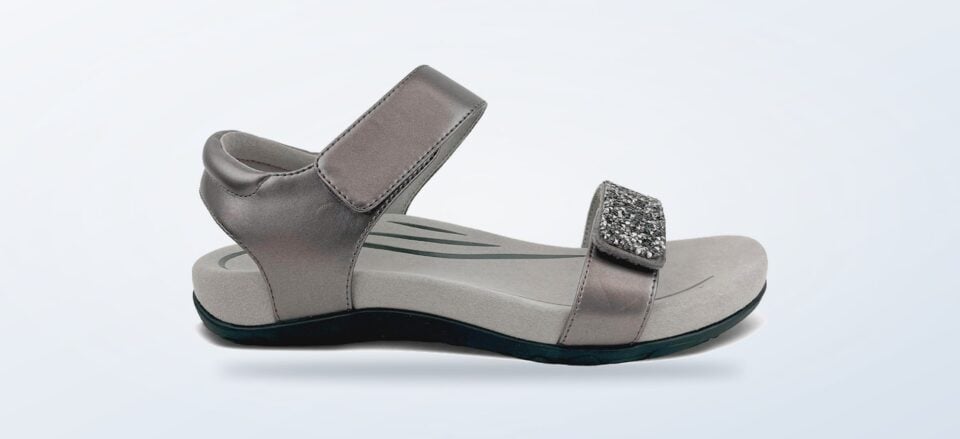
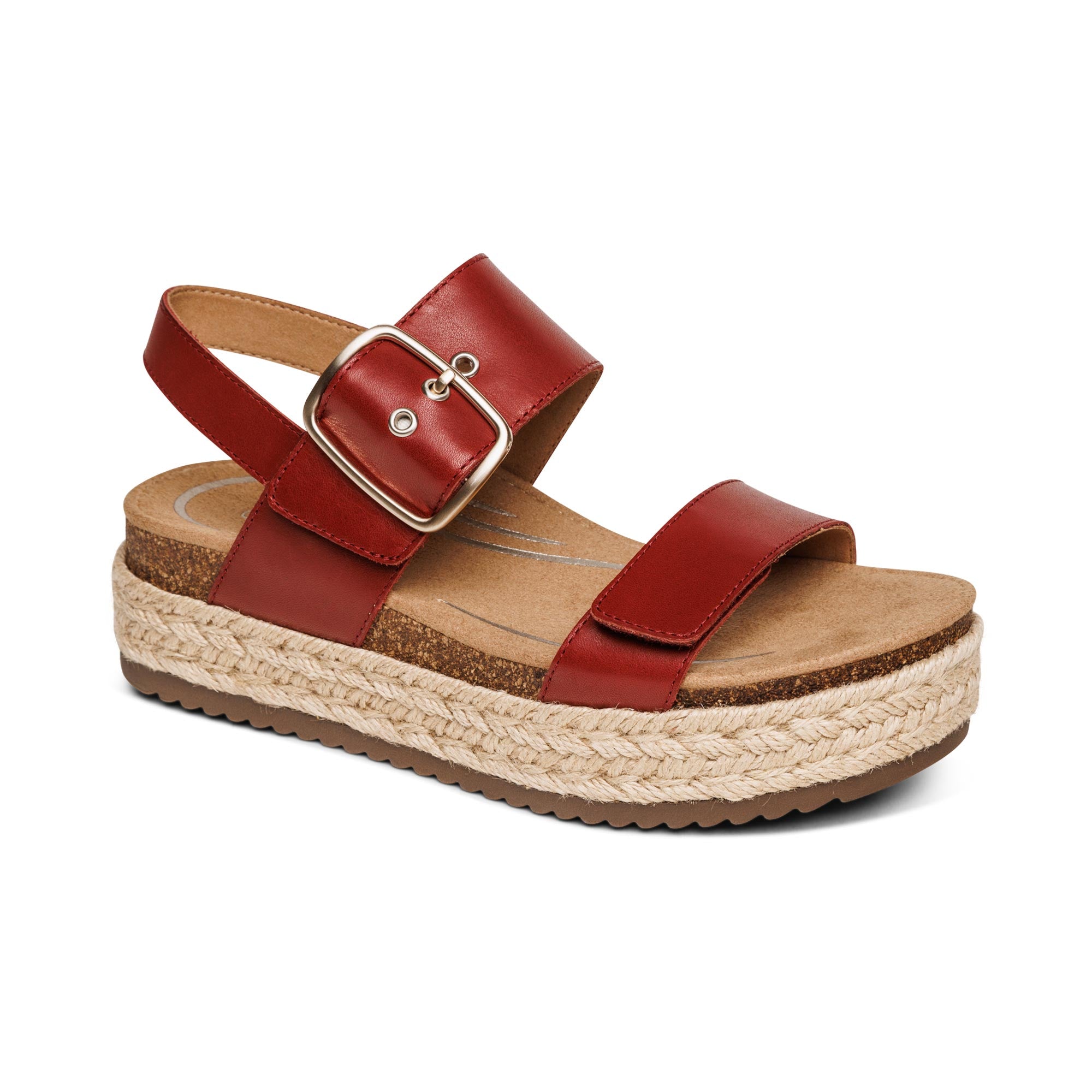
Best for warm-weather adjustability: the Maria Studded Quarter Strap uses a synthetic leather upper, a memory foam midsole, a soft microfiber footbed lining and a hook-and-loop closure. That combination is more informative than simply calling it a comfort sandal. The closure gives the wearer a way to fine-tune hold, while the open construction keeps it suited to warm-weather outfits. Compare current Aetrex sandal options when the same category is the priority.
The limitation is equally clear. Maria is not a substitute for a closed walking shoe, a weather-focused boot or a style with a removable insole. Compared with a basic fashion sandal, it offers a more developed support proposition. Compared with a dedicated walking sneaker, it asks more of the strap, footbed and the wearer’s own sense of stability.
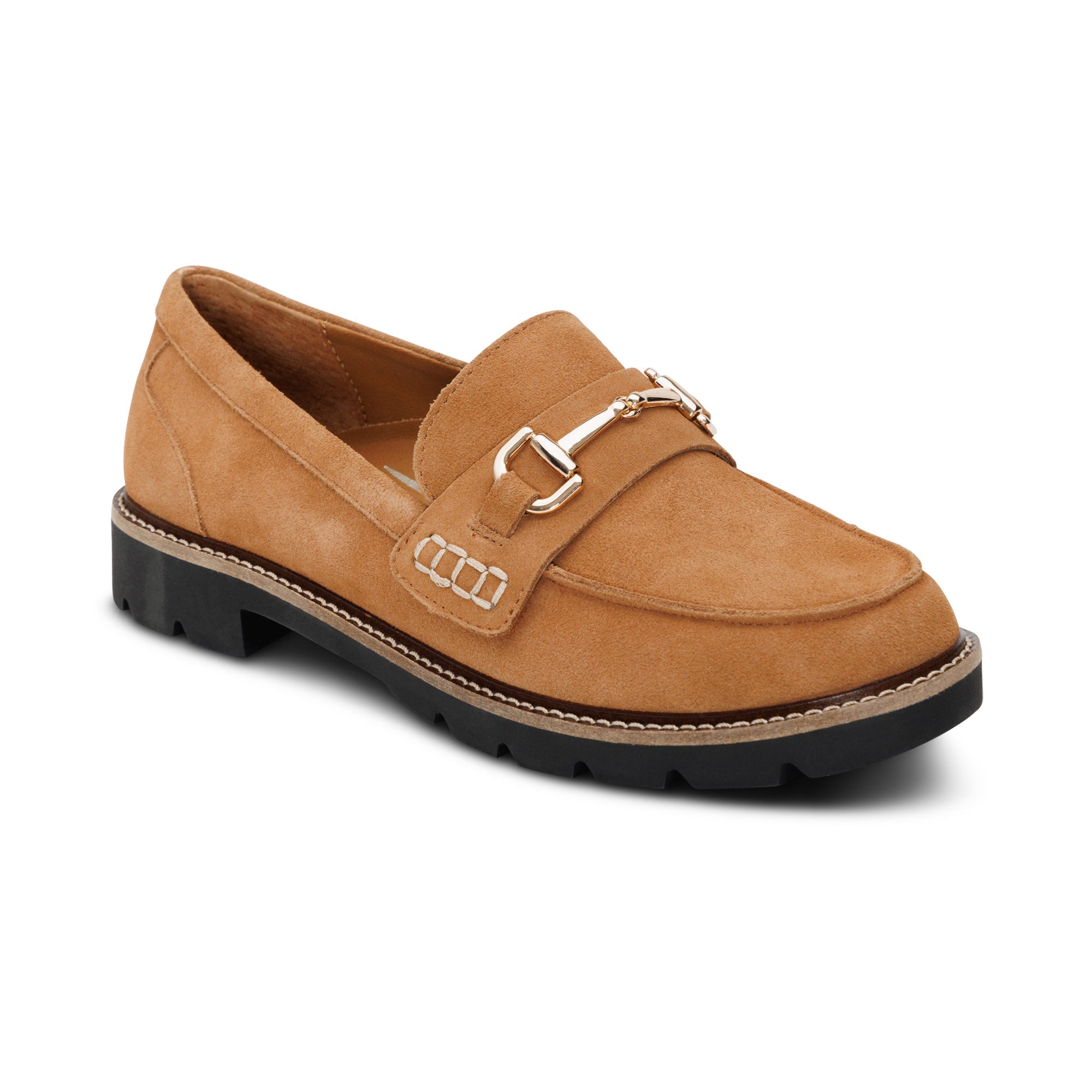
Best for polished workwear: the Collette Arch Support Loafer brings leather, an adjustable vamp, a lightweight EVA foam midsole, a lightweight outsole and a metal shank into the comparison. The shape is a better match for office outfits and smart-casual dressing than either a sandal or clog. The adjustable vamp is a practical detail for shoppers who need more control than a fixed slip-on usually provides. Review current Aetrex loafer availability before settling on one color.
Collette still needs a careful fit check. A loafer can look generous while its opening or toe shape feels restrictive. Compared with a conventional dress loafer, the support and cushioning details are more explicit. Compared with a sneaker, the tradeoff is less flexibility and less forgiving volume for long periods of walking.
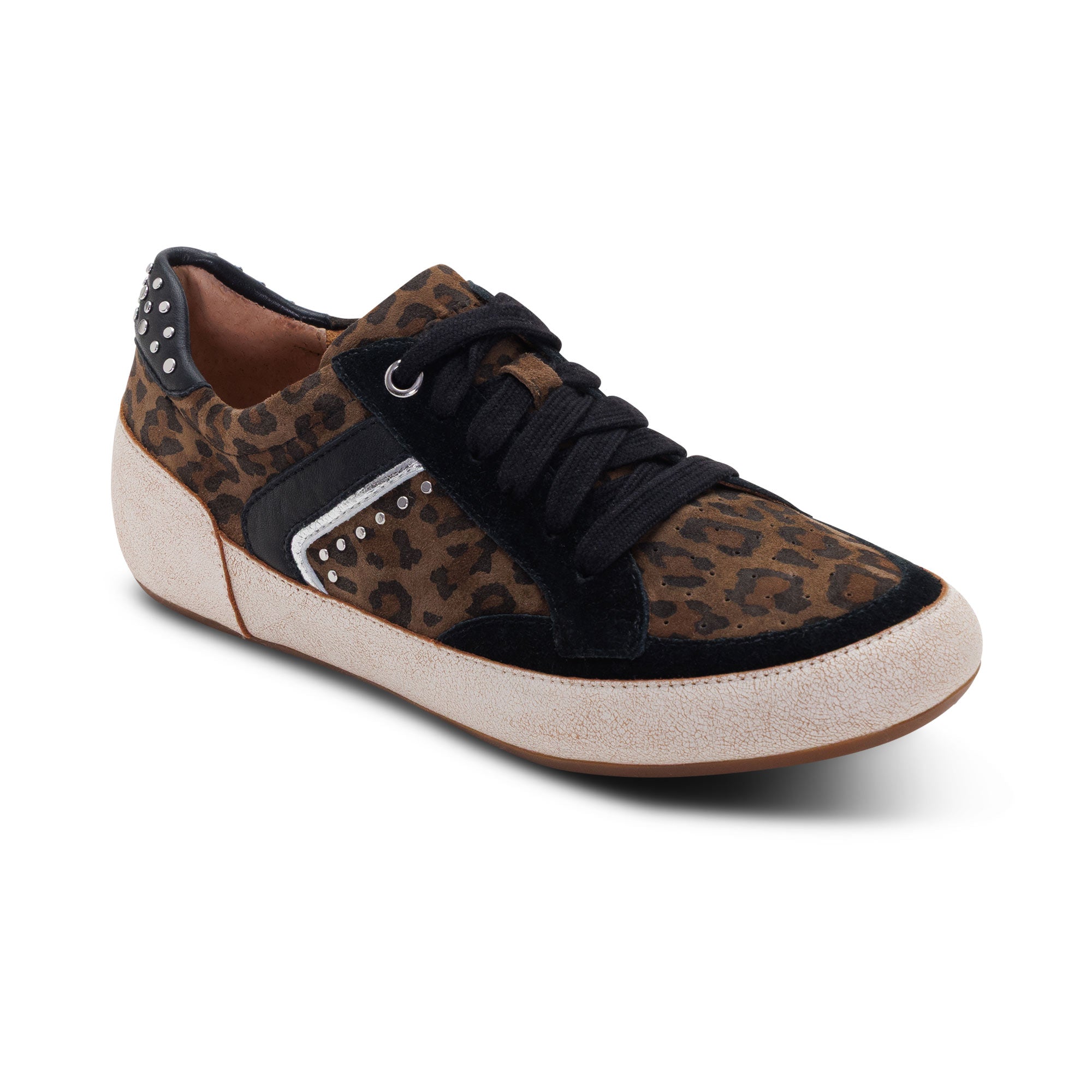
Best for a casual sneaker wardrobe: the Tess Arch Support Sneaker is the clearest choice when the outfit and routine both point to a sneaker. The store lists Tess as an arch-support style, making it the most natural format here for readers who want a closed shoe for errands, travel days and everyday casual wear. Its sneaker profile is also easier to compare with familiar alternatives than a clog or dress shoe. See Aetrex casual footwear if you want to compare the silhouette with other models.
The honest caveat is that a sneaker silhouette does not automatically make a model a clinical walking shoe. Read the live page for the current upper, insole, sizing and availability details, then compare those with the walking distance and surfaces in your routine. See the current Aetrex sneaker options when Tess is close but not quite right.
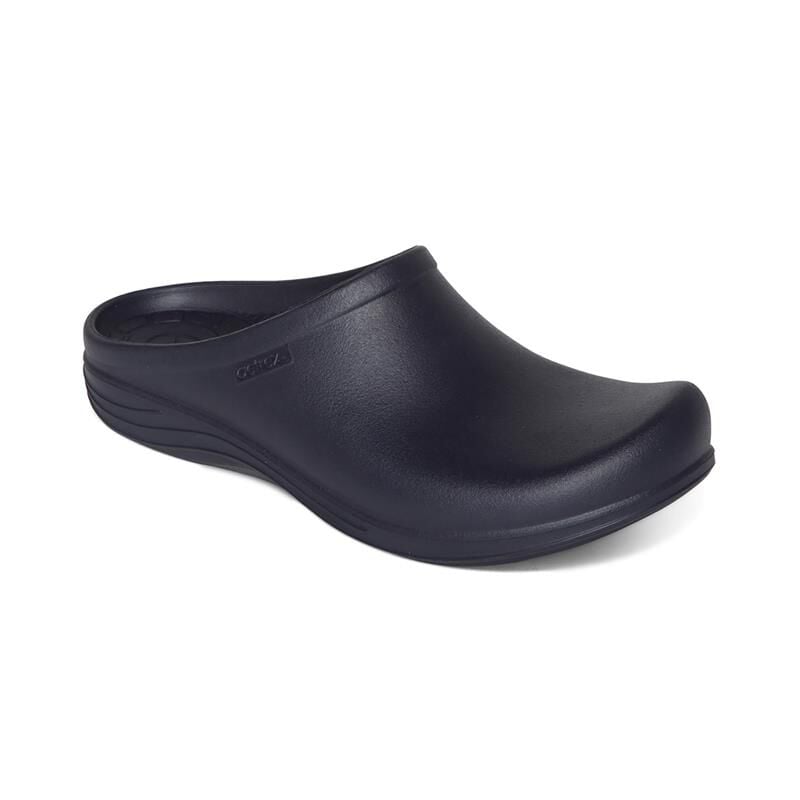
Best for easy entry: the Bondi Orthotic Clog represents the casual, low-fuss end of the range. Aetrex describes an injected UltraSky EVA construction, shock absorption, a soft foam toe-post design and its Orthotic System. That is a distinct proposition from a conventional slip-on: the page gives shoppers a reason to consider it beyond convenience. Browse current Aetrex clogs if easy entry is the deciding factor.
Bondi’s tradeoff is versatility. A clog is naturally more casual than Collette, less enclosed than Tess and less adjustable than Maria. It may be a good match for quick outings, relaxed travel and easy entry, but it is not the automatic winner for formal settings, wet conditions or activities that demand a highly secure upper.
Style-by-style use and trade-offs
The table keeps the recommendation tied to the product pages rather than to a broad claim that one shape is best for everyone. Product details and stock can change, so use it as a starting point and check the current Aetrex options before ordering.
| Style | Best for | Notable details | Main tradeoff |
|---|---|---|---|
| Maria | Warm-weather outfits | Adjustable strap, memory foam, microfiber lining | Open construction limits coverage |
| Collette | Work and smart casual | Leather, adjustable vamp, EVA foam, metal shank | Less walking flexibility than a sneaker |
| Tess | Everyday casual wear | Sneaker format with named arch support | Read the exact current fit details |
| Bondi | Easy entry and relaxed use | Injected EVA, shock absorption, orthotic system | Most casual and least adjustable |
Our use-case winners are therefore straightforward. Choose Maria for sandals, Collette for workwear, Tess for a casual sneaker routine and Bondi for easy entry. If your need crosses categories, start with the construction that solves the hardest constraint, then use the store filters and Aetrex product notes to narrow the choice.
Aetrex product details beyond comfort claims
Aetrex’s strongest point is specificity. The brand does not only place the word comfort in a product title; its pages often identify the upper, midsole, footbed, closure and support system. That gives shoppers a better basis for comparison than a standard fashion listing with no construction detail. Browse Aetrex footwear by category and keep those details beside your own requirements.
The second strength is range breadth. A person who wants support in a sandal does not have to accept a sneaker aesthetic, and someone shopping for work does not have to move straight to a medical-looking shoe. View Aetrex sandals, compare Aetrex loafers and review Aetrex sneakers by the role they need to play.
What it does not solve is the personal part of the decision. Scan-informed design is a brand-level input, not a promise that one model matches your arch height or width. If you use prescribed orthotics, also check whether the exact shoe has a removable insole. A product page can explain construction; it cannot replace professional advice for persistent pain or a diagnosed condition.
Choosing Aetrex by setting and fit
Start with the setting you can describe clearly. If you need a warm-weather sandal, compare closure and footbed before color. If you need workwear, check the vamp, heel height and material. If you need a sneaker for daily movement, pay attention to the insole, cushioning and fit notes. If you want an easy slip-on, decide whether the convenience of a clog outweighs its more casual shape. Open the Aetrex footwear range once that use case is clear.
- Pick the category that matches the most demanding part of your week.
- Read the current product page for materials, insole status and live sizes.
- Compare the closest alternative rather than the entire store at once.
- Review delivery and returns before placing an order, especially when fit is uncertain.
Cost should be checked at this final stage, not treated as a permanent ranking. The live listing can vary with material, model, color, size and availability. Check Maria’s current listing, check Collette’s current listing, check Tess’s current listing or check Bondi’s current listing instead of relying on a static comparison.
Questions buyers often ask
Is Aetrex footwear the same as a custom orthotic? No. The brand integrates support features into its footwear and sells orthotics, but an integrated footbed is not the same as a custom device prescribed for an individual.
Can I use the same Aetrex style for work and walking?
Sometimes, but the best choice depends on the setting. Collette is the workwear-led option in this comparison, while Tess is the more natural casual walking format. Check the exact construction and your expected distance before choosing one pair for both roles.
Which option is easiest to adjust?
Maria has a hook-and-loop quarter strap, and Collette has an adjustable vamp. Those are the clearest adjustment features in this sample. Bondi is easier to enter but offers less fine control, while Tess depends more on its closed sneaker fit.
Wrapping up
There is no single Aetrex winner across all routines. Maria is the most sensible warm-weather sandal pick, Collette is the most polished workwear choice, Tess is the best starting point for a casual sneaker wardrobe, and Bondi wins when easy entry matters most.
Our honest limitation is fit certainty. Aetrex gives shoppers a clearer construction story than a generic comfort label, but no product page can guarantee the right width, arch feel or heel hold for every wearer. Shortlist the format that matches your routine, verify the live details and keep expectations grounded when comparing integrated support with a conventional shoe or a custom orthotic.