
A first look at how Frameless combines four projection-led galleries with changing residencies and distinct ways to visit.
When an art venue fills whole rooms with moving images and sound, the first question is often how the experience differs from a conventional gallery. Frameless answers by making the room part of the presentation: visitors move through large-scale digital interpretations rather than viewing a sequence of framed originals.
That approach sits within a broader programme. The London venue has four permanent galleries, plus changing residencies and an after-hours format. For a first-time reader, the useful distinction is between the core gallery visit and the event or seasonal options layered around it. This feature draws on the venue’s published programme and visitor information, rather than a personal visit.
Disclosure: this post includes affiliate links, and we may be paid a commission on purchases made through them.
Highlights
- Four permanent galleries give the visit a clear structure, from figurative works to abstraction.
- Standard admission centres the permanent gallery experience; ticket options and availability can change.
- FRAMELESS Lates adds an 18+ after-hours setting, a curated soundtrack and a café bar.
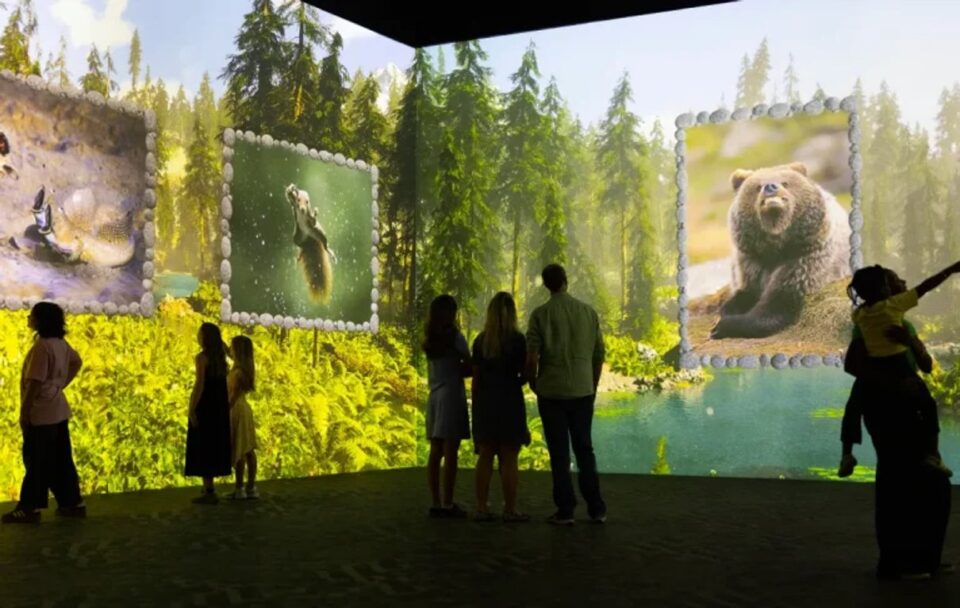
- The Nikon Comedy Wildlife Awards residency brings seven animal habitats into the venue as a limited-run programme.
- The format suits visitors curious about art on an architectural scale, though it offers less close viewing of original paintings.
Frameless gives the artwork the scale of a room
The venue’s central idea is easy to grasp: projection, animation and spatial sound turn gallery walls and floors into part of the visual field. It shifts attention from the individual canvas to the relationship between image, architecture and movement. That can make familiar works feel newly legible, especially for visitors who respond to colour, rhythm and atmosphere as much as to labels and dates.
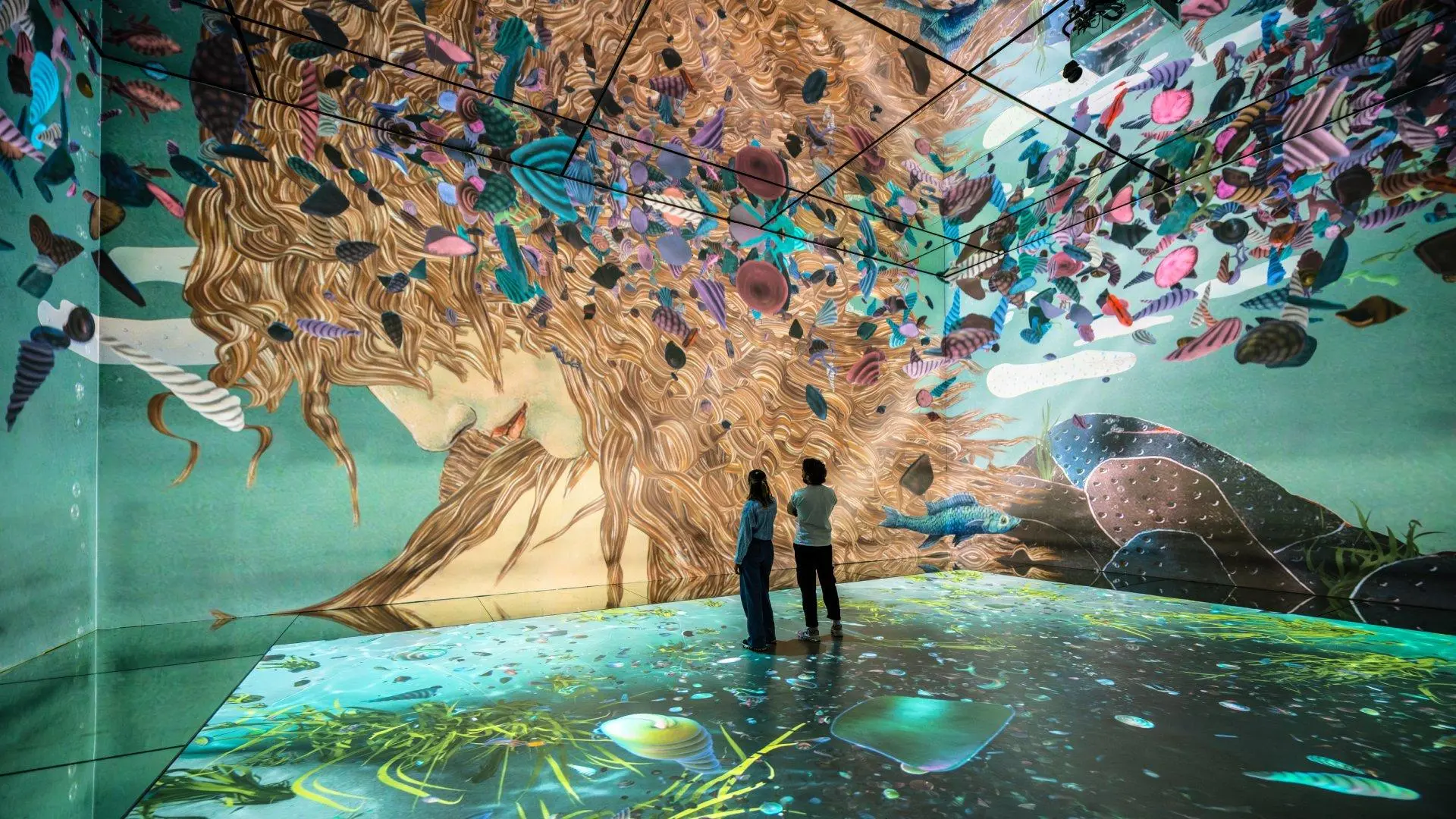
The approach also gives the visit a social quality. People share the same changing image, but each person can choose where to stand and what detail to follow. There is no single viewing point to maintain. A visitor might watch a scene unfold from the centre, then move to a wall to notice a smaller passage that was easy to miss from farther away.
For people who want to plan the practical side first, the standard admission information is the natural place to begin. It explains the current visitor options and helps set expectations for a visit built around moving between galleries. We would check the live listing before setting a date, since ticket availability and arrangements belong to the venue’s current schedule.
Four galleries move from familiar images to abstraction
The permanent programme is divided into Beyond Reality, Colour In Motion, The World Around Us and The Art Of Abstraction. This is more than a navigation aid: each gallery gives visitors a different way into the visual material, making the route easier to understand than one continuous projection space.
- Beyond Reality focuses on dreamlike and imaginative imagery, including works such as Odilon Redon’s Cyclops.
- Colour In Motion uses colour and movement as a more immediate entry point to art.
- The World Around Us places landscapes and recognizable scenes in a room-scale context.
- The Art Of Abstraction gives non-representational work room to unfold through form, scale and sound.
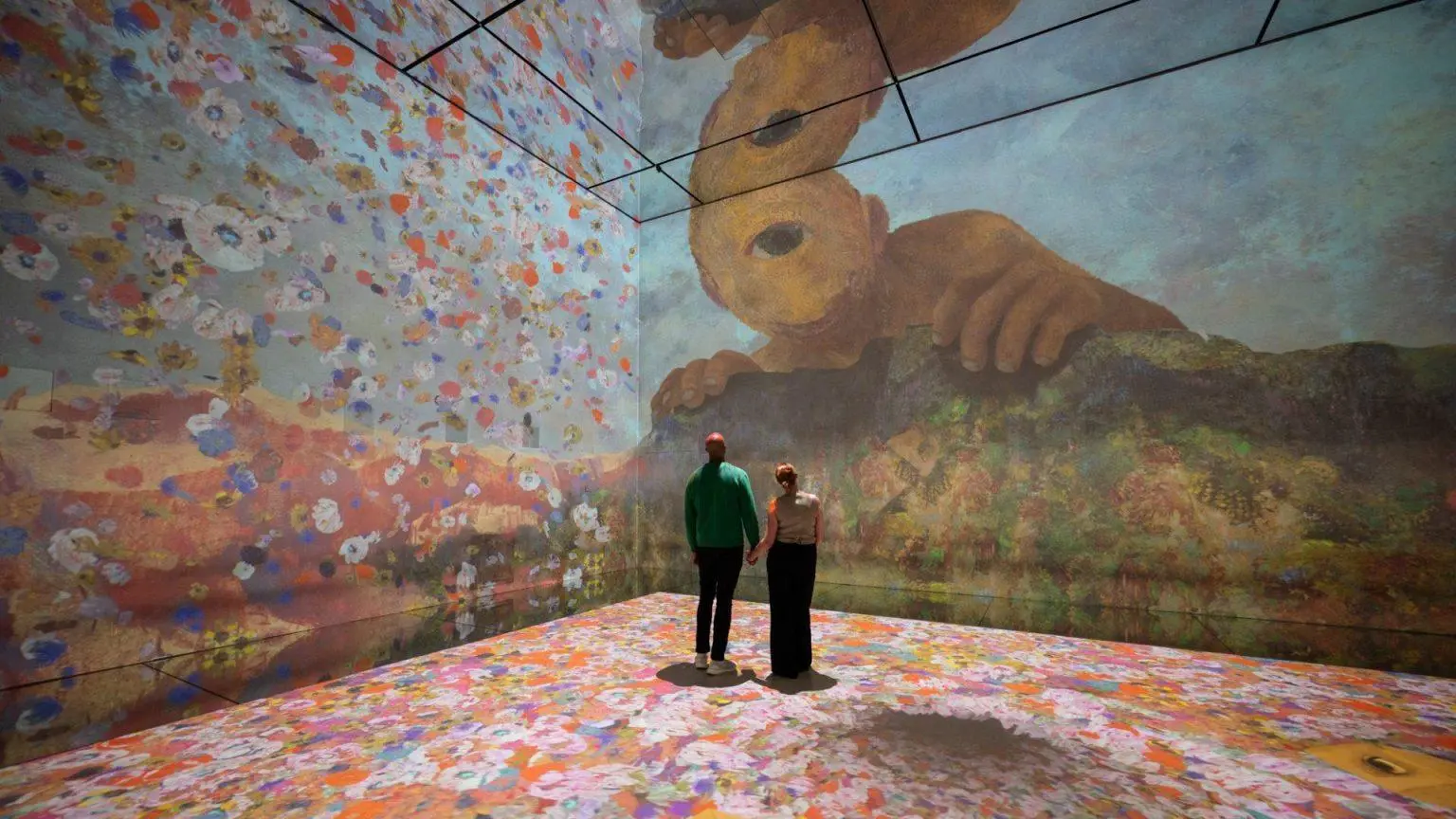
That range matters for mixed groups. Someone drawn to a recognisable subject can find a point of entry in figurative art; another visitor may prefer a colour-led or abstract environment. Instead of expecting everyone to approach art in the same way, the programme offers contrasting visual registers within one visit. The gallery structure also gives a natural pause between moods, which is useful when the images are immersive and attention can feel full.
The site describes the experience as featuring 42 masterpieces. That figure gives a sense of curated breadth, but it should not be mistaken for a conventional collection display: the work is presented through digital interpretation, with projection and sound shaping how the viewer encounters it. Readers especially interested in original materials, conservation or close inspection may find a museum visit more aligned with their expectations.
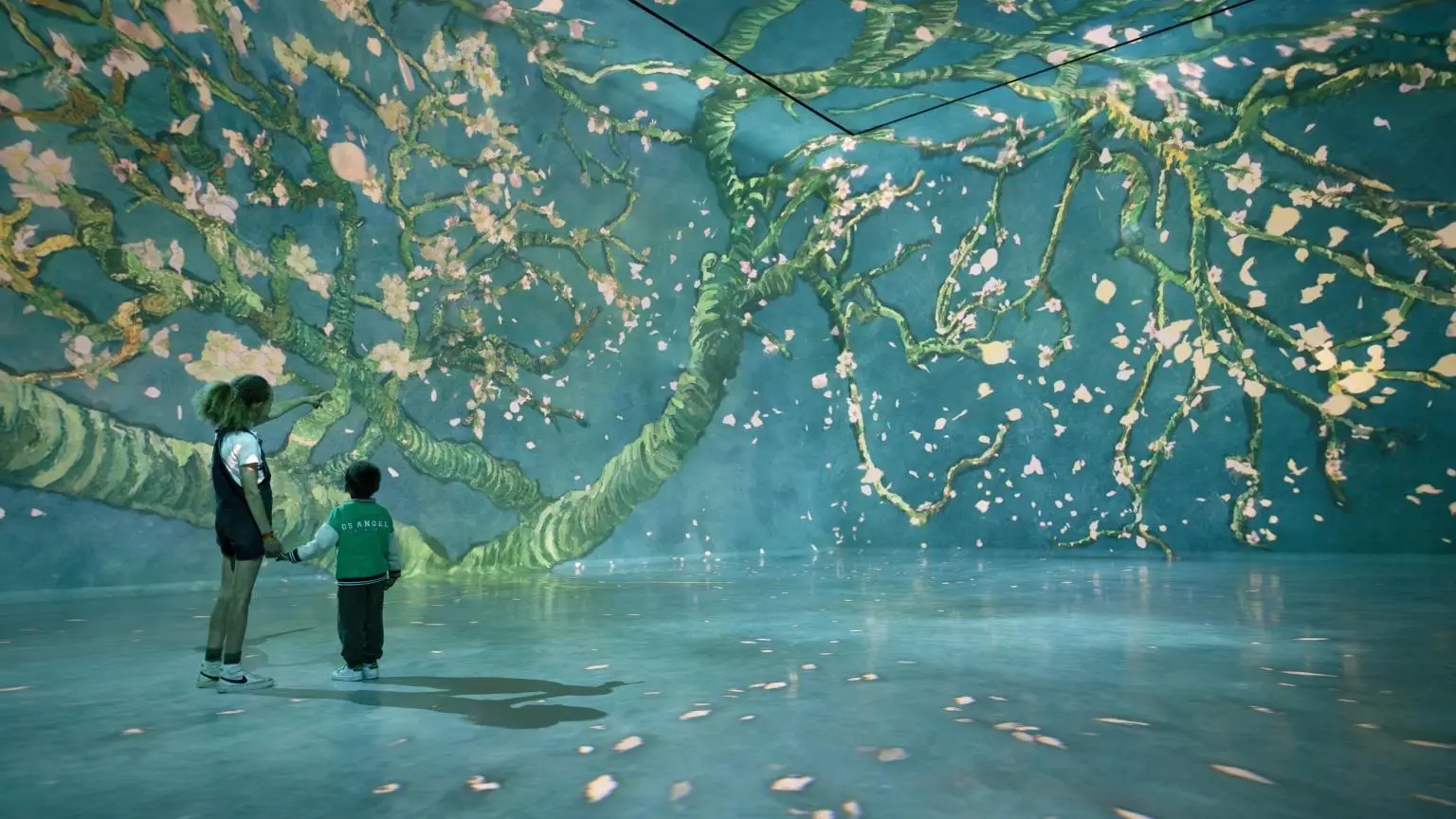
There is a useful context here for first-time visitors: immersive presentation is not simply a bigger screen. It changes the viewer’s position. Instead of standing outside a painting and examining its surface, the visitor is inside a designed interpretation, deciding where to look as the image and soundtrack shape the room. That is the programme’s defining strength, and also its clearest limit.
Changing residencies keep the programme open
Alongside the permanent galleries, Frameless presents artist and themed residencies. These shorter programmes create a reason to check what is currently on before booking, and they show how the venue can apply its immersive format to material beyond the main art selection. One current example is the Nikon Comedy Wildlife Awards experience, described by the venue as a journey through seven habitats.
The residency takes animal photography into an environment with several scenes, shifting the emphasis from a single humorous image to a sequence of habitats. It is a lighter, accessible premise than some of the canonical art in the permanent rooms, which may make it an appealing addition for family groups or visitors who prefer nature and photography. The venue lists the residency as included with admission, but availability is tied to its programme, so check the residency page for current details.
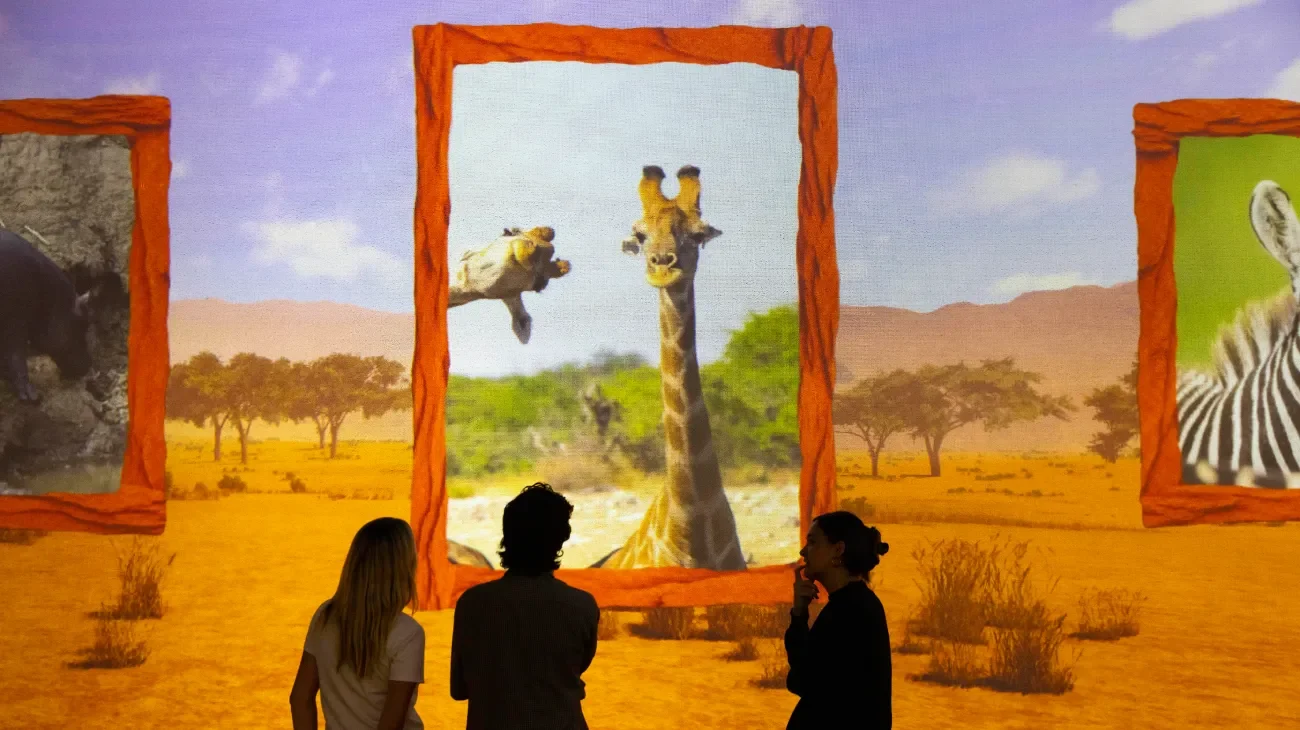
Residencies can add variety without changing the basic character of a Frameless visit: visual material is brought into a shared, large-scale space. The practical trade-off is that a temporary element may not be available on every future visit. Readers who have a particular residency in mind should confirm its dates and inclusion before choosing a ticket, rather than assuming all previous installations remain on show.
FRAMELESS Lates gives the galleries an evening setting
FRAMELESS Lates is the venue’s 18+ after-hours option, advertised with a curated Soho Radio soundtrack and access to the café bar. It reframes the same broad proposition as an evening out: the galleries remain the focus, while music and refreshments make the setting feel more social. This is a distinct visitor format rather than a separate permanent gallery.
It may suit adults arranging a date or a night with friends, particularly if the group wants an activity that gives conversation a shared subject. The age restriction is a decisive practical detail for mixed-age groups. Before planning around the evening format, use the FRAMELESS Lates page to review the current schedule and booking information; individual dates and programme details are venue-controlled.
There is a broader brand point in this option. Frameless treats the galleries as an adaptable venue, not only a daytime attraction. A soundtrack, bar and after-hours atmosphere can change how people experience the same rooms, while the art-led format remains at the centre. Visitors who want quiet, close study may prefer a standard daytime slot; those looking for an evening plan may value the social framing.
The format suits curious visitors more than close-study purists
Frameless makes most sense for people open to sensory interpretation: visitors who enjoy large images, changing light and music and a route that involves moving through the artwork. The multi-gallery structure gives a group options, and the mix of permanent rooms and temporary programming helps the brand speak to different interests. It is also a straightforward cultural outing for people who want art to feel participatory without needing specialist knowledge before arriving.
- Choose the permanent gallery visit if the four-room programme is the main draw.
- Check the current residency listing if a seasonal subject is what interests you.
- Consider Lates for an adults-only evening with music and a café bar.
- Look at access and visitor information in advance if sensory conditions or mobility needs shape your plans.
The format is less suited to someone seeking an unmediated encounter with original paintings, extended wall text or a quiet museum atmosphere. Projection can draw attention across a room, but it also makes the viewing experience more directed by animation and soundtrack. That is not a flaw so much as a clear curatorial choice, and it helps readers decide whether this particular kind of art outing is right for them.
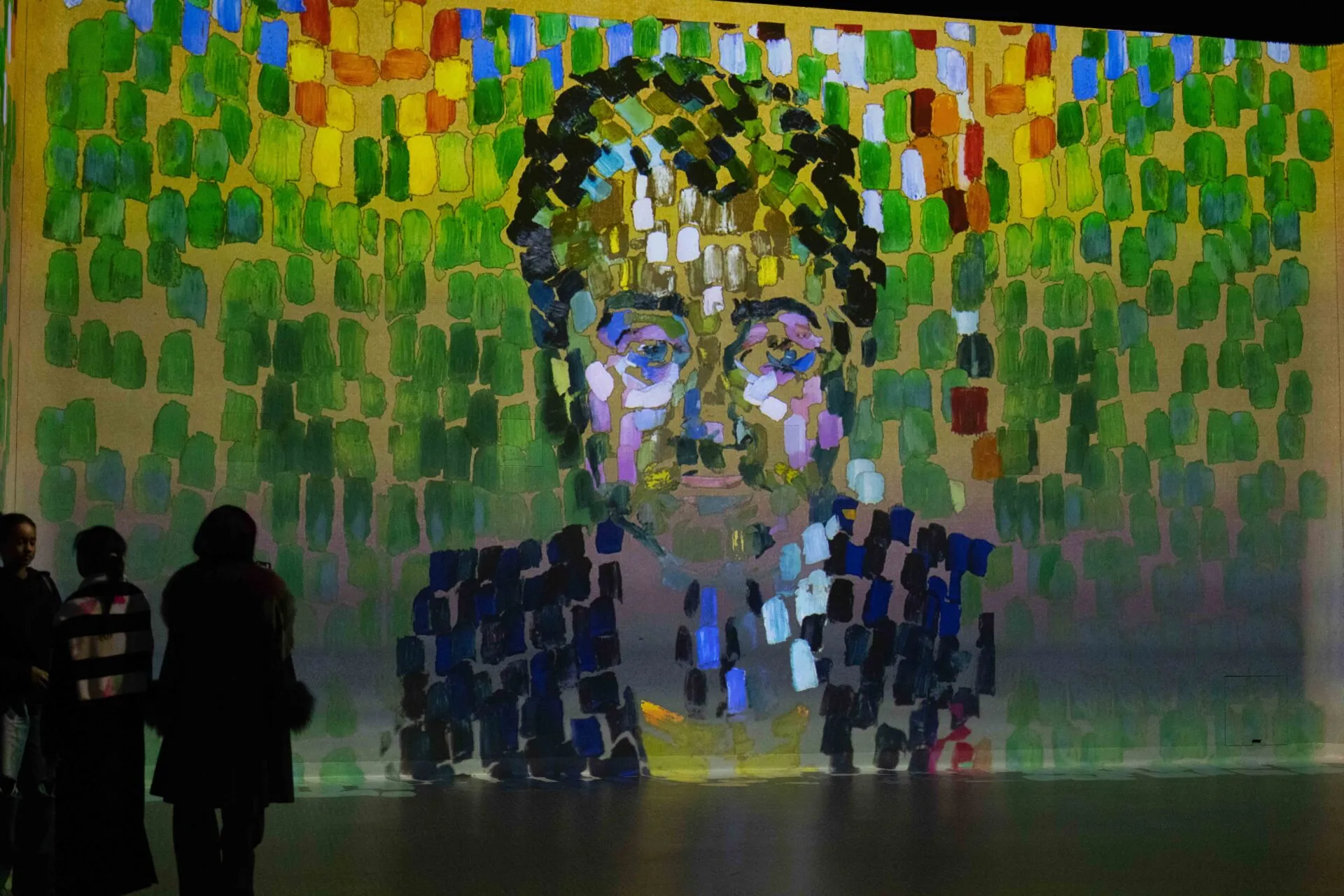
Visitors can improve the fit by deciding what they value most before booking: time with large-scale moving imagery, a specific temporary feature, or an evening atmosphere. These priorities point to different information pages and sometimes different visit times. We recommend treating the site’s live listings as the final word on availability, age guidance and practical arrangements.
A few questions help set expectations
Is Frameless a traditional art gallery?
No. Its four galleries present digital interpretations through projection, animation and sound. Visitors encounter the works in room-scale environments rather than viewing original paintings in a conventional display.
What is included in the main experience?
The core visit is organised around four permanent galleries. The venue also lists changing residencies and other visitor formats, so check the ticket and programme pages to see what is included for the date you are considering.
Who can attend FRAMELESS Lates?
The venue describes Lates as an 18+ after-hours experience. Check its current event listing for dates, booking details and any updates before making plans.
Wrapping up
Frameless has a clear identity: four distinct gallery environments, large-scale digital interpretation and a programme that can extend into residencies and after-hours events. We would recommend it to readers who want art presented as a shared, sensory space, especially those who enjoy variety more than quiet, close study of original works.
The honest limitation is that the same immersive scale can make detailed, self-paced viewing harder, and temporary features may change. If the format sounds right, start with the venue’s current visitor options and confirm the programme and practical details for your preferred date.