
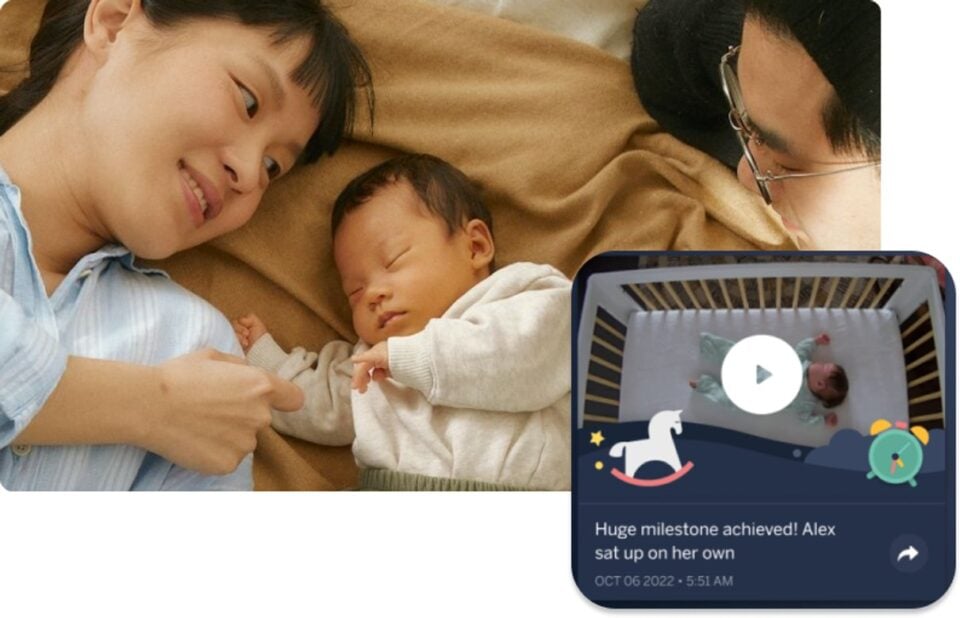
Nanit connects video, sleep context and everyday nursery routines through a modular range built around one app.
Choosing a baby monitor is rarely just a camera decision. Families also have to think about where the device will sit, how they will check in at night, whether sleep data matters and which accessories will still make sense as a child grows.
That is the space Nanit is trying to occupy. The brand begins with a smart video monitor, then adds mounting choices, patterned sleepwear, a dedicated display and sound-and-light tools around it. The result is less a single gadget than a connected nursery system that can be built in stages.
Disclosure: this post includes affiliate links, and we may be paid a commission on purchases made through them.
Highlights
- Nanit starts with the Smart Baby Monitor System and lets families choose a wall-mounted or freestanding setup.
- Smart Baby Monitor + Flex Stand is the portable route, while overhead mounting unlocks the fullest sleep context.
- Breathing Wear Sleeping Bag uses a printed pattern the camera reads without electronics, wires or sensors in the garment.
- Sound + Light Machine extends the app into bedtime routines with audio, color, monitoring and room tracking.
- Core live-view features do not require Insights, but deeper history and coaching features depend on the chosen plan.
Nanit turns a baby monitor into a connected routine
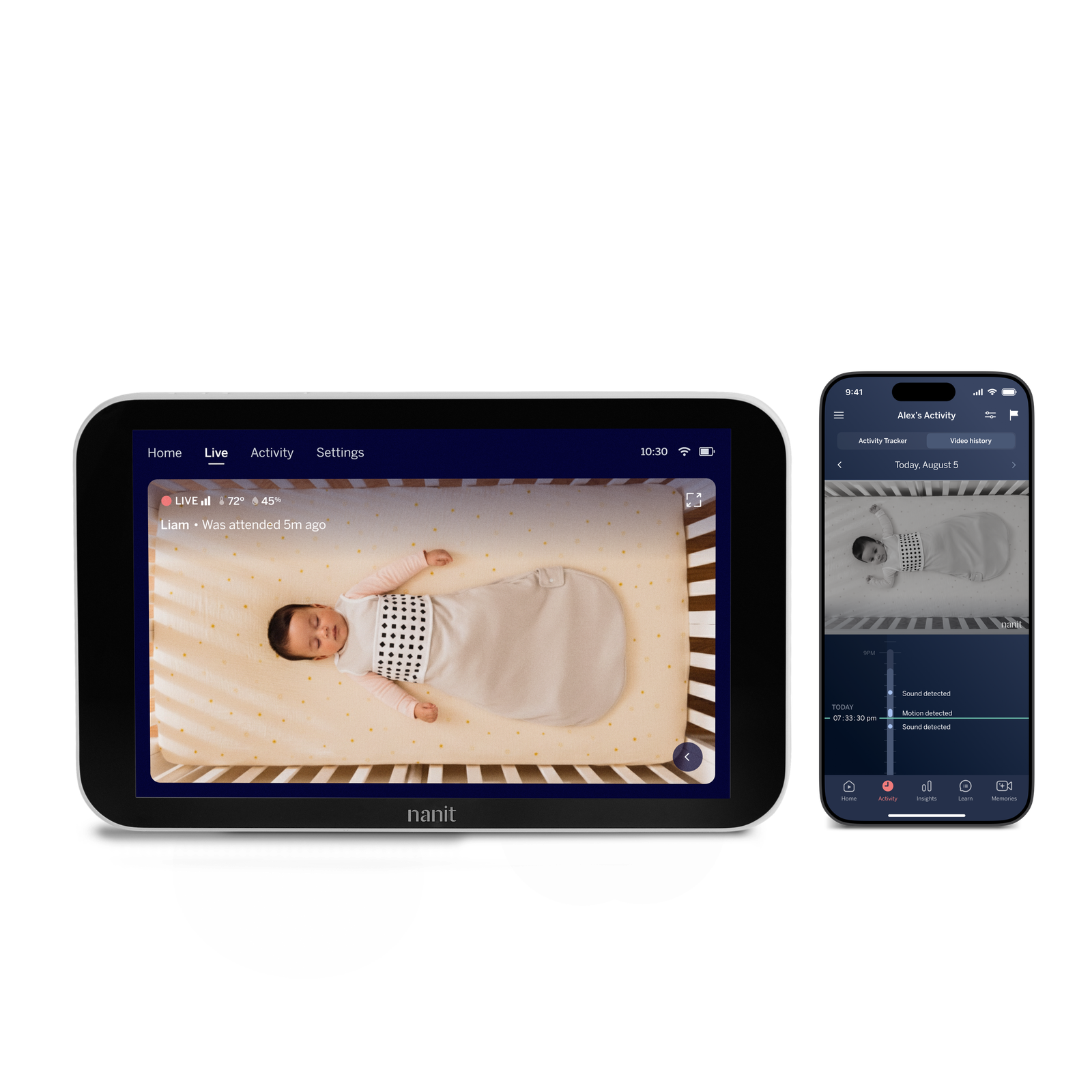
Nanit’s public story is built around a simple shift: a monitor should help parents understand more than whether a baby is currently visible on screen. The brand says its system combines 1080p HD video, live audio, temperature and humidity tracking, real-time sound and motion notifications, and an app that brings care information together.
That positioning gives Nanit a clear identity in a crowded category. Its camera is the anchor, but the wider promise is continuity: the same account can support live viewing, multi-user access, care logs, sleep information and, with the relevant plan, video history and personalized guidance. The Smart Baby Monitor, Flex Stand, and app are designed to work as a connected route. The brand also says feeds are protected with 256-bit AES encryption and two-factor authentication.
For a first-time reader, the useful distinction is between core access and optional depth. The store states that a subscription is not required for live view, sound and motion alerts, background audio, two-way audio, room tracking, white noise and limited user access. Insights plans are for features such as longer history, sleep tracking, personalized coaching and milestone capture.
- Core monitor role: live video, sound, motion notifications and two-way audio.
- Context role: temperature, humidity, care logs and sleep-related information.
- Growth role: optional history, coaching, milestones and additional memory features.
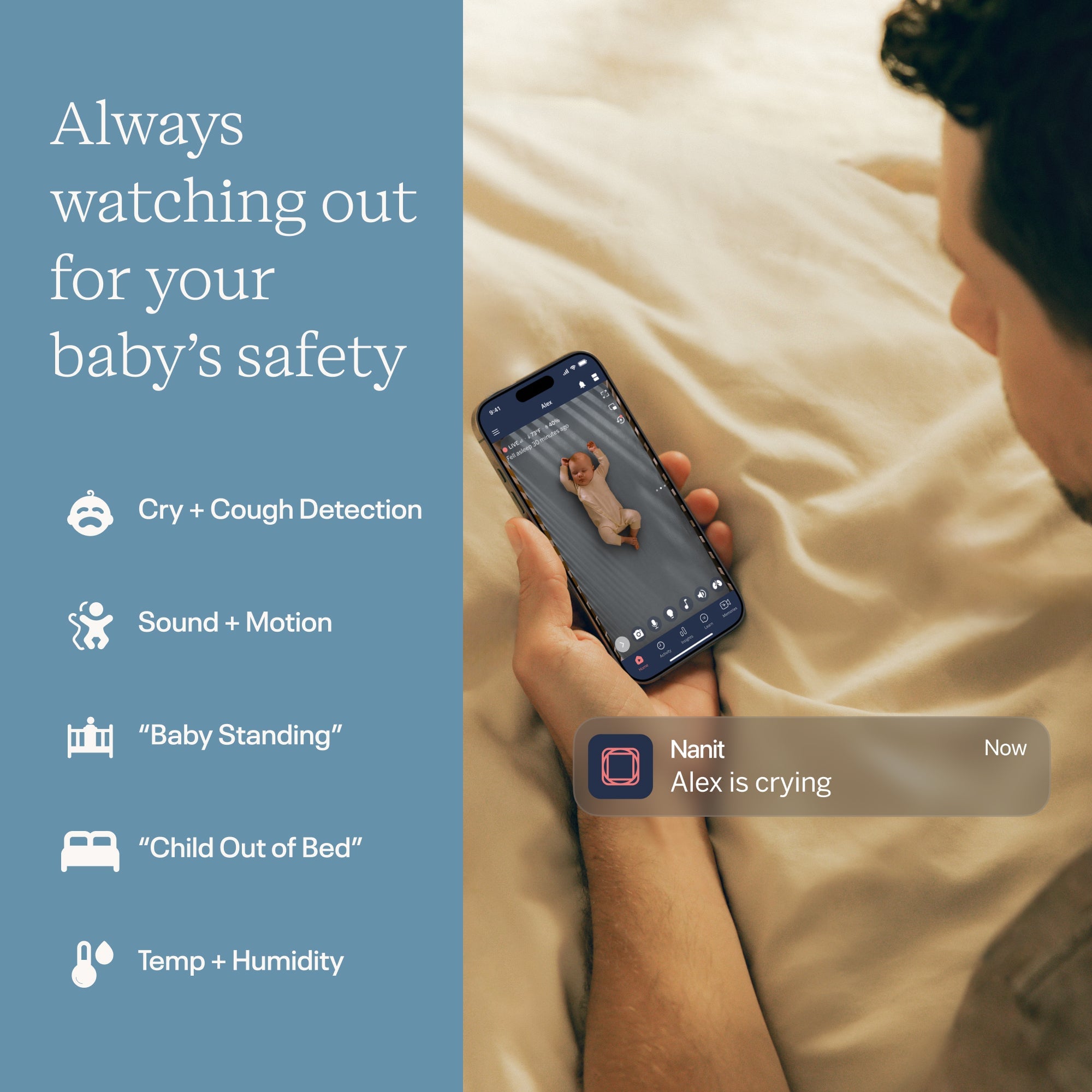
Smart Baby Monitor System gives the brand its foundation
The Smart Baby Monitor System is the most direct introduction to Nanit’s approach. The store lists a Pro Camera with a choice of Wall Mount or Floor Stand, plus a Breathing Band and the option to add a Home Display. In other words, the important purchase decision is not only the camera itself but the perspective and permanence of the installation.
A wall mount suits a nursery where the camera can stay in a fixed overhead position. That matters because Nanit says its sleep algorithms work best when the camera is overhead or positioned in the Floor Stand. The Smart Baby Monitor System, camera setup, and mount keep the monitoring view consistent from night to night, which is relevant if sleep tracking is central to the buyer’s reason for choosing the brand.
The tradeoff is commitment. Installation takes more planning than placing a basic camera on a shelf, and the broader feature set can make Nanit feel more involved than a simple video feed. The store’s monitor information, membership options, and product details also make clear that an Insights plan is needed for the fullest set of history and coaching features. Readers should treat the monitor and membership as related but separate choices.

- Best starting point: families wanting one central monitor with room to expand.
- Mounting question: decide between fixed overhead context and a freestanding setup.
- Budget question: separate the hardware decision from any recurring Insights plan.
Flex Stand makes Nanit portable with a narrower view
The Smart Baby Monitor + Flex Stand changes the emphasis from permanent nursery placement to portability. Nanit describes it as useful for travel, another room or a secondary play space, and says the camera can move between the overhead setup and the Flex Stand.
This is one of the clearest examples of the brand’s modular thinking. A family can keep the main camera in its regular nursery position, then move it when circumstances change. The store says Flex Stand, the portable setup, uses a 130-degree wide-angle view, remembers up to ten Wi-Fi networks and reconnects when the user returns home.
There is a meaningful limit: Nanit states that sleep tracking does not work on Flex Stand, because the sleep algorithms require the Floor Stand or overhead Wall Mount. The store separately says Breathing Motion Monitoring is available while using Flex Stand. That distinction is worth understanding before buying. Portability expands where the camera can go, but it does not reproduce every benefit of the fixed setup.
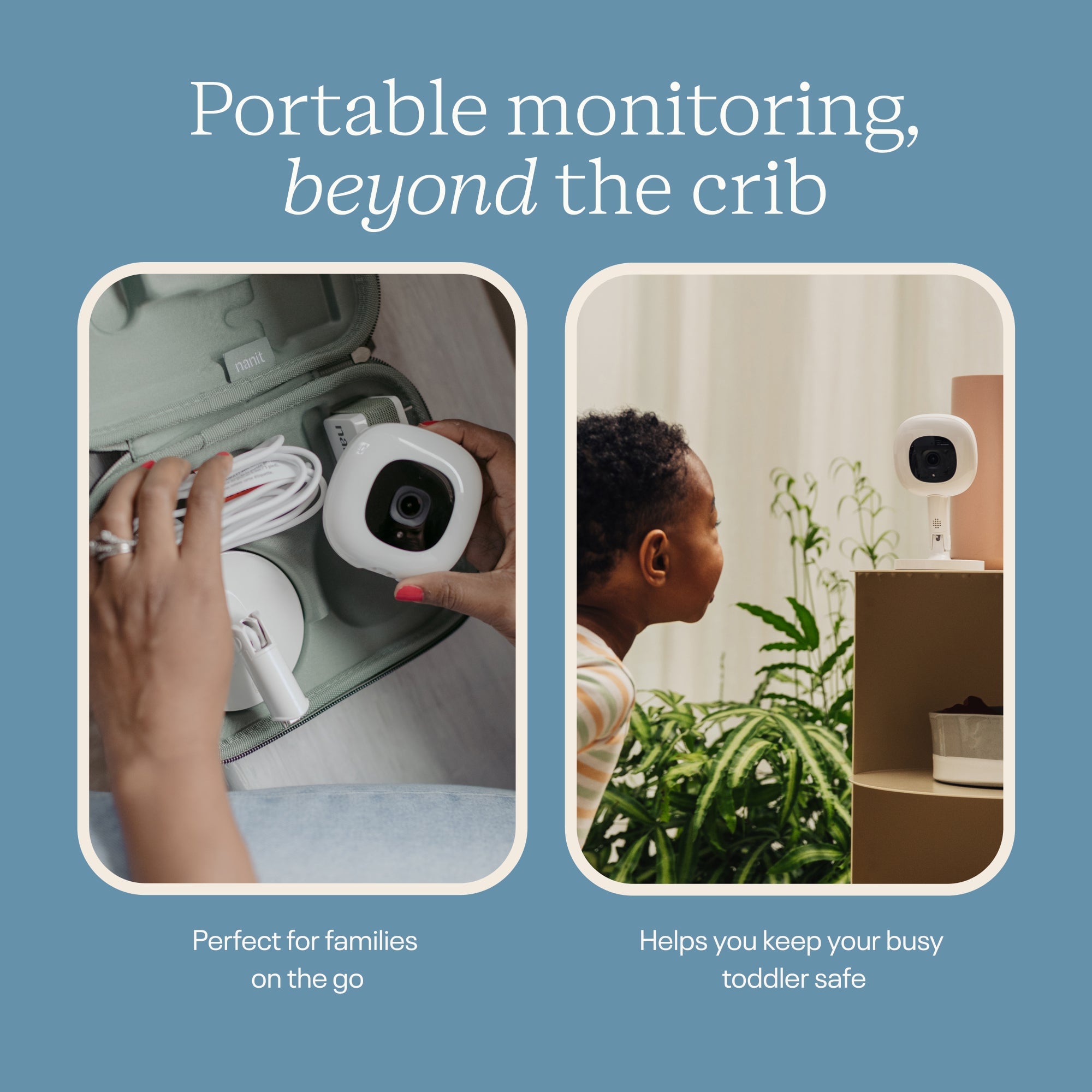
Our reading of the range is that Flex Stand is best treated as a complement or a deliberate travel-first route, not as a universal replacement for the nursery mount. It gives Nanit a practical answer to changing routines, while also making the fixed-versus-portable tradeoff visible.
Breathing Wear links the camera to sleepwear
Breathing Wear Sleeping Bag shows how Nanit extends its technology without putting electronics on the baby. The brand says its cotton Breathing Wear carries a custom pattern that the Pro Camera can read to track breathing motion. The line also includes a Breathing Band, Swaddle and Pajamas, so families can choose a format around age, fit and existing sleep habits.
The product page describes the Sleeping Bag as a breathable alternative to loose blankets, with a two-way zipper for changes. It is available across several age and size ranges, which makes the size chart part of the decision rather than a minor checkout detail. The key point is that the garment is a visual interface for the camera, not a wearable sensor.
Nanit’s Breathing Wear information is appropriately important here. The brand says Breathing Wear contains no wires, sensors or electronics, but also says the system is not a medical device and should not replace adult oversight or professional care. We think that limitation belongs in any honest introduction to the range: breathing-motion notifications can be part of a monitoring routine, but they do not turn the product into a diagnostic tool.
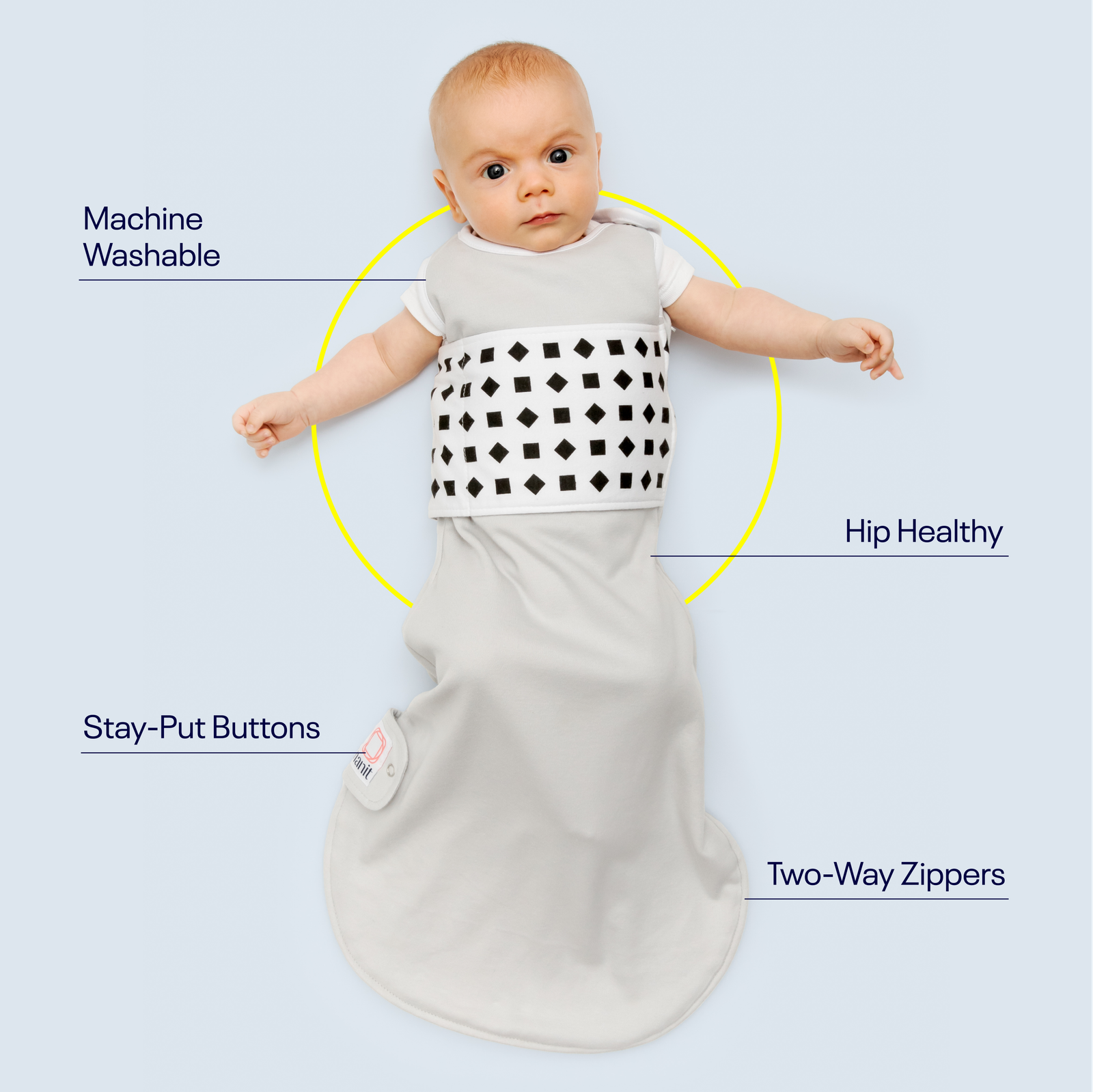
- Choose by stage: match the garment to the child’s age, weight and length.
- Choose by routine: the Band can layer over existing sleepwear, while the Bag replaces a blanket-style layer.
- Choose with care: follow safe-sleep guidance and treat alerts as information, not medical diagnosis.
Sound + Light Machine carries the app into bedtime
The Sound + Light Machine broadens Nanit beyond observation. The store describes a portable device with soothing sounds, customizable light colors, live audio monitoring and temperature and humidity tracking. It can be controlled through the Sound and Light app, the Nanit app, built-in buttons and Google Home.
That makes the product relevant to a different kind of parent need: not only checking on sleep, but shaping the routine around it. Nanit lists 11 sound options, routines and a rechargeable battery rated for up to eight hours. The Sound + Light Machine can also travel, although the store notes that predictive pairing with the monitor requires an Insights membership.
The limitation is ecosystem dependence. Its strongest role appears when a family already wants Nanit’s app and monitor to coordinate nursery tools. Someone looking only for a basic standalone night-light or speaker may not need the connected layer. Someone already invested in the camera may value having one place for audio, light and room information.
Nanit’s range works best when each add-on has a job
The temptation with a connected brand is to treat the full range as a package. Nanit’s products make more sense when each one answers a specific nursery question:
- Need a stable nightly view? Start with the Smart Baby Monitor System and select the mount that fits the room.
- Need movement between spaces? Consider Smart Baby Monitor + Flex Stand, accepting the narrower sleep-tracking role.
- Want breathing-motion context? Add a compatible Breathing Wear format and check the relevant plan and safety information.
- Want routine support? Add Sound + Light when audio, color and room tracking belong in the same app.
This staged approach is also useful for keeping the total commitment legible. The camera, mount, sleepwear, sound machine and Insights plan each contribute something different. The store’s current listings and plan terms should be checked together before checkout because included accessories, compatibility and membership features can vary by configuration.
The right Nanit setup depends on how much context you want
Nanit is most interesting for families who want one connected view of nursery life rather than a camera in isolation. The brand’s strengths are the breadth of its app, the choice between fixed and portable mounting, the camera-readable Breathing Wear concept and the way optional tools can follow a child’s changing routine.
It is less compelling for readers who want the cheapest simple monitor, dislike account-based ecosystems or do not expect to use sleep history and connected accessories. The subscription is not required for core monitoring, but the deeper experience depends on choosing the right plan and keeping the system within its stated compatibility limits.
Before ordering, we would check these practical details:
- Whether the room suits a Wall Mount, Floor Stand or portable Flex Stand.
- Whether a dedicated Home Display adds value beyond the app.
- Which Breathing Wear size fits the child and whether the feature is appropriate for the family’s routine.
- Which Insights features matter enough to justify an ongoing plan.
Does Nanit require an Insights plan?
No for core use, according to Nanit. Live video, sound and motion notifications, background audio, room tracking, two-way audio and other basic features remain available without a membership. Sleep tracking, longer video history, personalized coaching and some advanced connections depend on the chosen Insights plan.
Can the Nanit camera travel between rooms?
Yes. Nanit says the camera can move into the Flex Stand for another room or travel, with a 130-degree view and support for remembering multiple Wi-Fi networks. Sleep tracking is limited on Flex Stand, so it is not identical to the fixed overhead setup.
Is Breathing Wear a medical device?
No. Nanit states that Breathing Wear is designed to help the camera detect breathing motion, but the system is not intended to diagnose or treat a condition. Families should follow safe-sleep guidance and use adult judgment alongside any notification.
Wrapping up
Nanit stands out because it treats monitoring as an evolving nursery system. The Smart Baby Monitor provides the foundation, Flex Stand adds mobility, Breathing Wear adds camera-readable sleep context and Sound + Light extends the same account into bedtime routines. That range gives first-time buyers room to begin with one clear need and expand later.
The honest limitation is that the experience becomes more valuable as the setup becomes more deliberate, and some deeper features depend on Insights. For families comfortable with that connected approach, the Smart Baby Monitor System is the logical starting point; everyone else should compare the store’s current configurations and plan details before committing.