

A closer look at Libidex’s London roots, made-to-order approach and standout designs can help first-time readers decide where to begin.
Latex clothing is easy to recognize and harder to choose. A first look at Libidex can bring up catsuits, dresses, corsetry, separates and a long list of colors and construction choices. The useful question is not simply whether the finish appeals, but how a particular garment is made, configured and suited to the occasion.
Libidex presents itself as a London maker of handcrafted latex fashion, with a catalogue that spans statement pieces and more focused designs. We reviewed the brand’s published story and product information to explain what gives the range its character and what a new shopper should understand before exploring individual pages.
Disclosure: this post includes affiliate links, and we may be paid a commission on purchases made through them.
Highlights
- London roots: Libidex says its handcrafted latex work dates to 1989.
- Broad range: the brand describes more than 1,000 designs across clothing categories.
- Made to order: product pages can offer choices such as color, size, length, zips and other options.
- Specific construction: the Hero Catsuit and Bioprene Catsuit use 0.40mm latex with distinct panel designs.
- Read the details: production, fit, allergy, care, shipping and return information should be checked on each garment page.
Libidex has built its identity around handcrafted latex
On its homepage, Libidex places its roots in 1989 and describes its clothing as handcrafted in a London atelier. That history matters as context: the brand is not presenting latex as a single novelty item, but as a design material used across a developed catalogue. It describes more than 1,000 designs, spanning sculpted one-piece garments, structured corsetry, dresses and menswear. For a first-time visitor, this breadth is both the point and the first challenge: style names alone do not tell you how a garment closes, fits or can be customized.
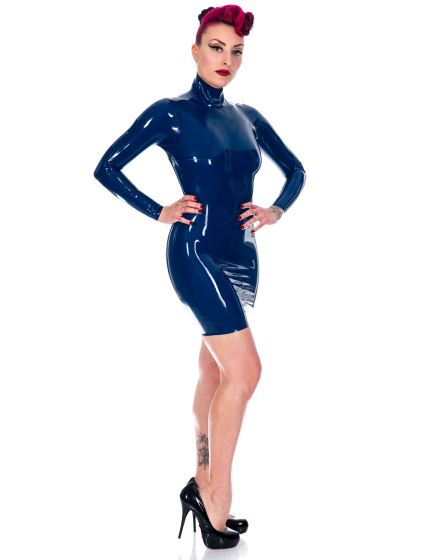 Matrix Dress in glossy latex” />
The brand’s product pages make the range more tangible by specifying materials and design details. The Matrix Dress, for example, is described as 0.40mm latex with a tailored bust and options for a three-quarter or open-ended zip, positioned at the front or back. That level of detail is helpful because latex clothing depends on fit and construction as much as silhouette. A reader can use the page to compare a clean, uninterrupted look with a fastening choice that better fits their needs, then review size guidance before deciding.
- For a coordinated look: compare dresses and corsetry.
- For a single-piece design: start with catsuits and their closure options.
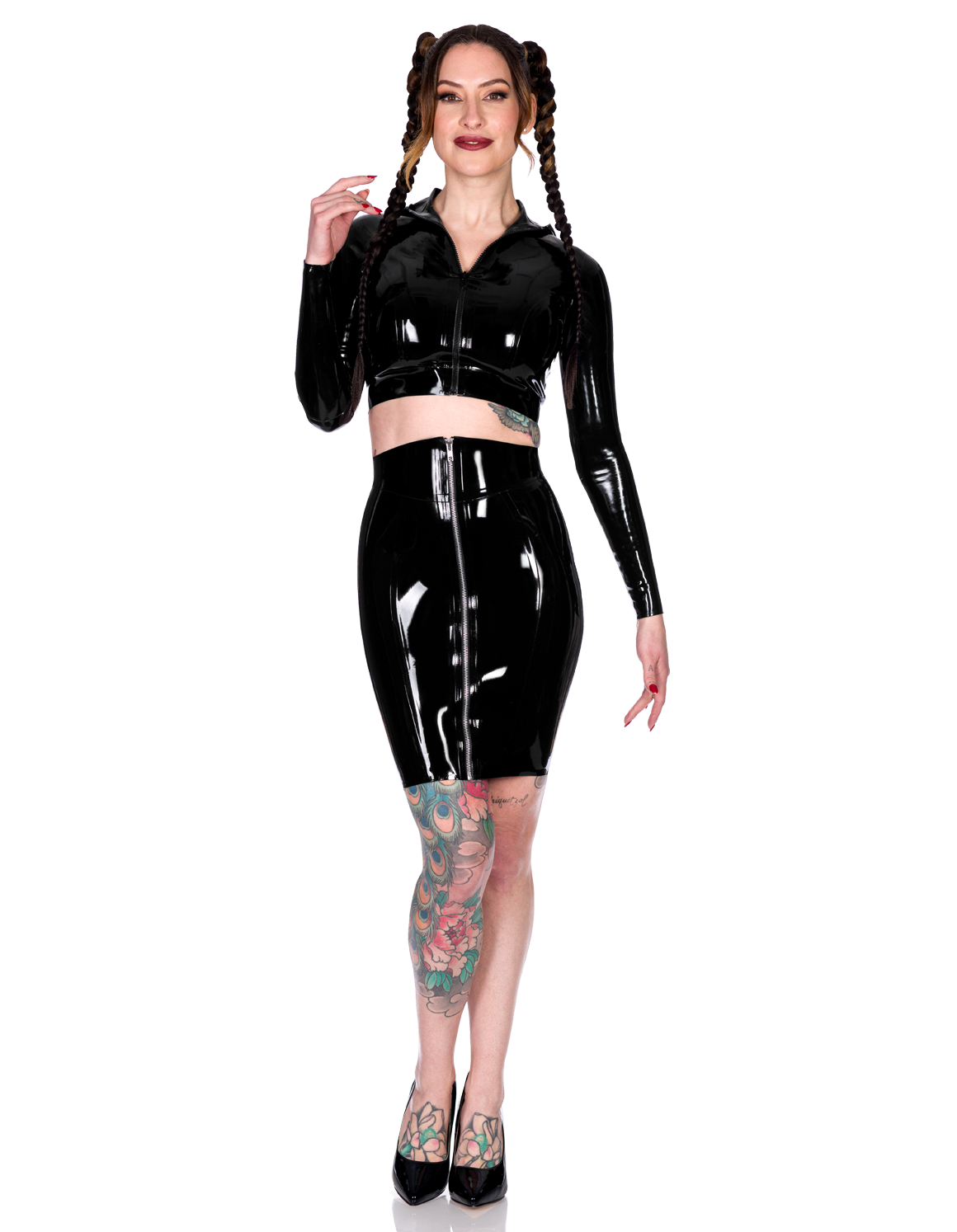
- For separates: browse skirts, tops and jackets.
- For a first pass: choose category before color.
The catsuit range makes construction the main distinction
The Hero Catsuit is a useful example of Libidex’s maximal, coordinated approach. Its page describes multiple contrasting panels at the chest, inside leg and hood, and an attached open-faced hood and gloves. The listed latex thickness is 0.40mm. This is a design for readers who want a connected look in which the accessories are part of the garment concept; the trade-off is that the hood and gloves make fit and sizing across several areas especially important.
Configuration details matter here. Libidex’s page offers choices involving colors, size, length, hood and glove sizing, zip style and whether to include feet. Those choices can shape both appearance and wearability. A shopper considering the Hero Catsuit should check the available combinations carefully and measure according to the brand’s guidance, rather than assuming every option shown in gallery imagery is part of the standard design.
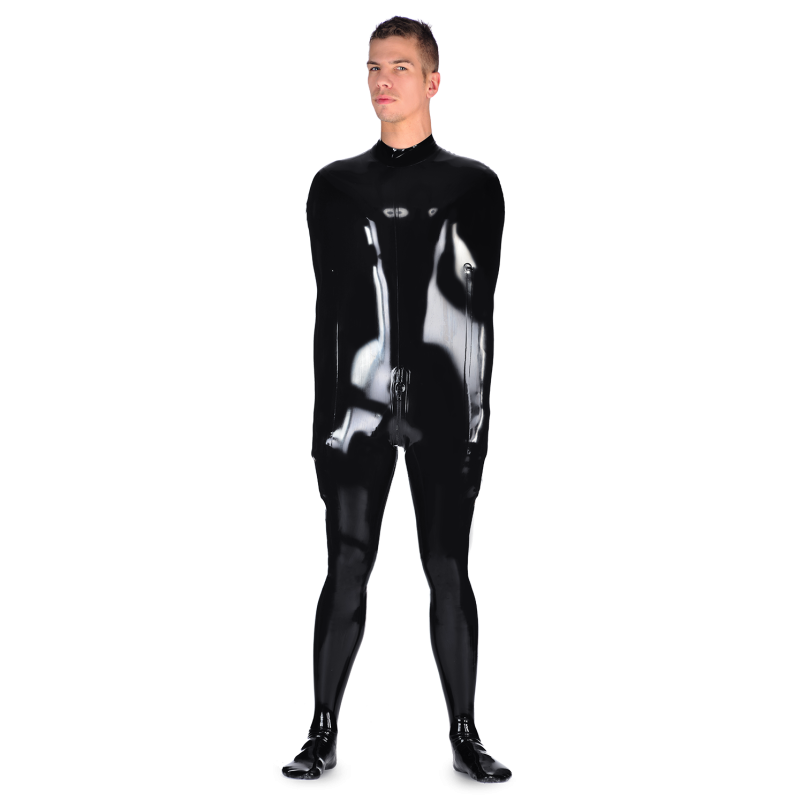
The Bioprene Catsuit takes a different visual route. Libidex describes broad contrasting panels running down the sides of the body and arms, also in 0.40mm latex. The effect is more graphic and streamlined than the Hero’s integrated hood-and-glove styling. Its page notes color combinations and optional extras, and cautions that translucent colors can make seams more visible or appear off-color. That is practical information for choosing a palette: product photography is a guide, while the material and seam behavior are part of the real choice.
These examples show why the brand’s range is best read garment by garment. A familiar category such as catsuit contains different panel layouts, access points and accessory choices. Product descriptions are more useful than a generalized claim about a whole collection, particularly when an option affects comfort or how the garment is put on and removed.
- Start with silhouette: decide whether you want a full one-piece, a dress, corsetry or a separate.
- Check the construction: note latex thickness, panel placement, closures and any attached elements.
- Choose options deliberately: color, length, feet, hood, gloves and zip positions can vary by design.
- Confirm practical details: read sizing, lead time, care and exchange terms on the exact page.
Dresses and separates give newcomers more ways into the range
Not every entry point into Libidex is a full-body design. The Princess Corset Dress combines a latex dress with a more structured corset element, and its product information distinguishes the body material from the heavier corset construction. This kind of design lets a reader explore the brand’s sculptural approach in a more focused garment. It also makes accurate sizing and comfort expectations important: a close-fitting dress with a structured waist will behave differently from a simpler pull-on silhouette.
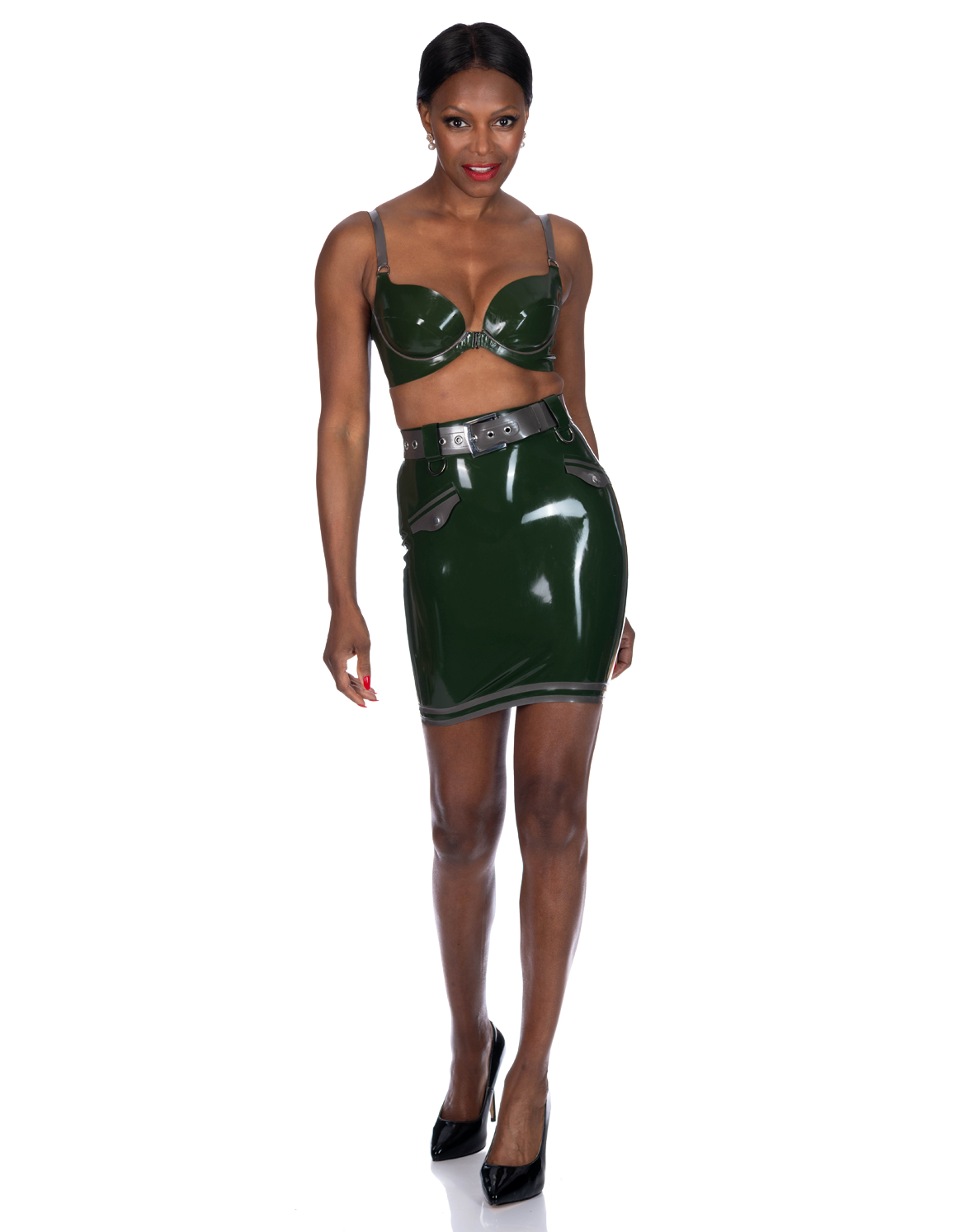
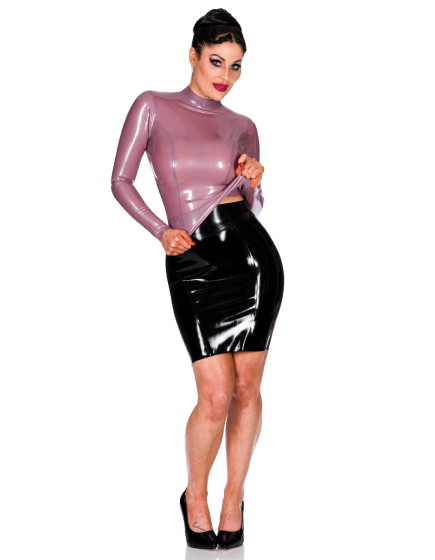
Other official product pages illustrate the range beyond the three examples above. The Iris Dress uses a Grecian-inspired neck detail, while the Daphne Dress pairs contrasting trim with a lace-up neckline. A pencil skirt such as the Yolanda adds a separate that can be considered alongside existing wardrobe pieces. These products show that the catalogue is not only about one dramatic catsuit template; it includes distinct necklines, waist treatments and styling possibilities.
For a first purchase, separates can make the decision more modular, while a coordinated dress offers a clearer finished look. Neither is automatically easier: a close fit still requires attention to the garment’s size chart and natural-rubber latex care. Readers may want to compare similar cuts and details before settling on a favorite. In particular, consider the fastening, the amount of structure, and whether the garment is intended to be layered or worn as the main feature.
Made-to-order choices reward careful preparation
Made-to-order customization is one of the clearest reasons to spend time on each product page. Depending on the style, Libidex presents choices for color, size, length, zip placement and optional details. The benefit is a design that can be configured beyond a single fixed stock image. The cost of that flexibility is a more involved decision: selecting a striking color is only one part of matching a garment to your measurements, use and comfort preferences.
We recommend treating the size chart as essential reading, not a formality. Compare your measurements with the brand’s instructions and verify whether the chosen piece has a snug cut, a structured section, integrated accessories or a special closure. The Matrix Dress page, for instance, describes both its tailored bust and zip alternatives; the Hero Catsuit asks readers to configure several sizing and length choices. That specificity helps, but it also means a quick glance at a model photograph cannot substitute for checking the actual option set.
There are practical considerations beyond fit. Libidex’s product pages include notes on handmade production, delivery and returns, and the exact terms may vary or change. Its information pages also explain care and natural rubber latex allergy considerations. Latex is not suitable for someone with a latex allergy, and the brand itself advises consumers to establish whether they have that sensitivity before purchase. Read those points before configuring an order, especially if you are new to natural rubber garments.
- Measure first: use the relevant chart and follow the garment-specific instructions.
- Review the option list: confirm each selected color, length, closure or extra before checkout.
- Plan around production: handmade lead times and delivery time are separate considerations.
- Read care and safety notes: check the brand’s guidance on latex care and allergy risk.
- Recheck the terms: shipping, returns and exchanges belong to the current store information.
The brand suits readers who value design choice over instant simplicity
Libidex is most compelling for shoppers who know they want latex clothing and value design range, color choice and made-to-order configuration. Its product pages offer enough construction detail to help a considered decision, from the paneling of the Bioprene Catsuit to the hood and glove integration of the Hero Catsuit. The brand’s breadth can also serve readers still defining their preferred silhouette, since dresses, skirts and jackets sit alongside full suits.
The limitation is the learning curve. A large catalogue and many possible options ask more of the shopper than a simple ready-to-wear purchase. Fit, latex care, allergy suitability and production timing all deserve attention. Some designs are also deliberately specialized, so the most visually distinctive choice may not be the best starting point if you are unsure about coverage, closures or how often you will wear it.
- Best starting point: choose a garment category first.
- Best next step: compare exact fit and closure details.
- Best final check: confirm care, lead time and return terms.
Does Libidex make garments to order?
Libidex describes its garments as handmade and many product pages provide configuration choices. The available options differ by style, so check the individual listing for its current sizes, colors, lengths and extras.
What should a first-time latex shopper check?
Start with the size chart and garment-specific fit notes, then review latex care, natural rubber allergy information, production timing and return or exchange terms. Confirm that the selected options match your intended use.
What kinds of clothing does Libidex offer?
The range described on the store includes catsuits, dresses, corsetry, skirts, jackets and menswear. Browse by garment type, then compare individual product descriptions for their construction and customization details.
Wrapping up
Libidex’s identity comes through in its combination of London craft heritage, a broad latex catalogue and detailed made-to-order options. For a first-time reader, the best way in is to begin with a garment category and then compare specific construction, fit and configuration details. The Matrix Dress offers a clear example of the brand’s shaped dress approach, while the Bioprene Catsuit and Hero Catsuit show two distinct takes on a full-body style.
Our recommendation is to browse Libidex if customization and distinctive latex design matter to you, while taking time over sizing, care and lead times. Its extensive selection can feel demanding for someone seeking an uncomplicated first garment, and latex itself requires care and allergy awareness. Check the current product and store information before choosing.
Ready to compare designs? Browse the full collection, view Hero Catsuit options, compare Bioprene Catsuit details, read Matrix Dress configurations, or explore the Princess Corset Dress.